Indigenous & Ancestral Traditions
African Religious Worlds
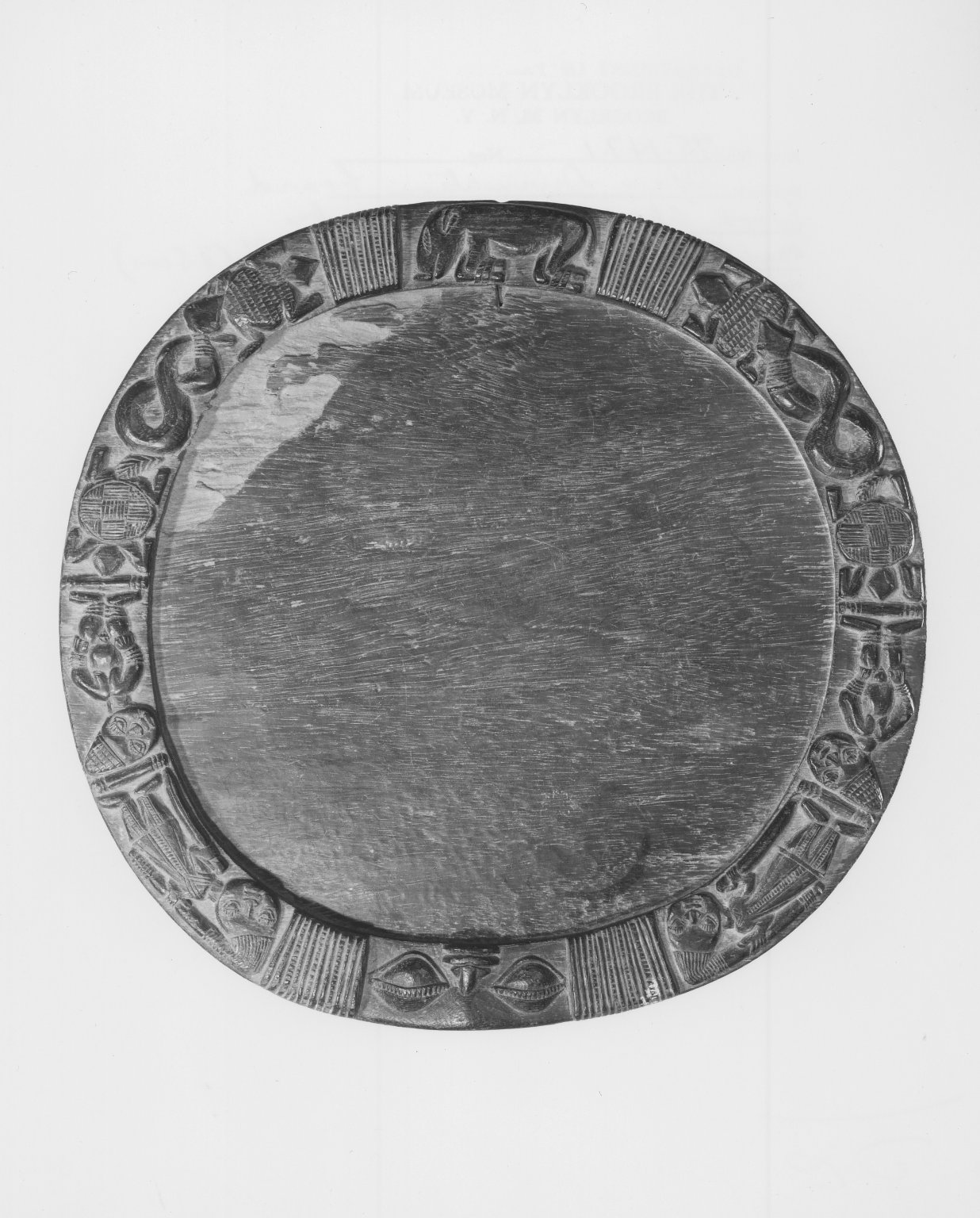
A wide-ranging introduction to the traditional religions of the African continent: cosmology and the nature of God, divinities, spirits and ancestor veneration, ritual and sacred art, religious specialists, and the continent's encounters with Christianity and Islam. Illustrated with photographs of an Ifá divination tray, a Yoruba Gelede mask, and a Kongo nkisi power figure.
Introduction
1Across the vast and diverse continent of Africa, religion is not merely a compartment of life but the very fabric through which existence is understood, experienced, and given meaning. This is a truth that resonates from the ancient kingdoms of the Nile to the bustling megacities of the twenty-first century, from remote forest villages to global diaspora communities. To study African religions is to study African peoples themselves—their histories, their struggles, their aspirations, and their profound engagement with a universe they perceive as alive with spiritual significance.
2The landscape of African religious expression is as varied as the continent itself. With over fifty nations, more than a thousand distinct ethnic groups, and countless languages, Africa defies any simplistic characterization. Yet beneath this remarkable diversity lies a deep unity of religious sensibility—a shared understanding that the visible and invisible worlds interpenetrate, that human existence is embedded within a cosmic order governed by divine and ancestral powers, and that ritual, myth, and community form the essential structure of meaningful life.
3This book aims to provide a comprehensive introduction to the religious traditions that have shaped African civilizations for millennia and continue to influence the continent's development today. Our journey will encompass the foundational worldviews that orient African peoples toward the sacred, the complex pantheons of deities and spirits that populate their spiritual landscapes, the ritual practices that mark the passage of human life from birth through death and beyond, and the profound philosophical insights embedded in African conceptions of time, destiny, and the nature of being.
4We shall also examine the profound transformations that have occurred through the encounter with Christianity and Islam—traditions that have been present on the continent for centuries and have, in many respects, become thoroughly "African" while simultaneously challenging and reshaping indigenous religious practices. The rise of independent African churches, the growth of charismatic movements, and the continued vitality of Sufi orders all testify to the dynamic religious creativity of African peoples.
5Perhaps most significantly, we shall explore the contemporary resurgence and global reach of African religious traditions. Far from being relics of a primitive past, African religions have proven remarkably resilient and adaptable. They have traveled across the Atlantic with enslaved Africans, giving birth to vibrant diaspora traditions such as Candomblé in Brazil, Vodou in Haiti, and Regla de Ocha in Cuba. They have found new expression among African immigrants in Europe and North America. And they continue to evolve in response to the challenges of modernity, urbanization, and globalization.
6The study of African religions has long been plagued by misunderstanding and prejudice. Early European observers, operating within a framework of evolutionary assumptions, dismissed African religious traditions as primitive superstition, animism, or ancestor worship. Missionaries often viewed them as obstacles to be overcome rather than spiritual systems worthy of respect. Even today, many Westerners remain unfamiliar with the sophistication and depth of African religious thought.
7Yet the scholarship of recent decades has begun to correct these distortions. African scholars themselves have made invaluable contributions, bringing insider perspectives and deep linguistic competence to the study of their own traditions. Anthropologists and historians have produced detailed ethnographic accounts that reveal the complexity and coherence of African religious systems. Theologians and philosophers have explored the rich conceptual resources embedded in African cosmologies and ethical frameworks.
8This book synthesizes this wealth of scholarship into a coherent account that honors both the diversity and the unity of African religious traditions. We begin with the foundational concepts of worldview and cosmology, exploring how African peoples understand the structure of the universe and their place within it. We then examine the pantheon of divine and spiritual beings that populate this universe, from the Supreme God to the myriad spirits and ancestors who mediate between the human and divine realms.
9From there, we turn to the practices through which humans engage with the sacred—ritual, ceremony, and the arts that give material form to spiritual reality. The figure of the ritual specialist—the diviner, healer, priest, and king—emerges as a crucial link between the human and divine worlds, wielding sacred authority and mystical power for the benefit of the community.
10The second half of the book considers the historical encounter with Christianity and Islam, tracing how these traditions have been both received and transformed within African contexts. The emergence of independent churches and the spread of Pentecostalism, the growth of Sufi orders and the rise of reformist movements, all reflect the ongoing dynamism of African religious life.
11Finally, we examine the contemporary state of African religions, both on the continent and in diaspora, exploring how these traditions continue to provide meaning, identity, and security in a rapidly changing world. From the rise of African immigrant religious communities in North America to the flourishing of African-derived religions in the Caribbean and South America, we see traditions that are simultaneously ancient and modern, local and global.
12African religions, as we shall discover, offer profound insights into the nature of human existence, the structure of the cosmos, and the relationship between the living and the departed. They remind us that religion is never merely a set of beliefs but a way of life, a pattern of participation in a universe charged with meaning and power. They demonstrate the resilience of human spirituality in the face of adversity and the creative capacity of peoples to adapt and innovate even under the most challenging circumstances.
13This book is written for the curious reader who wishes to understand African religious traditions on their own terms, to appreciate their depth and beauty, and to recognize their continuing significance in the modern world. Whether you approach these traditions as an academic, a practitioner, or simply a seeker, I hope this exploration will open new horizons of understanding and respect.
14The Source Materials and Their Legacy
15The knowledge that follows draws upon decades of careful scholarship, including the foundational work of African scholars who have devoted their lives to understanding and articulating their own traditions. The present synthesis is built upon this rich foundation, honoring the insights of those who have come before while weaving their contributions into a coherent and accessible account.
16Early studies of African religions were often marred by ethnocentric assumptions, viewing African traditions through the lens of Western Christianity and evolutionary theory. The concept of "animism" emerged from this period, suggesting that African religions were concerned primarily with spirits inhabiting natural objects—a characterization that fundamentally misrepresented the sophisticated theologies and cosmologies that African peoples had developed over millennia.
17Similarly, the term "ancestor worship" has been widely used but inappropriately applied to practices that are more accurately understood as expressions of family solidarity, respect for the departed, and recognition of the continuing influence of ancestors on the lives of their descendants. The ritual offerings and libations given to the dead are tokens of fellowship and remembrance rather than acts of worship in the sense that term carries in Christian or Islamic contexts.
18The concept of "magic" has also been used to dismiss African religious practices as irrational attempts to manipulate supernatural forces. Yet a careful examination reveals that African peoples recognize a clear distinction between legitimate religious practices and antisocial uses of spiritual power, just as other traditions distinguish between prayer and sorcery.
19These early mischaracterizations have gradually given way to more nuanced and respectful scholarship. Contemporary studies recognize African religions as complete and coherent systems that address the fundamental questions of human existence: the nature of ultimate reality, the origin and destiny of humanity, the meaning of suffering and death, and the principles that should govern human conduct.
20African scholars have played an increasingly important role in this scholarly evolution, bringing both academic training and deep cultural knowledge to the study of their own traditions. Their contributions have been particularly valuable in revealing the philosophical sophistication of African thought and in challenging the assumption that African religions lack theological depth or systematic coherence.
21This synthesis seeks to build upon these scholarly advances, presenting a comprehensive picture of African religious traditions that is both faithful to the sources and accessible to the general reader. Where earlier studies emphasized difference—between Africa and the West, between traditional religions and world religions—we shall emphasize connections, continuities, and the shared human concerns that unite all religious traditions.
22A Note on Terminology and Scope
23Throughout this book, we speak of "African religions" in the plural, recognizing the remarkable diversity of traditions across the continent. Yet we also find justification for speaking of "African religion" in the singular, insofar as these traditions share fundamental similarities: belief in a Supreme Being, veneration of ancestors and spirits, emphasis on community and ritual, and a worldview that sees the sacred and secular as interpenetrating dimensions of existence.
24The term "traditional" is used to distinguish these religious systems from Christianity and Islam, which came to Africa from outside, although both of these faiths have been present on the continent for centuries and have, in many respects, become thoroughly "African" in their expression. "Indigenous" is often a more appropriate term, acknowledging that these religions emerged organically from the soil of Africa itself.
25We shall use the present tense in describing traditional beliefs and practices, not because we assume these traditions are unchanged or universally observed, but because they continue to shape the worldview of many Africans even when they also profess Christianity or Islam. Traditional concepts persist at the deepest levels of consciousness, surfacing particularly in times of crisis, transition, and need.
26The examples and illustrations in this book are drawn from across the continent, reflecting both the diversity and the commonality of African religious traditions. Particular attention is given to traditions that have been well documented by scholars, but we must remember that many African peoples have not yet been the subject of detailed religious study, and their traditions remain less well represented in the scholarly literature.
27With these considerations in mind, let us begin our journey into the rich and complex world of African religions.
Worldviews and the Architecture of Reality
1The Religious Universe
2For African peoples, the universe is fundamentally a religious reality. This is not simply a matter of holding beliefs about spirits and gods but of experiencing the world as permeated by sacred presence and power. The individual who emerges from childhood into adult life does not encounter a neutral physical environment but a cosmos alive with significance, every aspect of which has meaning and purpose within a comprehensive spiritual framework.
3Consider the way an African person inhabits the landscape. A particular hill is not merely an elevation of land but the dwelling place of ancestors or the site of significant mythological events. A river carries not just water but spiritual power and perhaps the presence of water divinities. The forest is not simply a collection of trees but a realm of spirits, a place of initiation and transformation where humans encounter forces beyond their everyday experience.
4This religious perception extends to the rhythms of daily life and the cycle of the year. The rising and setting of the sun, the phases of the moon, the coming and going of the rainy seasons—all are meaningful events, indicators of divine activity and order. The agricultural calendar is a sacred calendar, its turning points marked by rituals that ensure cosmic and social harmony.
5The integration of religion into every aspect of life poses a sharp contrast to the separation of sacred and secular spheres characteristic of modern Western societies. In traditional African communities, there is no such division: economics, politics, health, family relations, and governance are all informed and shaped by religious beliefs and practices. Civic authorities are not simply political leaders but religious figures, their legitimacy grounded in their role as intermediaries between the community and the divine.
6This does not mean that African societies are theocracies in the Western sense. Rather, it reflects a worldview in which the sacred and secular are not separate categories at all. To speak of religion as a distinct sphere of life is to impose a Western framework on a reality that operates differently. For Africans in the traditional context, all of life is religious.
7This religious permeation extends to the fundamental categories of social organization. Kinship, the basic structure of African society, is deeply religious in its significance. The family is not merely a social unit but a chain of being linking the living, the departed, and those yet to be born. The ancestors who have passed into the spirit realm remain active members of the family, concerned with its welfare and capable of influencing its fortunes.
8Similarly, the rituals that mark the key transitions of life—birth, initiation, marriage, death—are not merely social ceremonies but sacred dramas through which individuals are incorporated into the community and their place in the cosmic order established. These rituals connect the individual to the ancestors, to the community, and ultimately to the divine sources of life.
9The religious understanding of existence also shapes the way Africans approach morality and ethics. Actions are judged not merely by their consequences for individuals but by their impact on the harmonious functioning of the community and its relationship with the spiritual world. Offenses against social order are simultaneously offenses against ancestors and gods, requiring not just social correction but ritual restoration.
10In this context, the individual is never an isolated unit but always a member of a larger whole. The "I" exists only in relationship to the "we" of the community, and personal well-being is inseparable from the well-being of the group. This corporate consciousness, rooted in a religious understanding of existence, has profound implications for both individual identity and social organization.
11The Ontology of Existence
12At the heart of African religious thought lies a comprehensive understanding of the nature of being. This "ontology" is fundamentally anthropocentric, placing humanity at the center of the cosmic order—not in the sense that humanity controls all else, but in the sense that everything is understood in relation to human existence and experience.
13The universe, in this understanding, is structured in a hierarchy of being. At the apex stands God, the Supreme Being, the ultimate source and sustainer of all existence. Below God are the spirits and divinities, beings of superhuman power who mediate between God and humanity and who are associated with various aspects of nature and human experience. Below them are human beings, both the living and the departed. And at the base are animals, plants, and inanimate objects, which provide the environment within which human life unfolds.
14This hierarchy is not a rigid chain but a dynamic network of relationships. The categories of being are interconnected, and the boundaries between them are sometimes fluid. Ancestors may become spirits; spirits may become associated with natural phenomena; and human beings, through their actions, may affect their position within the hierarchy.
15The fundamental principle underlying this ontology is relationship. Nothing exists in isolation; everything exists in relation to everything else. The individual human being is not an atomistic entity but a node in a vast network of relationships: with other humans (living and departed), with animals and plants, with natural phenomena, with spirits, and with God.
16This relational understanding of existence has profound implications for how African peoples understand themselves and their world. Identity is not something individual and personal but something social and relational. To ask "who am I?" is to ask "to whom do I belong?"—to what family, clan, community, and lineage. The answer to this question places the individual in the network of relationships that constitutes the social and cosmic order.
17It also has implications for the nature of time. The African conception of time, as we shall explore in detail, is not a linear progression from past to future but a dynamic movement from the present back into the past. The past is not something gone and gone; it is a living reality, populated by ancestors and spirits, connected to the present through ties of memory and ritual. The future, in contrast, is relatively indistinct, a short extension of the present rather than a vast terrain of possibility.
18This understanding of time shapes everything from historical consciousness to economic planning, from political expectations to religious hope. Traditional African societies did not develop messianic expectations or progressive ideologies because the future dimension of time was largely absent from their conceptual framework. The golden age was not ahead but behind, in the time of the ancestors, the period of foundations.
19The Three-Tiered Cosmos
20A common pattern in African cosmologies is the division of the universe into three tiers: sky, earth, and the underworld. The sky is the realm of God and the highest divinities, often seen as the dwelling place of the Supreme Being and the source of rain and heavenly blessings. The earth is the realm of human habitation, the arena of human life and activity, inhabited by human beings, animals, plants, and various spirits. The underworld is the realm of the dead, the place where ancestors dwell and from which they may influence the world of the living.
21These three tiers are not separated by absolute barriers but are connected through various channels and processes. The sky and earth interact through rain, which falls from the heavenly realm to nourish the earth, and through sunlight, which warms and illuminates the world. The earth and underworld connect through burial, which returns the dead to the earth, and through springs and caves, which provide access to the subterranean realm.
22The porous boundaries between these realms mean that beings from one tier may affect life in another. Ancestors dwell in the underworld but maintain interest in and influence upon their descendants on earth. Spirits associated with natural phenomena may cross between realms. And God, though dwelling in the sky, is present and active throughout the universe.
23This cosmological structure provides a framework for understanding the relationship between the visible and invisible dimensions of reality. The visible world of ordinary experience is not the whole of reality; it is accompanied and sustained by an invisible world populated by spiritual beings and animated by spiritual forces. The visible and invisible are not separate but interpenetrating dimensions of a single reality.
24For African peoples, this means that the world is never simply what it appears to be. Behind every visible phenomenon lies a deeper spiritual reality, accessible through ritual, divination, and the insights of religious specialists. The challenges of human life—sickness, misfortune, death—are understood not simply in terms of their apparent causes but in terms of their spiritual significance and the relationships they reveal.
25Diversity and Unity in African Worldviews
26Despite the common features just described, African worldviews are remarkably diverse, reflecting the vast range of ecological, historical, and cultural contexts across the continent. The worldview of a pastoral people on the East African savannah differs significantly from that of a forest-dwelling agricultural society in West Africa, which in turn differs from that of a desert community in the Sahel.
27Yet beneath this diversity, certain structural similarities recur. The three-tiered cosmos, the anthropocentric ontology, the emphasis on relationship and community, the integration of the sacred and the secular—these patterns appear across the continent, adapted to local conditions and expressed in the idioms of particular cultures.
28This combination of unity and diversity makes the study of African worldviews both challenging and rewarding. Generalizations must be approached with caution, attentive to the specificities of individual traditions. Yet the patterns that emerge from comparative study reveal deep continuities that justify speaking of an African worldview as a coherent type.
29One of the challenges of this study is the inadequacy of Western conceptual frameworks for understanding African worldviews. Terms like "god," "spirit," "worship," and "ritual" all carry Western connotations that may not map cleanly onto African concepts. The African term for the highest being may carry connotations of impersonal force as well as personal deity; the concept of "worship" may be more about relationship and reciprocity than adoration and submission.
30Scholars have developed various approaches to this challenge. Some emphasize the need to understand African concepts on their own terms, using indigenous categories rather than imposing Western ones. Others argue that comparative study requires a common vocabulary but recognize the need for careful definition and contextualization. Still others seek to develop new conceptual frameworks that do justice to the unique features of African worldviews.
31What emerges from these efforts is a picture of African worldviews as sophisticated and coherent systems, capable of addressing the fundamental questions of human existence with insight and depth. The African understanding of reality is not a primitive stage in religious evolution but a mature and complex system that deserves respect and careful study.
Cosmogonies and Myths of Origin
1The Creation of the World
2The myths that African peoples tell about the origin of the world constitute some of their most profound and sacred narratives. These cosmogonic stories are not simply primitive explanations of natural phenomena but sophisticated reflections on the nature of reality, the relationship between God and creation, and the place of humanity in the cosmic order.
3In these stories, we find a remarkable variety of creative scenarios. Some peoples speak of creation from nothing, with God simply speaking the world into existence through word or intention. Others describe creation from pre-existing matter, with God shaping the world like a potter shaping clay. Still others tell of creation by emergence, with the world and its inhabitants gradually coming forth from an original cosmic egg, a primordial body of water, or a sacred mound.
4The diversity of these creation stories reflects both the cultural specificity of different peoples and the human capacity for imaginative engagement with the deepest questions of existence. They are not meant as scientific accounts but as theological narratives that reveal the nature of God, the structure of reality, and the meaning and purpose of human life.
5Consider, for example, a creation narrative found among the Fon people of the Republic of Benin. In this account, the creator god Nana Buluku gives birth to the androgynous deity Mawu-Lisa, who combines the female principle of the moon and the male principle of the sun. Mawu-Lisa creates the universe and the pantheon of divinities known as the Vodun, who then assist in the completion of creation and the establishment of human life. This androgynous conception of the divine reflects the Fon understanding that creation requires the cooperation of complementary principles—male and female, active and receptive, assertive and sustaining.
6Among the Yoruba people of southwestern Nigeria, the creation myth centers on the role of the divinities in shaping the world. Olodumare, the Supreme Being, commissions the oldest divinity, Obatala, to create land and life on earth. Obatala is given all the necessary tools and descends from the sky to begin his work, but he becomes intoxicated and is temporarily incapacitated, allowing the trickster divinity Eshu to take charge. When Obatala finally completes his work, he creates human beings from clay and receives from Olodumare the breath of life. This story reveals the Yoruba understanding of creation as a process involving multiple divine agents, the presence of accident and imperfection in the created world, and the special place of humanity as a unique creation of the divinities.
7The creation myth of the Bambara people of Mali centers on the primordial sound Yo, the foundational vibration from which the entire cosmos emerged. Before creation, there was nothing but an empty void. From this void, the sound Yo arose, and its emanations formed the planets, stars, earth, and all sentient beings. For the Bambara, this primordial sound is also a silence, the highest form of consciousness, which manifests in human beings as the capacity for understanding. This creation story bears similarities to Hindu and Buddhist conceptions of creation through the primordial sound Om, suggesting deep resonances between African and Asian cosmological thought.
8Among the San peoples of southern Africa, we find a creation myth that speaks of the death of the goddess Tumtumbolosa, the creator figure of the Gikwe people. When the goddess dies, her stomach bloats and explodes, and the universe and its contents pour out. The celestial bodies emerge first, followed by all terrestrial beings—insects, mammals, birds, reptiles, and humans. A river also emerges, bringing forth a forest on earth. This explosive creation, reminiscent of contemporary cosmological theories of the Big Bang, reveals the San understanding of creation as emerging from the destruction of the creator figure, suggesting that life and death, creation and destruction, are intimately connected processes.
9The Original State of Humanity
10These creation myths are often accompanied by narratives about the original state of humanity and the relationship between God and the first humans. In many traditions, humans were originally created in a state of happiness and blessedness, living in close proximity to God and lacking nothing. There was no death, no labor, no sickness, no conflict. God provided for all human needs, and humanity lived in harmony with the divine order.
11This state of primordial bliss is often described in terms of the absence of what we now consider normal conditions of human life. There was no need to work, because God provided food. There was no need for clothing, because the climate was perfect. There was no death, because humans were immortal or could return to life after death. There was no division between humans, because they lived in unity and peace.
12The Acholi people of Uganda, for example, tell how God taught the first humans the essentials of civilization: cultivation of the land, cooking of food, and the making of beer. The Akamba people of Kenya speak of God providing the first humans with cattle, sheep, and goats, lowering them from the sky along with a pair of human beings. The Nuer people of Sudan recount how God offered humans a choice between cattle and rifles; the Nuer and Dinka chose cattle, while Europeans and Arabs chose rifles.
13This picture of primordial blessedness reveals a deep memory of a time when the relationship between God and humanity was closer, when the conditions of human existence were more perfect, and when the hardships of contemporary life were unknown. It is a common motif in religious traditions worldwide—the lost paradise, the golden age from which humanity has fallen.
14Yet the African version of this motif has distinctive features. The separation between God and humanity is often described as accidental rather than punitive, resulting from a mistake, a misunderstanding, or the interference of a minor being. The withdrawal of God is not a punishment for human sin but a consequence of human action or even divine sensitivity—God moves away because the smoke from human fires is bothersome, or because a woman's pestle keeps knocking against the heavens, or because the rope connecting earth and heaven is cut by a careless hyena.
15The Separation from God
16The myths of separation explain how the original harmony between God and humanity was disrupted and how the present condition of human existence came to be. These are stories that address the ultimate question of human suffering, the origins of death, and the nature of the human condition.
17The Ashanti people of Ghana tell how God originally dwelt in the sky, but close to men on earth. A woman who was constantly pounding the traditional food fufu kept knocking against the sky with her pestle, causing God to move higher. When she instructed her sons to build a tower to follow God, the tower collapsed, killing many and convincing the survivors to abandon the attempt. This story speaks of God's sensitivity to human disruption and the human failure to restore the original relationship.
18The Mende people of Sierra Leone recount how God dwelled among the first people but moved away because they constantly came to Him with requests. Before departing, however, He made an agreement with them concerning the proper relationship between God and humanity and among humans themselves. This story establishes the terms of the ongoing relationship between God and humanity—a relationship governed by covenant and mutual responsibility.
19The Bambuti Pygmies of the Congo region tell of how God forbade the first humans to eat of the tahu tree, but they violated the prohibition and incurred God's anger. They also have a myth in which the first humans were forbidden to look at God, but someone looked and the relationship was broken. In both versions, human disobedience is the cause of the separation, and the consequence is the introduction of death and suffering into human life.
20The peoples of the Upper White Nile region—the Bari, Fajulu, Lugbara, Madi, and Toposa—tell of how the sky and earth were originally joined by a rope or bridge, allowing easy communication between God and humanity. This rope was broken accidentally, or by the hyena, causing the separation between heaven and earth. This story suggests that the separation was not intended by God but resulted from an accident or the action of an irresponsible creature.
21The consequences of this separation are catastrophic for humanity. With God's withdrawal comes the introduction of death, suffering, illness, and the necessity of labor. The free supply of food ceases, and humans must work to survive. The gift of immortality or resurrection is lost, and humanity becomes subject to death and decay.
22Significantly, African creation myths do not generally contain narratives about the end of the world. The separation from God is a past event, a historical or mythological occurrence, but there is no corresponding expectation of a future reunion. The golden age lies in the past, in the Zamani, not in the future. There is no messianic hope, no apocalyptic expectation. This orientation toward the past is a distinctive feature of African religious thought, reflecting the basic conception of time that we will explore in the next chapter.
23The Origin of Death
24Among the most important and widespread African myths are those that explain the origin of death. These stories address a fundamental human concern—the meaning of mortality—and they do so with remarkable creativity and insight.
25A common motif is the confused messenger. In one version, the Supreme Being sends the chameleon to deliver a message to humanity: "Men shall not die." The chameleon, however, travels slowly and delays on the way. Meanwhile, the lizard, who moves more quickly, delivers a different message: "Men shall die." When the chameleon finally arrives with the correct message, it is too late; the lizard's message has already been accepted, and death has entered the world.
26This story, found among the Xhosa of South Africa and other peoples, explains death as the result of mistaken delivery—a cosmic error that was never corrected. The implication is that immortality was intended for humanity but lost through a combination of messenger carelessness and human gullibility.
27The Maasai of Kenya and Tanzania tell a different version of the confused messenger story. The creator god instructed the first human, Leeyio, to declare over the corpse of anyone who dies: "Man die and come back again; Moon die and stay away." But Leeyio inverted the decree, declaring: "Moon die and come back again; Man die and stay away." This inversion allowed death to enter the world. In this version, the error is made by humanity itself, not by a messenger, and the consequence is the loss of immortality.
28The Chagga people of Kenya and Tanzania tell of a man who received a message from God: when people die, they should be thrown on the ground, where they will come back to life. But a woman who had lost her child was so distraught that she buried the body before the appointed time, breaking the divine command and bringing about the permanent institution of death and burial.
29The Nandi people of Kenya tell of how death entered the world when a hungry stranger ate the yams that God had forbidden the people to eat. God punished the elder with death and blindness, but after much supplication, He healed the elder and told him that people would no longer die but would shed their skin when they grew old. However, this transformation had to take place in secret. When the elder's granddaughter returned too soon and caught him in the process, she screamed, ruining the transformation and restoring the condition of death.
30What these myths share is the conviction that death is not an original feature of creation but an intrusion. God did not intend humanity to die; death entered the world through some mistake, error, or disobedience. This understanding makes death a tragedy rather than a natural phenomenon and places it in the larger narrative of the separation between God and humanity.
31Cultural Heroes and Founders
32Beyond the creation myths and origin of death stories, African traditions include narratives about cultural heroes—extraordinary individuals who founded peoples, established institutions, introduced essential skills, and shaped the distinctive identity of particular communities. These heroes often occupy a liminal position between humanity and divinity, their origin and deeds giving them a status beyond ordinary human experience.
33Among the Yoruba, many of the orisa (traditional gods) are also cultural heroes. Ogun, the divinity of iron, war, and hunting, was originally a historical hunter who cleared the way for other divinities to come to earth. Sango, the divinity of thunder and lightning, was also a historical figure, the third Alaafin of the Oyo Empire, later deified after his death. Oramiyan is regarded as the builder of Ife, the founder of Oyo, and the creator of the traditions of Yoruba kingship.
34Oduadua, perhaps the most important Yoruba cultural hero, played a vital role in the creation of the universe but is also honored as the first Yoruba ruler and the founder of the Yoruba people. The Ooni (high king) of Ife is seen as a living embodiment of Odudua, and all Yoruba royal houses and peoples trace their lineage back to this primal figure.
35The Shilluk people of Sudan trace their origins to Nyikang, a figure of divine origin who came from the sky and established the Shilluk nation. Nyikang did not die but "disappeared," and he continues to act as the great intermediary between the Shilluk and God. The Shilluk king is considered to be a manifestation of Nyikang, linking the present to the mythological past.
36Among the Sonjo people of Tanzania, Khambageu is the cultural hero who first appeared "without parents" and traveled among the people, performing miracles, healing the sick, and settling disputes. He eventually grew old and died, but he is now closely associated with and identified with God, serving as the religious focus of Sonjo life.
37These cultural heroes serve multiple functions in their communities. They provide a sense of origin and identity, anchoring the present in the foundational past. They embody the ideals and aspirations of the people, serving as models and sources of inspiration. They act as religious figures, connecting the community to the divine realm. And they provide a point of reference for thinking about the relationship between divine and human, past and present, ideal and actual.
Time, History, and Human Destiny
1The Concept of Time
2The African conception of time is perhaps the most important key to understanding African religions and philosophy. This understanding, deeply embedded in African languages and thought patterns, differs fundamentally from the linear conception of time characteristic of modern Western thought and its Judeo-Christian heritage.
3In traditional African thought, time is not an abstract dimension of existence but a concrete composition of events. Time is what happens, not a container within which things happen. This understanding has profound implications for how Africans experience reality and orient themselves toward past, present, and future.
4The most significant feature of this conception is that African time is two-dimensional, with a long past and present but virtually no future. The future is limited to what is likely to occur or what lies within the rhythm of natural phenomena—the changing of seasons, the maturation of crops, the stages of human development. What extends beyond this immediate horizon is not time but "no-time," a realm that does not correspond to human experience and is not a matter of active concern.
5The Swahili terms Sasa and Zamani help to capture this conception. Sasa refers to the "now-period," the period of immediate concern characterized by nearness, immediacy, and "now-ness." This is the period in which meaningful events occur, either those about to happen, happening now, or recently experienced. Sasa is not mathematically or numerically constant; it is longer for older people, who have more memories, and shorter for younger ones, who have less personal history to recall.
6Zamani is the "big time," the period of the past, the graveyard of time, the ocean into which all events eventually flow. The past is not dead but is filled with activities and happenings, giving a sense of foundation and security to the present. It is in the Zamani that the myths and traditions of the people are anchored, and it is toward the Zamani that people look for explanation of their customs, the origin of their wisdom, and the meaning of their existence.
7The relationship between Sasa and Zamani is dynamic. Events move "backward" from the Sasa into the Zamani, a process that takes several generations. When a person dies, they do not immediately disappear from the Sasa but remain in the memory of those who knew them. As long as someone is alive who remembers a departed person, that person is still in the Sasa, still part of living time. But when the last person who knew them dies, the departed person sinks beyond the horizon of the Sasa and enters fully into the Zamani.
8Human Life and the Rhythm of Time
9This conception of time shapes the understanding of human life and destiny. The individual is born into the Sasa period, and through the various rites of passage—initiation, marriage, procreation—gradually moves toward the Zamani. The rhythm of human life is a movement from the Sasa to the Zamani, a slow process that continues after physical death.
10For the individual, the Sasa period is the time of personal experience, of intense participation in the life of the community. It is during this period that the person forms relationships, establishes family, and contributes to the life of the community. The Sasa is the period of personal consciousness, of individual existence in its full sense.
11As the individual moves through the Sasa and toward the Zamani, the quality of existence changes. The older a person is, the longer their Sasa period, the more they have experienced, the deeper their roots in the past. Elders are respected because their Sasa extends deeper into the Zamani; they have more memories, more relationships, more connection to the past of the community.
12When the individual dies, they do not disappear from the Sasa immediately but continue as a "living-dead," a person who is physically dead but alive in the memory of those who knew them. The living-dead is remembered by name, and as long as someone is alive who remembers them, they are not really dead. They are in the state of personal immortality, a condition that may continue for up to four or five generations.
13This personal immortality is externalized through various practices. Respect for the departed, giving them food and drink, pouring libation, carrying out instructions they gave while alive—all of these acts honor the living-dead and maintain the bond between them and the living. The family, the community, the kinship group keeps the living-dead in the Sasa, preventing them from entering fully into the Zamani.
14But eventually, the process of dying is completed. When the last person who knew the living-dead personally by name also dies, the former passes out of the Sasa and sinks fully into the Zamani. They are now truly dead, as far as human beings are concerned—no longer remembered by name, no longer possessing personality, no longer the focus of personal relationships.
15Yet they do not vanish out of existence altogether. They enter the state of collective immortality, becoming spirits, joining the myriads of departed whose personal names have been forgotten. They are no longer "he" or "she" but "it," no longer a person but an impersonal spiritual force. This is the ultimate destiny of the human soul in African understanding: to move from personal to collective immortality, from the Sasa to the Zamani, from being a remembered individual to being a forgotten spirit.
16History and the Mythical Past
17The conception of time as a movement toward the Zamani has profound implications for African understandings of history and the role of myth. History is a "backward" movement, from the present through the remembered past into the mythic realm. There is no concept of history moving forward toward a future climax, no belief in progress toward a golden age yet to come.
18The center of gravity for human thought and activity is the Zamani period, the period of foundations, the time of the ancestors, the original state. People look toward the Zamani for explanation and meaning, and it is in the Zamani that the golden age lies. The "world to come," such as is found in Judaism and Christianity, has no place in African thinking.
19This orientation toward the past is reflected in the way that historical traditions are formulated. Oral history tends to be telescoped, with events from different centuries compressed into a relatively brief narrative. People trace their genealogies back to the first man or the founding hero, but not beyond. The past is remembered as events and personalities, not as a timeline of dates.
20Myths are not located at a specific point in chronological time but in the Zamani, the period that is both historical and transcendent. The events of myths are "older" than the Sasa period, but they are not simply history; they are also meaningful in the present, shaping how people understand themselves and the world.
21Significantly, there are no myths about the end of the world. The rhythm of nature and the rhythm of human life are expected to continue as they have always continued—birth, initiation, marriage, death, and the movement of the individual from the Sasa to the Zamani. History has no end; it is an endless repetition of this rhythm.
22The Discovery of the Future
23The traditional conception of time is, however, undergoing rapid transformation. Through Christian missionary teaching, Western-style education, and the invasion of technology, African peoples are discovering the future dimension of time. This discovery has both promise and danger.
24On the secular level, the discovery of the future leads to national planning for economic growth, political independence, and educational expansion. African nations are beginning to orient themselves toward the future, to set goals and work toward them. This represents a fundamental shift from the traditional orientation toward the past.
25On the religious level, the discovery of the future has produced millennial expectations, the creation of independent churches centered around prophetic leaders, and the emergence of messianic movements. The future that was non-existent in traditional thought has become a source of hope and expectation, a dimension of time that holds the promise of deliverance and transformation.
26This discovery of the future has created tensions and instabilities. The traditional foundations of existence have been shaken, and new foundations have not yet been established. People find themselves caught between two worlds—the world of their ancestors, with its deep roots and firm traditions, and the world of modernity, with its promises and dangers.
27The instability produced by this tension is one of the most significant features of contemporary African life. The search for new values, identity, and security is a search for orientation in time, for a way to live between the Sasa and the future, between tradition and change. Religion, both traditional and modern, plays a crucial role in this search, providing resources for navigating the transition from the old world to the new.
28The significance of this discovery for African religions cannot be overstated. Traditional religions, with their orientation toward the Zamani, are being challenged by Christianity and Islam, with their orientation toward the future. Independent churches and prophetic movements represent attempts to bridge these dimensions, to create a future-oriented religious expression that remains connected to African roots. This is, perhaps, the most important development in contemporary African religious life.
The Nature of God
1The Supreme Being
2At the foundation of African religious thought lies the conviction that there is a Supreme Being, the source and sustainer of all existence. This is the most fundamental and universal element of African religions—found, according to the evidence, in every African society, with not a single known exception. The Supreme Being is the ultimate reality, the origin of all things, and the final authority over the destiny of creation.
3The names given to this Supreme Being reveal much about how different peoples conceive of the divine. Many names convey the sense of God as Creator or Maker. Among the Akan of Ghana, God is Borebore, the "Excavator" or "Hewer," suggesting a God who shapes and forms the world. The Akamba of Kenya use Mumbi and Mwatuangi, "Maker" and "Cleaver," reflecting the divine role in creating and giving shape to things. The Yoruba call God Olorun, "Owner of the Sky," and Olodumare, "The Supreme One."
4Other names convey God's power and authority. Many peoples call God "King," "Lord," "Chief," or "Great One." The Zulu name Unkulunkulu means "The Great-great-One," suggesting a being of supreme greatness. The Ndebele call God "The Greatest of the Great." These titles reflect the understanding of God as the ultimate ruler and authority over all creation.
5Still other names convey God's mystery and inaccessibility. The Ngombe of the Congo call God "The Unexplainable," acknowledging that the divine nature transcends human comprehension. The Ashanti refer to God as "The Fathomless One," suggesting depths that human understanding cannot plumb. The Bacongo call God "The Marvel of Marvels," indicating that God is the source of all wonder and mystery.
6Despite the diversity of names, the underlying conception of God is remarkably consistent across Africa. God is considered to be omniscient, knowing all things, seeing all things, hearing all things. God is omnipresent, present everywhere at all times, not limited by space or distance. God is omnipotent, all-powerful, capable of doing anything and overcoming any obstacle.
7These attributes distinguish God from all other beings and establish God as the supreme reality of existence. No other being can be described in these terms; God alone possesses them. They are the essential aspects of God's being, the qualities that make God God.
8The Attributes of God
9African conceptions of God include both eternal and moral attributes. The eternal attributes concern God's nature in itself—omniscience, omnipresence, omnipotence, eternity, self-existence. The moral attributes concern God's character—goodness, justice, mercy, holiness.
10God's omniscience is expressed in various ways. The Akan call God "He Who Knows All." The Yoruba say God "sees the inside and outside of man." The Barundi call God "The Watcher of Everything." These expressions indicate that nothing is hidden from God, nothing escapes God's knowledge, nothing can be concealed from divine awareness.
11God's omnipresence is conveyed through names and sayings that emphasize God's presence everywhere. The Bamum call God "He Who is Everywhere." The Kono say God is like the wind, present everywhere though invisible. The Yoruba speak of God's presence as protecting people from harm, and the Shilluk say that the presence of God is like the air that surrounds everything.
12God's omnipotence is described through powerful images and sayings. Among the Akan, God is "The All-powerful." The Yoruba call God "The Almighty," and they say that "One never hears of the death of God!" The Ngombe, living in the thick forest, praise God as "The One Who Clears the Forest," suggesting that even the most formidable obstacles are no challenge to divine power.
13God's eternity is expressed through metaphors of endlessness. The Ngombe call God "The Everlasting One of the Forest," comparing God's eternal nature to the ageless forest. The Ila and Tonga call God "The Eternal One." The Akan say "Heaven never dies," identifying the eternal nature of God with the seeming immortality of the sky.
14God's goodness and mercy are widely recognized. The Akamba and Ila call God "The God of Kindness" or "The God of Mercy," reflecting the belief that God is compassionate and caring toward humanity. The Ewe say that God is good, that "He is He who does good." People credit God with their prosperity, their health, their children, their daily blessings.
15God's justice is also emphasized. The Nuer say that God is right, that God does not do evil. The Ila say God "does what is right." The Yoruba call God "The King Who is without blemish," implying that God is holy and perfect. People believe that God punishes wrongdoers and rewards those who follow good conduct, that God evens things out and executes judgment with impartiality.
16God's love, while not often expressed in direct sayings, is experienced through concrete acts and blessings. The manifestations of good—health, children, wealth, prosperity—are tokens of divine love. People experience God's love even when they do not speak of it as a detached concept.
17The Paradox of Transcendence and Immanence
18One of the most striking features of African conceptions of God is the paradoxical combination of transcendence and immanence. God is "far," transcendent, beyond human reach, the "Ancient of Days" who existed before creation and will exist after it. Yet God is also "near," immanent, present in the world, involved in the lives of humanity, accessible through prayer and worship.
19This paradox has been a source of misunderstanding for many early scholars, who emphasized God's remoteness to the exclusion of divine nearness. The reality is that African peoples hold both dimensions in a balance that is theologically sophisticated and experientially profound.
20God's transcendence is expressed through spatial imagery. God dwells in the sky, in the heavens, in the "above." The sky in its vast immensity invites people to gaze at it, to imagine the divine presence beyond human reach. Many peoples have myths about the separation between heaven and earth, explaining how God withdrew from humanity and established the distance that now exists.
21Yet God's immanence is equally emphasized. God is present in the world, involved in creation, accessible through prayer. The Akan call God "The One Who fills everything," suggesting that God's presence pervades all existence. The Ngombe call God "The One Who Fills Everything," expressing the same conviction.
22This immanence is expressed through the association of God with natural objects and phenomena. God is associated with the sky, but also with the sun, the moon, the rain, the thunder, the wind. These natural phenomena are not God but are manifestations of God's presence and activity, symbols of divine power and involvement in the world.
23The paradox of transcendence and immanence is resolved in practice through the recognition that God is both beyond all things and present in all things. This is not pantheism, the identification of God with everything, but panentheism, the recognition that God is present in all things while also transcending them.
24God and the Spiritual World
25While God is the supreme reality, the spiritual world also includes many other beings: spirits, divinities, ancestors, and various lesser supernatural entities. The relationship between God and these beings varies from society to society.
26In some traditions, the lesser beings are seen as servants of God, created to assist in the governance of the world. The Ashanti believe that God created the abosom, a pantheon of divinities through which God manifests Himself. These divinities serve as intermediaries between God and other creatures, carrying out divine will in various departments of life.
27In other traditions, the lesser beings are seen as aspects of God, personifications of divine power or manifestations of divine activity. The Yoruba orisa represent different aspects of God's nature and activity—Ogun embodies God's power in iron and warfare, Sango represents God's wrath in thunder and lightning, Orunmila conveys God's omniscience through divination.
28In still other traditions, the lesser beings are seen as elevated ancestors, human beings who have been deified after death. The Baganda have a category of balubaale, national heroes and leaders who have been socially and religiously elevated to divine status. These beings are associated with natural phenomena and human activities, representing the intersection of the human and divine realms.
29Despite these variations, the lesser beings are always seen as subordinate to God. They derive their power from God, and they are ultimately accountable to God. They function as intermediaries, bridges between the human and divine realms, but they do not compete with God for ultimate authority or worship.
30This relationship between God and the lesser beings makes African religions difficult to classify as either monotheistic or polytheistic. There is one supreme God, but there are also many other spiritual beings. In practice, people often address their prayers and offerings to the lesser beings rather than directly to God, seeking the help of those who are closer to human affairs. This has led some observers to conclude that African peoples are "practically polytheistic but theoretically monotheistic," a characterization that acknowledges the complexity of the situation.
Divinities, Spirits, and Ancestors
1The Realm of Divinities
2Below God in the hierarchy of being are the divinities, spiritual beings of superhuman power who mediate between God and humanity and who are associated with various aspects of nature and human experience. These beings are sometimes called "gods," "demigods," or "nature spirits" in Western scholarship, but these terms do not fully capture their nature or function.
3Divinities are generally thought to have been created by God and placed in charge of specific departments of existence. They are associated with natural phenomena like thunder, lightning, rain, and the sun; with human activities like war, hunting, and healing; and with important places like mountains, rivers, and forests.
4The Ashanti have a pantheon of divinities known as the abosom, through whom God manifests Himself and through whom He carries out His purposes. These divinities are increasing numerically and include major beings associated with cattle, clans, and human activities. They serve as intermediaries between God and other creatures, and people hold festivals for them and make sacrifices to them.
5The Yoruba have perhaps the largest collection of divinities of any single African people, with a traditional number of 1,700 or more. These orisa are associated with natural phenomena and objects as well as with human activities and experiences. They form a hierarchy parallel to the Yoruba social-political structure, with the most important divinities holding positions of great authority.
6Orisa-nla is "the supreme divinity" in the country, acting as God's earthly deputy in creative and executive functions. Orunmila is reputed to be an omnilinguist who understands every language spoken on earth and who represents God's omniscience and knowledge; he is associated with the oracle of divination and the healing arts. Ogun is the owner of all iron and steel, originally a hunter who paved the way for other divinities to come to earth; he is the divinity of war, hunting, and all activities or objects connected with iron. Sango is the divinity of thunder and lightning, representing the manifestation of God's wrath; legend makes him a historical figure who was later deified.
7These examples illustrate the nature and function of divinities in African religious life. They are specific and concrete, associated with particular aspects of life and nature. They are accessible, closer to human concerns than the remote Supreme Being. They are powerful, capable of assisting human beings in times of need. And they are approachable, amenable to ritual intervention and the establishment of personal relationships.
8The Populace of Spirits
9Below the divinities are the spirits, the vast populace of non-human beings that populate the African spiritual world. The spirits are more numerous than the divinities and less well-defined. They are associated with natural objects and phenomena, with places and regions, and sometimes with particular human activities.
10Spirits are generally thought to have been created as a race of beings, but they are also understood to be the spirits of those who have died physically and have entered the realm of collective immortality. In this sense, becoming a spirit is the ultimate destiny of the human soul, the final stage in the movement from the Sasa to the Zamani.
11Spirits are invisible and ubiquitous. A person never knows where they are or are not, and they are thought to be present everywhere, often in places of solitude and silence. They are fearsome because they are unpredictable and because they are "strangers"—no longer human, no longer part of the community, no longer possessing personality or name.
12Spirits are not intrinsically good or evil. They are like men in power—they can be helpful or harmful depending on circumstances and the relationship that humans establish with them. They can be manipulated or controlled by those who have the knowledge and power to do so, but they can also be dangerous if not properly handled.
13Spirits dwell in various places. Some are thought to live in the underground, in the netherworld, the subterranean realm where the dead are buried. Others live in the sky, in the sun, the moon, or the stars. The majority are thought to dwell in the woods, bush, forests, mountains, rivers, and other natural places—the same environment in which humans live.
14This location of spirits in the human environment reflects the African understanding of the relationship between the human and spiritual worlds. The two worlds are not separate but interpenetrating, and the spirits are in the same geographical region as humans. This makes the spirits contemporaries of humans, though they are "older" in the sense that they have moved further into the Zamani.
15Spirits may appear in various forms. They may assume human shape, though their bodies are often described as shadowy and elusive. They may appear as animals, plants, or inanimate objects. They may appear in dreams, especially to diviners, medicine-men, and rainmakers, to impart information. They may possess people, causing forms of madness and epilepsy, or they may communicate through mediums.
16Spirit possession is a common phenomenon in many African societies. When a person is possessed, they lose their own personality and act in the context of the personality of the spirit possessing them. They may speak in a different voice, exhibit different behavior, and relay messages from the spiritual world. Exorcism is one of the major functions of traditional doctors and diviners.
17The relationship between humans and spirits is complex and ambivalent. People fear spirits because they are strange and unpredictable, but they also seek their help in times of need. The spirits are not trusted, but they are consulted. They are approached with caution, but they are not avoided entirely.
18The Living-Dead
19Between the human beings and the spirits are the living-dead, the recently departed who are still remembered by name and still part of the human community. These are the most important spiritual beings in African religious life—the ancestors, the forebears, the departed relatives who continue to influence the lives of their descendants.
20The living-dead are in the Sasa period, the period of personal immortality. They are still "persons," still "he" or "she," still recognized by name and personality. They are part of their families, and they maintain interest in what is going on in their households. They may appear to their relatives, recognize them, and be recognized by them.
21The living-dead are bilingual. They speak the language of men, with whom they lived recently, and the language of spirits and God, to whom they are drawing nearer. This makes them the best possible intermediaries between humans and the spiritual world: they know human needs because they were recently here, and they have access to the channels of communicating with God and the spirits.
22The living-dead are not worshipped. They are respected, remembered, and honored. Libations and food offerings are tokens of fellowship, hospitality, and remembrance, not acts of worship. The living-dead are family members who have died physically but continue to be part of the family, and the rituals performed for them maintain the bond between the living and the dead.
23The relationship between the living and the living-dead is one of reciprocity. The living need the blessings, wisdom, and grace of their predecessors, and the ancestors need the recognition and remembrance of their descendants. The family is a chain of being linking the living, the departed, and those yet to be born, and all are bound together by ties of mutual obligation.
24But the living-dead do not remain indefinitely in the Sasa. When the last person who knew them personally by name dies, they sink beyond the horizon of the Sasa and enter fully into the Zamani. They are no longer living-dead but spirits, no longer persons but things, no longer remembered by name but lost in the collective memory of the community.
25This is the worst possible fate for an African person—to be forgotten, to sink into the oblivion of the Zamani, to lose personal immortality and become an impersonal spirit. For this reason, marriage and procreation are religious and ontological duties. Children continue the chain of humanity, and through them, the dead are remembered and kept in personal immortality.
26The Unity of the Spiritual World
27The African spiritual world is a unified system, with all beings connected through relationships of hierarchy and reciprocity. God is at the top, the source and sustainer of all existence. Below God are the divinities, powerful beings associated with natural phenomena and human activities. Below them are the spirits, the vast populace of non-human beings. Below them are the living-dead, the departed relatives who are still in the Sasa. And below them are the living human beings.
28This hierarchy is not a rigid chain but a dynamic network. Beings move between categories—spirits may become associated with natural phenomena, ancestors may become divinities, human beings may become living-dead and then spirits. The boundaries are porous, and the system is flexible.
29The unity of the spiritual world is reflected in the practices of African religious life. People address prayers and offerings to all levels of being, depending on the nature of their need. They honor the living-dead with family rituals, consult the spirits through diviners and medicine-men, invoke the divinities through priests and initiates, and appeal to God through prayer and sacrifice.
30This comprehensive spiritual system provides Africans with a complete framework for understanding and addressing the challenges of human existence. It explains the world, it provides meaning, and it offers resources for coping with the difficulties of life. It is a coherent and sophisticated system that deserves to be understood in its own terms.
Ritual and Ceremony
1The Nature and Purpose of Ritual
2Ritual is the visible expression of African religious belief, the enactment of the sacred values communicated in myths and the establishment of contact between the human and spiritual realms. Rituals occur on calendrical cycles, marking the passage of time and the turning of the seasons. They also occur at critical moments in individual and community life, marking the transition from one stage to another and the renewal of social and cosmic order.
3Rituals serve multiple functions. They embody and reinforce the values and beliefs of the community. They provide occasions for honoring divinities and ancestors, expressing gratitude, and seeking blessing. They enable communication between humans and spirits, establishing and maintaining the relationship between the two realms. They mark the key transitions of human life, incorporating individuals into the community and their proper place in the cosmic order. And they restore harmony when it has been disrupted, healing rifts in relationships and restoring ontological balance.
4In traditional African thought, ritual is not an optional activity but a necessity. The cosmic order depends on the proper performance of ritual, and the well-being of the community is tied to the faithful observance of ritual obligations. When rituals are neglected, misfortune follows; when they are performed correctly, blessings ensue. This understanding gives ritual a central place in African religious life.
5The power of ritual lies not only in its performance but in its meaning. Rituals are dramas in which the community enacts its fundamental beliefs, re-enacting the events of creation and the founding of the community. Through ritual, the participants are connected to the past, to the ancestors, to the foundational events of the community, and to the divine sources of life.
6Rituals also serve to create and reinforce community solidarity. When people gather together to perform a ritual, they are affirming their membership in the community, their shared values, and their commitment to the common good. The ritual provides an experience of corporate identity that transcends individual differences and strengthens social bonds.
7Calendrical and Agricultural Rituals
8The cycle of the year provides the framework for many of the most important rituals. These calendrical rites mark the change of seasons, the arrival of the rainy season, the first harvest, the beginning of the planting period. They are rituals of renewal, re-enacting the cosmic cycle and ensuring the continued fertility of the earth.
9Rainmaking rituals are among the most widespread and important. For agricultural peoples, rain is not simply a natural phenomenon but a gift from God, a blessing that ensures the survival and prosperity of the community. When rain is delayed, the community turns to ritual to solicit divine intervention.
10Among the Chewa of Mozambique, rainmaking involves the burning of the bushy Bunda Hill at the end of the rainy season, the observance of specific taboos, and the prayer to Chiuta, the Supreme Being. If drought threatens, the priests perform mfunde, "prayers for rain," involving the offering of food, the observance of taboos, and the sacrifice of a black goat. The ancestors receive a portion of the meat, and it is believed that if the offerings and prayers suffice, the rains will fall.
11Among the Ihanzu of Tanzania, rainmaking involves three principal stages. First, the rainmakers and their assistants perform the kukumpya lutinde, or "cutting-of-the-sod," which involves lighting a fire to a mulama tree branch. This ritual is a joining of male and female forces, placing the two opposites in balance. The most important event occurs in the shrine, where the rainmakers awake the rainstones by coating them with castor seed oil and sacrificing a black goat. Then they make rain medicine from sacred leaves, combine the crushed mixture with water, and pour it over the rainstones while praying to the Supreme Being. Finally, the rainmaking pair must receive grain tributes from all the villages, bless the collected grain, and redistribute it.
12Calendrical rituals also mark other important moments in the agricultural cycle. Among the Wasa Boorana of East Africa, the buna qalla, a sacrifice of coffee beans, used to occur several times per month but now takes place only on national holidays. This ritual reaffirms Boorana cultural identity and solidarity, with married women frying the coffee beans and childless women serving them, while men recount cultural history to the children.
13Among the Nandi of Kenya, the harvest ceremony involves lighting a sacred fire and offering prayers for the welfare of both people and cattle. The Gikuyu of Kenya hold harvest ceremonies to ask God's blessing upon the new crop, and the Gisu of Uganda have initiation rites where the priest pronounces God's blessing upon the initiates.
14These rituals are not simply practical measures to ensure agricultural success. They are also expressions of gratitude, acknowledgments of dependence on God and the ancestors, and affirmations of community solidarity. They bring the community together, they strengthen social bonds, and they connect the present to the past and to the divine.
15Rites of Passage
16Rites of passage mark the key transitions of individual life—birth, initiation, marriage, and death. These rituals are not simply social events but sacred dramas through which the individual is incorporated into the community and their place in the cosmic order established.
17The rites of passage in African societies generally follow the pattern described by Arnold van Gennep: separation, transition (liminality), and incorporation. The individual is separated from their former status, undergoes a period of transition during which they are "betwixt and between," and is then incorporated into their new status.
18Birth rituals begin the process of incorporation. The child who is born physically must also be born socially and religiously, integrated into the community and its traditions. The placenta and umbilical cord, the symbols of the child's attachment to the mother, are disposed of in a way that indicates the child's separation from the mother and growing integration into the society.
19Naming ceremonies mark the child's entry into the community. In many societies, the child is given a name that has meaning, often reflecting the circumstances of birth or the personality of the child. The naming ceremony is a public event, attended by relatives and friends, and marked by prayers, offerings, and feasting.
20Initiation rituals mark the transition from childhood to adulthood. These rituals, often involving seclusion, instruction, and physical ordeals, prepare young people for their roles as adults in the community. They learn the secrets of the community, the responsibilities of adult life, and the relationships that will govern their future.
21Among the Akamba of Kenya, initiation involves circumcision for boys and clitoridectomy for girls, followed by a period of seclusion during which the initiates learn the secrets and responsibilities of adult life. They are taught about marriage, procreation, and the proper behavior expected of adults. They learn the songs, dances, and rituals that will be part of their adult lives.
22Among the Maasai of Kenya and Tanzania, circumcision takes place every four years for people between twelve and sixteen. Those circumcised together form a lifelong age-group and take on a special name. After the operation, the initiates are kept in seclusion and then emerge as warriors, ready to defend their country and marry.
23Among the Nandi of Kenya, female initiation is preparation for adulthood and housewifery. The ceremony is marked by a series of rituals that teach the girls how to behave toward men, how to control their desires, and how to become attractive and productive wives. The initiates are circumcised, kept in seclusion for up to three years, and taught housework, marital relations, and child-rearing.
24Marriage rituals mark the transition to full adult status. Marriage is not simply the union of two individuals but a sacred drama through which families are joined, new life is brought into the community, and the chain of humanity is continued. The wedding ceremony involves the exchange of gifts, the joining of families, and the establishment of a new household.
25Among the Zulu of South Africa, marriage involves the lobolo, a price paid by the groom to the bride's family before the marriage. The ceremony lasts four days and includes the presentation of the umbeka, a special animal that represents the bride's ancestors, the sacrifice of the "wedding ox" to the ancestors, and the bathing of the bride in the animal's gall to associate her with her husband's ancestors.
26Among the Batoro of Uganda, the wedding involves a ritual in which the bride is carried to the groom's house, sits on the groom's lap, and is introduced to her new family. The bride's virginity is a matter of great pride, and if she is found to be a virgin, her mother is given a cow and the sheets with the stains of the blood of virginity.
27Death rituals mark the final transition, the passage from the Sasa to the Zamani. The funeral is not simply a sad occasion but a sacred drama through which the deceased is sent on their journey to the next world. The body is prepared, the grave is dug, the burial is performed, and the mourners are comforted.
28Among the Ndebele, the eldest son of the sick man must be present at the deathbed, and the "beast of the ancestors" is killed to hasten the death of the sick. The grave is dug by the brother of the deceased, and the body is buried facing south. After the funeral, the "beast to accompany the deceased" is killed, and the flesh is eaten and the bones burned. The ceremony of "calling back the soul" puts an end to the disruption caused by death.
29Among the Abaluyia, the sick man is placed in front of his wife's house, and the relatives are informed. A sheep or goat is killed at the family shrine, and the dying man bids farewell to his family. After death, there is wailing, dancing, and singing. The body is buried facing west, completely naked, symbolizing birth in the hereafter.
30The Significance of Ritual
31These rituals of passage reveal the deep structure of African religious life. They show that the individual is never alone but always part of the community, that life is a journey through stages, and that each stage must be marked and celebrated.
32They also show that religion is not a separate sphere of life but is woven into the fabric of existence. The rituals mark the key transitions of human life, the turning points that give meaning to the passage from birth to death. They connect the individual to the community, the living to the dead, and the human to the divine.
33The rituals also reveal the African understanding of time. Life is a rhythm, a movement from the Sasa to the Zamani, and each stage of this movement must be marked by ritual. The rituals keep the individual in the Sasa, preventing them from falling into the Zamani prematurely. They maintain the connection between the living and the dead, ensuring that the ancestors remain in personal immortality.
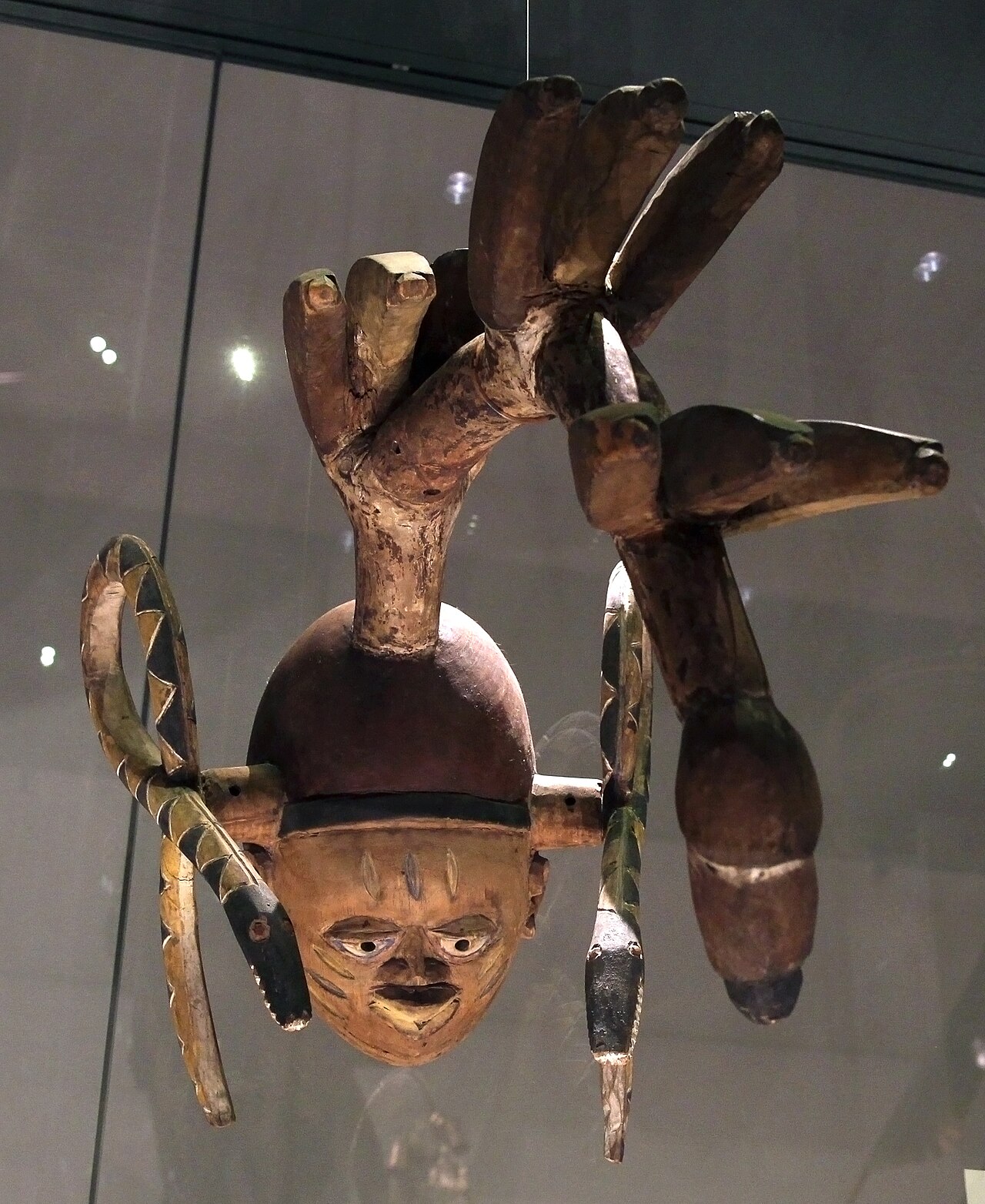
34Finally, the rituals reveal the African understanding of community. The individual is not an isolated unit but a member of a larger whole, and the rituals affirm this membership. They strengthen social bonds, they reproduce the community in each new generation, and they connect the present to the past and to the divine.
Sacred Arts and Ritual Performance
1The Art of the Sacred
2African religious life is expressed not only in words and actions but also in the visual and performing arts. The art of Africa is not art for art's sake but art for life's sake, created within the context of religious beliefs and practices and serving as a vehicle for the expression of religious values.
3The material objects of African art—statues, masks, crowns, staffs, and musical instruments—are not simply decorative items but tangible representations of the gods, ancestors, and spiritual entities, or objects made to honor or invoke them. They are often interactive, designed to be used in rituals and ceremonies, and they are believed to possess spiritual power.
4The aesthetic qualities of these objects are not separate from their religious functions. The beauty of the object reflects the power and goodness of the spiritual being it represents, and the skill of the artist is seen as a gift from God. The art is an expression of the community's religious vision, a way of making visible the invisible world and its powers.
5Museums in the West often display African art objects stripped of their cultural and religious contexts, presenting them as examples of "primitive art" to be appreciated aesthetically rather than understood religiously. This approach fundamentally misunderstands these objects, treating them as dead artifacts rather than as living participants in ongoing religious traditions.
6When viewed in their proper context, African art objects reveal themselves as sophisticated and meaningful expressions of religious experience. They are not primitive but complex, not decorative but functional, not separate from life but woven into the fabric of existence.
7Masks and Masquerades
8Masquerades are among the most striking and important forms of African religious art. The masquerade is not simply a performance but a sacred drama through which the community connects with the spiritual world, honors the ancestors, and maintains cosmic order.
9Masks represent a host of spiritual entities, including ancestors, gods, and animal tutelaries. They range from simple wooden carved masks to elaborate outfits made of animal skin, cloth, shells, leaves, beads, fur, and feathers. Some masks are recognizably human or animal, while others are unrecognizable as any terrestrial entity.
10The masquerade is a complex performance involving not only the mask but also the costume, the dance, the music, and the ritual context. The performer is not simply an actor but a medium, embodying the spirit represented by the mask and serving as a bridge between the human and spiritual worlds.
11The significance of the masquerade is not in the mask itself but in the performance. Many masquerading traditions make new masks every time the masquerade is performed, and old masks are often destroyed or discarded. The tradition is in the performance, not in the objects themselves.
12Among the Yoruba, the egungun masquerade represents the ancestors. The costume is made of shredded palm fronds, resembling a pile of hay. The masquerader embodies the ancestors, and the performance is an occasion for remembering and honoring the departed.
13Among the Guro of Côte d'Ivoire, three masquerades are performed, one of which (Gu) represents a female entity. Women are not allowed to dance the masquerade, but an elder female is charged with the ritual feeding of the mask, and drops of blood from the girls' circumcision ceremony are dropped on the mask to charge and feed its essence.
14Among the Fon of the Republic of Benin, the Zanbeto masquerade is associated with the secret society. The performer's regalia, covered in brightly colored straw, is believed to provide protection against the evil eye and malevolent spirits.
15Among the Mende of Sierra Leone, the Sande society uses masks in its female initiations. The Sowei mask represents the moral, spiritual, and aesthetic ideals of the society and female beauty. The diminutive size of the mouth and ears indicates that the ideal woman is not a gossip and does not listen to words of seduction.
16The masquerade is not a relic of the past but a living tradition that continues to evolve. Masquerades frequently incorporate masks that represent colonists, foreigners, and other contemporary figures. The themes portrayed are up-to-date and timely reflections of the lives of the performers and their audiences.
17Sculpture and Figural Art
18Sculpture is another important form of African religious art. Statues, figurines, and vessels serve multiple functions: they represent ancestors, store traditional medicines, embody spiritual powers, and protect and heal individuals.
19The minkisi (singular nkisi) of west-central Africa are among the most striking examples. These wooden anthropomorphic statues often include mirrors and have nails driven into them. The nails represent points of power, and the nkisi typically contains plant medicines and mystical objects whose properties indicate the characteristics of the spirit embodied by the figurine. For each request made of the nkisi, a nail is driven into it, and powerful nkisi are sometimes used as witnesses to oaths and pacts.
20The minkisi are living, ensouled beings, not simply objects. When displayed in museums without proper care, they pose ethical challenges, as they are, in effect, persons who deserve respect and proper treatment.
21Other African peoples have similar traditions. The boli sculptures of the Bamana are molded from clay, fabric, and other ingredients around a pouch of herbs that is said to "control the uncontrollable desires of men." The Tabwa of the Democratic Republic of Congo use carved wooden figurines to represent ancestral figures and to protect and heal individuals during sickness. The Yoruba create ibeji statuettes for deceased twins, representing the living twin's partner.
22These sculptures are not simply representations but tangible icons used to communicate with ancestors and ensure their presence in the lives of the living. They are active participants in the religious life of the community, not passive objects of aesthetic appreciation.
23Beadwork and Textiles
24Beadwork and textiles are another important form of African religious art. The colors and patterns of beads and cloth convey meaning, and the objects themselves are believed to possess spiritual power.
25The beadwork of the Zulu and Xhosa of southern Africa is particularly renowned. Beads are used to create necklaces, earrings, and bracelets that protect the wearer from malevolent supernatural forces. The patterns and colors communicate the wearer's marital status, social rank, or spiritual state. Beads are also used to adorn skirts, shirts, vests, and aprons with complex designs.
26In West Africa, the Yoruba are also renowned for their beadwork. The ade (crown) of the Yoruba kings is a magnificent beaded work of art that is said to contain the mystical powers of sacred entities and to transmit this sacred power to the king. The intricate arrangement of birds on top signifies the female power of mothers and witches, and the curtain of beads that hides the king's face provides a barrier between the power of the king's gaze and the public.
27The kente cloth of the Asante people of Ghana is world famous for its bright colors and intricate geometric designs. This cloth, made by hereditary craftsmen, is often given as a gift for religious occasions, such as birth, naming, and marriage celebrations. The colors and patterns convey meaning, and the cloth is chosen to correspond to specific events.
28Music, Dance, and Performance
29Music and dance are integral parts of African religious life. Religious ceremonies are almost always accompanied by singing, drumming, and dancing. The music is not simply entertainment but a language that speaks to the deities and sacred beings, summoning them to enter the ritual space and participate in the ceremony.
30The chanting of priests and the musical accompaniment, usually played on drums, communicate in a mystical language that the deities understand and to which they feel compelled to respond. The voice of the priest or priestess has been endowed with mystical power, due to the exalted spiritual status achieved during initiation.
31Dancing is also a form of religious expression. Possession by spirits is often induced through rhythmic dancing, and the possessed person enters a trance state in which they are "mounted" by the spirit. The dance is not simply movement but a means of entering the spiritual realm and establishing contact with the deities.
32Music and dance also serve to strengthen community solidarity. The shared experience of singing, drumming, and dancing together creates a sense of unity and belonging that transcends individual differences.
33The Body as Art
34Body art and style are also expressions of African religious identity. Body painting, scarification, hairstyles, and clothing all convey religious meaning and significance.
35During initiations, body painting is common, with circles, lines, and spots made with vegetable and mineral paints to indicate the power of the spirits. Ritual cuts are often made in the skin of the head, face, arms, torso, and legs, introducing medicines into the body and serving as decorative modifications. Among the Yoruba, the iron tools of the orisa Ogun are used in this process, demonstrating the transformative power of the deity.
36Hairstyles often indicate the god to whom a person is dedicated. In West African traditions, initiates have their heads shaved during the course of initiation and then later wear hairstyles indicative of the god. Among the Mende, hair style is one of the most important aspects of womanhood, with new initiates having their hair pulled up and piled on top of their heads in a knot that mimics sacred Sande masks.
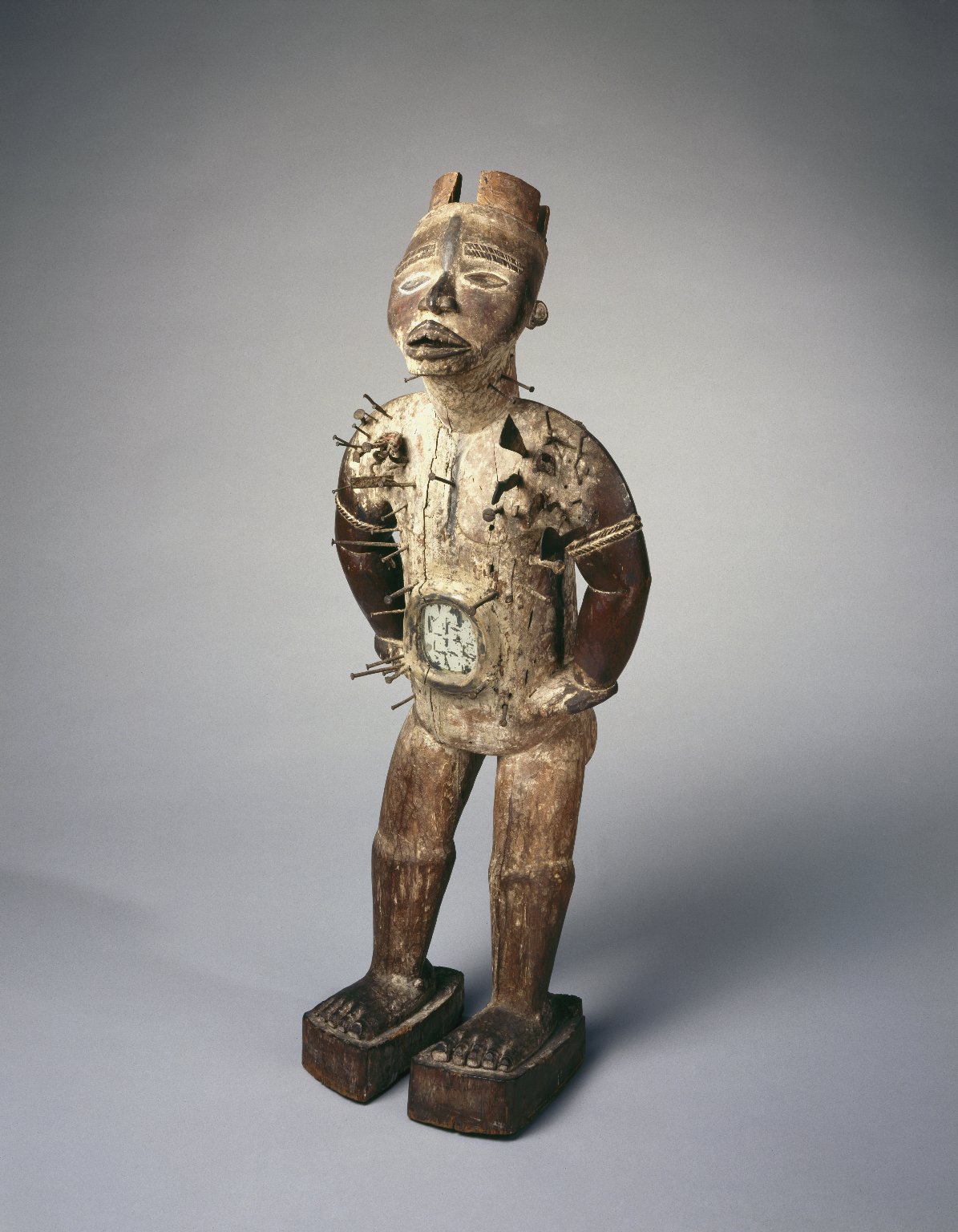
37Clothing also plays a role in African religious expression. Initiates wear specific outfits at various stages during initiation; brides wear elaborate garments; Ifá initiates in Nigeria are usually required to wear only white for at least a year after initiation.
Religious Specialists
1The Role of Specialists
2In African societies, certain individuals are recognized as religious specialists—people who have special knowledge, power, and authority in matters of the sacred. These specialists include medicine-men, diviners, mediums, rainmakers, kings, priests, and prophets. They play a crucial role in the religious life of the community, serving as intermediaries between the human and spiritual worlds, diagnosing and treating illness and misfortune, and maintaining the cosmic and social order.
3Religious specialists are distinguished from ordinary people by their training, their knowledge, and their power. They have undergone rigorous preparation to acquire the skills and information necessary for their work, and they are believed to have access to sources of power that are not available to ordinary individuals.
4The role of the specialist is both practical and symbolic. In practice, they heal the sick, identify the causes of misfortune, and provide protection against evil. Symbolically, they embody the religious values of the community and serve as living examples of the relationship between the human and the divine.
5The term "specialists" is preferable to other terms like "witch-doctors" or "medicine-men," which carry derogatory connotations. These individuals are not witch-doctors but healers, not primitive medicine-men but respected members of the community.
6Medicine-Men and Healers
7Medicine-men (and women) are the most common and useful source of help in African communities. They are the friends of the community, accessible to everyone, and available almost all the time. They come into the picture at many points in the life of individuals and communities.
8The calling to become a medicine-man comes in various ways. Some are called by spirits or the living-dead through dreams, visions, or waking experiences. Others inherit the profession from their fathers. In some cases, a young person feels drawn to the work and asks a medicine-man to teach him.
9Training involves learning about the medicinal value of different herbs, leaves, roots, barks, grasses, and various objects; the causes, cures, and prevention of diseases and other forms of suffering; the nature of magic, witchcraft, and sorcery; the nature and handling of spirits and the living-dead; and various secrets that are not divulged to outsiders.
10The duties of medicine-men are many and varied. They diagnose and treat illness, which in African societies is generally believed to be caused by the ill-will of one person against another through the agency of witchcraft and magic. They discover the cause of sickness, find out who the criminal is, diagnose the nature of the disease, apply the right treatment, and supply a means of preventing the misfortune from occurring again.
11Medicine-men take preventive measures against misfortune, supplying people with counter-measures against magic, witchcraft, sorcery, evil-eye, and bad words. They give aid to increase productivity, advising on how to win more love, prosper in business, pass examinations, and bear children. They purge witches, detect sorcery, remove curses, and control spirits and the living-dead.
12Medicine-men are also involved in harmful practices, but this is not a defining feature of their profession. On the whole, medicine-men are trustworthy, morally upright, friendly, willing, and ready to serve. They are the friends, pastors, psychiatrists, and doctors of traditional African villages and communities.
13Diviners and Mediums
14Diviners are specialists who link human beings with the living-dead and the spirits, receiving messages from the spiritual world and passing on the information to their communities. Through their work, hidden knowledge is revealed, the causes of misfortunes are identified, and remedies are prescribed.
15Divination is an integral part of African religious practice, using intricate tools, vast oral repertoires, and complex worldviews. There are countless divinatory methods in African societies. Some use consecrated objects which the diviner casts and interprets. Other techniques involve the diviner speaking from an altered state of consciousness through which the gods or ancestors speak.
16The Ifá divination system of the Yoruba is one of the most highly developed. It uses a divining chain onto which nutshells are attached, or palm nuts passed from one hand to another. After each cast, a mark is made in the wood powder spread across the divination tray, creating a pattern of binary data that provides a "call number" for one of the odù in the Ifá corpus.
17There are sixteen main odù, and each has sixteen subchapters, for a total of 256 possibilities. Each odù is a collection of poems, myths, proverbs, and remedies that the diviner has memorized. The diviner recites the relevant poetry, and the client identifies which oral texts seem relevant to their situation and discloses their problem.
18Among the Fon, the same system is known as Fa. This system, which relies on a rigorously ordered body of sacred texts rather than possession, was encouraged by King Agadja when he outlawed the more unpredictable forms of divination based on possession. This decision reflects the political dimension of divination, as forms that are more predictable and subject to control are easier to regulate.
19Mediums are a special type of diviner who allow themselves to be "possessed" by spirits. During possession, the individual loses control of their senses and becomes an instrument of the spirit. They can be led to act and speak according to the wishes of the spirit, seemingly without hurting themselves. Useful information is obtained from the spiritual world, and the medium serves as a radio-set functioning between two termini: the source (spirit or divinity) and the recipients (the diviners, medicine-men, or priests).
20Training for mediums is often lengthy and rigorous. Among the Fon and Yoruba, the novice goes into seclusion for several years, learns a new language, receives a new name, and is completely transformed. The training involves the imitation of death and resurrection, and the novice emerges as a new personality dedicated to the service of the spirit.
21Rainmakers
22Rain is one of the most important blessings in African life, and rainmakers are among the most important specialists in many societies. They are believed to have the power to "make" rain and to "stop" rain when it comes too much.
23Rainmakers are generally men, though there are women rainmakers, as exemplified by the rain-queen of the Luvedu in South Africa. Their work is not only to make rain but to stop rain when it comes in a short time or not welcome, and they are consulted by couples who request them to stop rain during their wedding parties.
24Rainmakers are well versed in weather matters, having long periods of acquiring their knowledge from other rainmakers, observing the sky, and studying the habits of insects and animals. They know when to attempt to make rain, and they keep their eyes fixed on the sky, not only to study weather conditions but also to pray to God as the Giver of rain.
25The methods of rainmaking vary. They include the use of sacred objects, especially "rain-stones," burning of leaves or other combustibles, ceremonial sprinkling of water, drawing from special or sacred wells, and collecting perspiration. Those engaged in rainmaking are often in a state of ritual purity, abstaining from sexual relations and observing various taboos.
26Rain is seen as a deeply religious rhythm, coming from God and linking the past, present, and future generations. Rainmakers are thus mediators of divine blessing, soliciting from God what the people need for their survival and prosperity.
27Kings and Rulers
28In African societies where there were traditional kings, queens, and chiefs, these rulers were not simply political heads but mystical and religious heads, the divine symbols of the people's health and welfare. They were the shadow or reflection of God's rule in the universe.
29Rulers were regarded as God's earthly viceroys, given highly elevated titles such as "saviour," "protector," "child of God," "lord of the earth and sky." People thought that they could do what they wanted, having control over the world, and they were linked as divine incarnations or as originally coming from heaven.
30This sacred position of rulers meant that they were not ordinary people. They took meals alone, their eating and sleeping were not mentioned, they did not touch the ground with their feet, and parts of their hair and nails were buried where they would not be seen by ordinary people or used in malicious ways.
31The health and prosperity of the king symbolized the welfare of the nation. When the king died, the rhythm of life stopped, and there was a period of upheaval until a new king was installed. In some societies, the king was killed when he grew old, became sick, or had an unsatisfactory reign.
32Rulers had special insignia that symbolized their sacred office. At their coronation, they received royal drums, scepters, and robes, often of leopard or lion skins, symbolizing power and strength. Thrones varied considerably in shape and composition, some covered with gold, beads, ostrich feathers, horns, barkcloth, and beads. Sacred fire was associated with the king, and at the death of a ruler and the installation of a new one, the fire was extinguished and relit.
33Priests and Prophets
34Priests are religious servants associated with temples, shrines, and sacred groves. They are devoted to God or the divinities, and they receive training and service for their office. Their duties include performing sacrifices, offerings, and prayers, conducting public and private rites and ceremonies, giving advice, performing judicial or political functions, and caring for temples and shrines.
35Training for the priesthood involves seclusion from the world, instruction in the laws, and sometimes possession. The vocation is highly honored, and it is generally open to both men and women. Priests are the depositories of national customs, knowledge, taboos, theology, and even oral history.
36Priests are also involved in non-spiritual matters like hunting, blacksmith work, and social activities. On the whole, they are men and women of respectable character: trustworthy, devout, obedient to the traditions of their office, friendly, kind, and religious.
37Prophets are a special type of specialist, though they are rare in traditional African societies. The lack of a future dimension in African concepts of time may explain why there has not been a strong prophetic tradition. However, as the future dimension is discovered and extended, prophets are beginning to emerge, especially among independent Christian churches.
38National heroes and founders sometimes become the focus of religious attention, serving as intermediaries between the people and God. The Shilluk hero Nyikang, the Sonjo hero Khambageu, and other similar figures are closely associated with God, and prayers, offerings, and sacrifices are addressed to both God and the hero as if there were no clear distinction.
Mystical Power, Magic, and Witchcraft
1The Reality of Mystical Power
2African peoples believe that the universe has a power, force, or energy permeating it, in addition to the ontological categories we have discussed. This mystical power is real and experienced, and it affects everyone—for better or for worse, particularly in its manifestation as magic, sorcery, and witchcraft.
3The belief in mystical power is not a primitive superstition but a profound conviction that has shaped African life for centuries. It is a reality that people encounter in their normal lives, and it is a force with which they must reckon. The stories of mystical power are not simply fictional but are recounted as actual experiences, and they have a profound impact on how people understand themselves and their world.
4The belief in mystical power is found in every African society, and it is expressed in various ways. It is experienced in words, especially those of a senior person to a junior one, in terms of age, social status, or position. It is manifested in the power of curses and blessings, in the ability to cause harm or good from a distance, in the power to change into animals, and in the ability to see into secrets and hidden information.
5The Nature of Magic
6Magic is the use of mystical power for human purposes. It is generally classified under "good magic" and "evil magic." Good magic is accepted and esteemed by society, used for the welfare of the community in counteracting misfortune, treating diseases, and warding off evil. Evil magic involves the belief and practice of tapping power to do harm to others.
7Good magic is used by the specialists—medicine-men, diviners, and rainmakers—who use their knowledge and manipulation of mystical power for the good of society. They provide people with protective objects like charms, amulets, and powders. They perform rituals to cleanse people or homesteads that have been subjected to attacks from mystical power. They give medicines to cure or "cool" those who are believed to use that power for evil purposes.
8Objects of good magic are found everywhere in African homes: forked posts in the middle of the compound, pieces of pot on the roof, ashes strewn across the gate, horns sticking out of the ground, gourds hanging on trees, beads around the neck. These objects symbolize protection, good health, and prosperity.
9Evil magic involves the use of mystical power to harm others. It is associated with sorcery and witchcraft, and those who practice it are feared and hated by their communities. They send snakes or other animals to attack their enemies, carry diseases to them, dig up graves to use human flesh or bones in their practices, and invoke spirits to attack someone.
10The distinction between magic and religion is not sharp. Good magic merges with religion, and the two cannot be clearly separated. The medicine-men who use good magic often pray to God and the ancestors, acknowledging that the power they tap ultimately comes from God. This is a point of contact between the two dimensions of African religious life.
11Witchcraft and Sorcery
12Witchcraft is the inherent power by means of which individuals can cause harm to others. Witches are generally women, though men may also be witches. They are people with an inherent, often hereditary, power that they may or may not realize they possess.
13The beliefs about witchcraft are widespread and deeply held. Witches are believed to be able to abandon their bodies at night and meet with other witches, to "suck" or "eat" the souls of their victims, and to cause illness, misfortune, and death. They are suspected of being witches because they seem to be doing inexplicably better than their neighbors, or because they are marginal people—widows, the elderly, outsiders, or people who isolate themselves.
14Sorcery involves the use of technical means—poisonous ingredients, magical objects, incantations—to cause harm. Sorcerers are believed to use these means intentionally, and they are therefore more culpable than witches. The distinction between witchcraft and sorcery is an academic one; in popular usage, the terms are often used interchangeably.
15Both witches and sorcerers are believed to be motivated by envy, jealousy, or anger, and they are the incarnation of moral evil. They work against the community, using their powers for selfish and destructive ends. Their activities are considered the most serious offenses against the social and moral order.
16The fear of witchcraft and sorcery is intense and widespread. People protect themselves against these forces through the use of charms, amulets, and medicines. They consult specialists to counteract the evil effects of mystical power. They accuse others of practicing witchcraft and sorcery, and they punish those who are found guilty.
17The Social and Psychological Dimensions
18The belief in mystical power, magic, witchcraft, and sorcery has profound social and psychological dimensions. It provides explanations for misfortune that make sense within the African worldview. It offers a way to understand suffering that does not simply accept it as random or natural but identifies it as caused by the actions of others.
19This belief also serves to regulate social behavior. The fear of accusation and punishment acts as a deterrent against antisocial behavior. The belief that others may be using mystical power against you encourages careful behavior and respect for social norms.
20However, the belief also creates tensions. The atmosphere of suspicion and fear is a source of anxiety and stress. Accusations can be used to settle scores or to persecute the innocent. The fear of witchcraft can lead to witch-hunting and violence, as communities seek to identify and punish those who are believed to be causing misfortune.
21The belief in mystical power is not simply an irrational superstition but a coherent system of explanation that addresses the fundamental questions of human existence. It provides a way of understanding suffering, of maintaining social order, and of seeking protection against the dangers of life.
22The Contemporary Context
23The belief in mystical power continues to shape African life in the contemporary context. It is a force that must be reckoned with in understanding modern African society, including its political, economic, and social dimensions.
24Politicians are often believed to use mystical power to gain and maintain power. Their successes, which seem inexplicable given the challenges they face, are attributed to their use of magical and occult forces. This belief is not simply a popular superstition but a serious force that shapes political attitudes and behavior.
25The film industry, particularly in Nigeria, has popularized themes of witchcraft, presenting them in ways that both reflect and shape popular beliefs. These films depict female witches who use their powers to ransom or spoil the destiny of individuals, especially relatives, and sometimes as avengers of the evil perpetuated by the male elite.
26The belief in witchcraft has also led to serious human rights abuses. Children, orphans, and the poor are often accused of witchcraft and persecuted. In some cases, they are cast out, beaten, abused, and killed because they are believed to be witches. This is a tragic consequence of the belief in mystical power, and it demands serious attention.
27Despite these problems, the belief in mystical power is likely to persist. It provides a way of understanding the world that is deeply rooted in African thought, and it addresses needs that other systems do not meet. As long as people experience misfortune that cannot be explained by ordinary means, the belief in mystical power will continue to provide a compelling explanation.
Christianity in Africa
1The Ancient Church in Africa
2Christianity has been present on the African continent for nearly as long as the religion has existed. Africa is not simply a mission field but a cradle of Christianity, with deep historical roots that have shaped the development of the faith from its earliest centuries.
3The ancient church in Africa was centered in the Christian kingdoms of Ethiopia and Nubia, the Coptic church of Egypt, and the Roman provinces of North Africa. These were dynamic forms of Christianity, producing great scholars and theologians like Tertullian, Origen, Clement of Alexandria, Augustine, and Athanasius. African Christianity made a great contribution to Christendom through scholarship, participation in Church councils, defense of the Faith, monasticism, theology, translation and preservation of the Scriptures, martyrdom, and liturgy.
4The expansion of Islam in the seventh century and later centuries checked not only the expansion but the very existence of African Christianity. The ancient Church in Africa was greatly reduced, surviving only in Ethiopia and Egypt. In these countries, Christianity has kept its identity both as a universal faith and as an indigenous religion. The Coptic Church and the Ethiopian Orthodox Church are truly "African" in the sense that their features have evolved over centuries and have not been imposed from outside.
5The Ethiopian Orthodox Church is characterized by frequent fasts and feasts, a great place given to the Virgin Mary, a rich liturgy, observance of many saints, a powerful but rarely well-educated clergy, and a Monophysite theology. It is integrated into the life of the nation, and its history and imperial history are intricately involved.
6The Missionary Expansion
7The nineteenth century saw the beginning of a new phase of Christian expansion in Africa, this time from Western Europe and North America. Missionaries from Britain, the United States, and continental Europe penetrated into the interior of Africa, establishing churches, schools, and hospitals.
8The missionary expansion was not simply a religious phenomenon. It was closely associated with colonialism, and the image of Christianity was colored by colonial rule and the Western culture that came with it. The missionary work was carried out by devout and sincere individuals, but they were not theologians, and they were not prepared to face a serious encounter with either traditional religions or the rapid changes taking place in Africa.
9Mission Christianity did not go deep into African religiosity. For many Africans, it was simply a set of rules to be observed, promises to be expected in the next world, and a few outward forms to be followed. It was a Christianity active only on Sundays and perhaps once during the week, not a religion that occupied the whole person.
10The cultural dimension of mission Christianity was also problematic. Missionaries brought not only the Gospel but a whole complex of Western culture, and they expected converts to adopt this culture as well. The Akan became Christian by cleaving to the new order introduced by the missionary rather than by working out their salvation within their traditional religious milieu. This approach has been criticized for failing to incorporate the ancestors, witches, song, and dance into the Christian scheme.
11Independent Churches
12One of the most important developments in African Christianity is the rise of independent churches. These are churches that have broken away from mission churches and from one another, seeking to establish forms of Christianity that are more authentically African and that respond more fully to the spiritual needs of their members.
13The independent church movements are an attempt by African peoples to "indigenize" Christianity and to interpret and apply it in ways that render it practical and meaningful to them. They provide a place where African Christians can feel at home in their faith, where they can freely shed their tears, voice their sorrows, present their spiritual and physical needs, and empty their selves before God.
14The causes of separatism are many. The missionary control over African converts and congregations was a major factor, as Africans rebelled against being ruled by Europeans and Americans in ecclesiastical matters. The scandal of division in Protestant mission churches also set an example to African converts, leading them to start their own churches free from missionary domination.
15Clashes of personality and leadership between missionaries and African Christians also precipitated breakaways. But perhaps the most fundamental cause is that mission Christianity has not penetrated deeply enough into African religiosity. African Christians feel that they do not get enough religion from a Christianity that does not fill up their whole life, and they seek in independent churches a more complete religious experience.
16Independent churches emphasize revelation and healing, forbid the use of European medicines, and teach their followers to depend entirely on God's power through prayer and healing services. Revelation comes through dreams and visions, and during worship services people seek to be possessed by the Holy Spirit. The literal interpretation of the Bible is common among these churches.
17The independent church movements are an important feature of Christianity in Africa. They demonstrate the creative capacity of African Christians to adapt their faith to local conditions, and they provide a way of being Christian that is more continuous with traditional African religiosity. While some independent churches have incorporated traditional practices that are clearly not Christian, others have maintained a high standard of Christian faith and life.
18Contemporary Christianity
19Mission Christianity continues to be a significant force in Africa, especially in its organizational expansion. It bears the stigma of colonialism, foreignness, westernism, and paternalism, but it also has strengths: organization, institutionalism, links with the historical traditions of Christendom, financial resources, personnel from overseas, an increasing ecumenical concern, and a deliberate attempt to relate Christianity to modern problems in Africa.
20Despite its weaknesses, mission Christianity has also made contributions. It has provided formal education, medical care, and humanitarian services. It has produced African converts who have gone on to become leaders in their communities and nations. It has developed a strong team of local and overseas workers.
21The ecumenical movement has made progress in Africa, with the All-Africa Conference of Churches and other organizations working toward unity among Christians. African Christians are increasingly aware of the ecumenical movement and are probably more ready to plunge into its practical demands than are overseas churches.
22Statistics suggest that Christianity is growing rapidly in Africa. It is estimated that there are between fifty and seventy million Christians in Africa, and the number is growing. Christianity is well established in Africa, and it is likely to continue to grow and develop.
Islam in Africa
1The Establishment of Islam
2Islam has been present on the African continent for even longer than Christianity, having swept across the whole of northern Africa within a century of the death of the Prophet Mohammad in 632 CE. It engulfed the Horn of Africa stretching southwards along the east coast, and where it encountered Christianity there was a prolonged battle until it firmly established itself almost everywhere.
3Through trade routes and commercial transactions between west African states and the Muslim north, Islam began to penetrate in a southerly direction into west African societies, especially those on the fringe of the Sahara, from as early as the ninth century. In the Sudan region, Islam moved from the east to the west through Arab traders and conquerors, eventually replacing Christianity in the region.
4Islam arrived on the east coast of Africa in the seventh century, where there were already Arab settlements and flourishing trade. It was confined to the coast until the eighteenth and nineteenth centuries, when Arab trade in ivory and slaves went further into the interior. The Portuguese arrival at the end of the fifteenth century, and their subsequent clash with the Arabs, checked the spread of Islam for a time.
5Today, Africa is predominantly Muslim in the areas approximately north of the tenth parallel, stretching eastwards from Senegal to the Sudan and including the east coast as far south as Mozambique. Over forty percent of the population of countries like Senegal, Mauritania, Gambia, Niger, Chad, Northern Nigeria, and the Sudan are Muslim, with the percentage rising above ninety in the Muslim states of Saharan and northern Africa.
6The Character of African Islam
7Islam in Africa is not simply a copy of Middle Eastern Islam but a distinctly African version of the faith, incorporating many elements from traditional African religions. The impact of Islam on African society has been complex, with some elements being embraced, others being rejected, and still others being transformed in the process of adoption.
8In many African societies, conversion to Islam has been more social than religious. People have adopted Islamic forms and practices while retaining the beliefs and attitudes of their traditional religions. For example, the Wolof of Senegambia retain many traditional concepts and practices, including the fear of praising a child, the belief in spirits and the living-dead, and the practice of divination combining traditional methods with Islamic almanacs.
9The amulets worn by African Muslims are a clear example of this syncretism. These protective adornments consist of both a written and graphic component—the written part may be a verse from the Qur'an or a passage from Islamic divination manuals, while the visual component may include magic squares or planetary references. Such creations are acceptable because it is Allah, his angels, and the good jinn who empower them.
10Marriage and funeral ceremonies follow a mixture of both traditional and Islamic procedures. In matters of inheritance, traditional practices often prevail against Islamic law. The observance of Islamic obligations is often partial, with people keeping some of the five pillars but neglecting others.
11Spirit cults continue to survive among African Muslims. Spirit-possession is still practiced, especially by women, and the cults of possession provide relief from afflictions that are not remedied by Islam. Traditional heroes and forefathers are assimilated into Muslim concepts, with saints and heroes taking on the role of intercessors between God and men.
12The Spread and Influence of Islam
13The spread of Islam in Africa has been facilitated by various factors. Trade has been the most important, as Muslim merchants established commercial networks across the continent. Colonial rule also helped the spread of Islam, as colonial governments did not seek to disestablish Islam and in some cases even helped Muslim subjects to build mosques and schools.
14The Sufi orders have been particularly important in the spread of Islam. The Qadiriyyah and Tijaniyya orders gained enormous followings throughout West Africa, and the Mouride brotherhood in Senegal, established by Sheikh Amadou Bamba, has become a major force in African Islam. Sufism, with its emphasis on charismatic prayer, dance, music, and healing, has been able to incorporate practices that echo traditional African cultural practices and worldviews.
15In recent years, the Ahmadiyyah movement, a dynamic reformist sect, has been making rapid growth in West and East Africa. Founded by Ghulam Ahmad in the nineteenth century, the movement is missionary-oriented and has been winning an African following, especially through schools and the translation of the Qur'an into African languages.
16The fundamentalist Wahaabism, which has spread from Saudi Arabia through trade, diplomacy, and evangelism, has also made inroads, promoting a more radical, literalistic form of Islam. This has contributed to a radicalization and militarization of Muslim involvement in African public life.
17Islam and Traditional Religion
18The encounter between Islam and traditional African religions has been complex. On the level of purely religious beliefs and practices, Islam has done little to add to or alter African religiosity radically, except in the ritual side where Islamic practices have introduced new forms. Deeper issues of great value remain basically traditional, even if they gain an Islamic guise.
19The concept of God is a point of contact, as Africans find their traditional concepts of a Supreme Being easily assimilated into the Islamic emphasis on the oneness of God. The position of Muhammad, however, is more difficult, as Africans find it impossible to relate this figure to anything in their traditional concepts.
20The recognition of spirits and mystical forces is another point of contact, as Islam does not ask its adherents to abandon their accustomed confidence in these forces. Traditional heroes and forefathers are accommodated into the Muslim concept of saints, and the cult of the living-dead persists in a different guise.
21Despite these accommodations, the relationship between Islam and traditional religion is not without tension. Reformist movements have sought to purify Islam of traditional elements, and the conflict between Islamic and customary law has created tensions in many areas. The future of Islam in Africa will depend on how it manages these tensions.
African Religions in the Modern World
1The Legacy of Colonialism
2The colonial era had a profound impact on African religions, undermining traditional institutions and values while introducing new ones. The rapid changes that occurred during this period disrupted traditional solidarity, leaving a vacuum that neither Christianity nor Islam has been able to fill fully.
3The European conquest of Africa, formalized at the Berlin Conference of 1885, exposed African peoples to the changes taking place elsewhere. European ownership of Africa meant the arrival of European settlers, businessmen, colonial administrators, the founding of new cities, the construction of railways and roads, and the introduction of new laws and economic systems.
4European medicine and knowledge of hygiene began to reduce infant mortality and put diseases under control, leading to increased population and new problems. The physical expansion of Europe into Africa exposed African peoples to the changes taking place elsewhere, and European culture was substituted for African culture in many respects.
5The economic transformation was also profound. A primarily money economy was introduced, involving earning and spending money with all the dangers, temptations, difficulties, and risks that go with it. Cash crops were grown, and people worked for money in all sorts of employment.
6These changes had a profound impact on traditional religions. The traditional foundations of African societies have been shaken, and everyone—whether in the village or in the city, whether Christian or Muslim—has been exposed to the dilemmas of the changing situation. Traditional religions have been undermined but not overthrown, and they continue to exert a great influence upon individuals and communities.
7Contemporary Challenges
8African societies today face a range of challenges. Political instability is a persistent problem, as nations struggle to establish stable governments and manage ethnic tensions. The rapid urbanization of the continent has created new problems of housing, unemployment, and social dislocation. The growth of cities has led to the breakdown of traditional social structures and the emergence of new forms of social organization.
9Economic challenges are also significant. African nations are increasingly dependent on economic aid from richer and industrialized countries, and they face the challenge of developing sustainable economies that can provide for their people. The gap between the rich and the poor is growing, creating discontent and social tensions.
10Social and moral problems are also widespread. The traditional solidarity that gave meaning and security to individual life has been disrupted, and new forms of solidarity have not yet emerged. Crime, corruption, and other forms of social disorder are common. The family is in transition, with the extended family giving way to the nuclear family, and the authority of parents and elders being challenged.
11Religious challenges are also significant. African peoples are caught between their traditional religions, Christianity, and Islam, each of which makes competing claims on their allegiance. They are searching for new values, identity, and security, seeking to adapt their religious traditions to the challenges of modern life while maintaining continuity with the past.
12The Search for Values, Identity, and Security
13The contemporary religious landscape in Africa is marked by a search for new values, identity, and security. The traditional foundations of existence have been shaken, and new foundations have not yet been established. People find themselves caught between two worlds—the world of their ancestors, with its deep roots and firm traditions, and the world of modernity, with its promises and dangers.
14The religious turbulence of contemporary Africa reflects this search. Conversion, counter-conversion, and apostasy are common as people move between traditions, seeking the religion that best meets their needs. Acculturation is also widespread, as Christianity and Islam are adapted to African cultural settings, producing hybrid forms of religious expression.
15The independent church movements are one response to this search. These churches attempt to indigenize Christianity, to make it relevant to African spiritual needs, and to provide a sense of community for those who have been uprooted by social change. They are a creative response to the challenges of modern life, offering new forms of solidarity and meaning.
16The ideological movements of contemporary Africa—Negritude, African Personality, African socialism—are another response. These movements seek to define African identity and values, to recover the richness of African cultural heritage, and to establish new foundations for social and political life.
17The search for values, identity, and security is the defining challenge of contemporary African religious life. It is a search that will continue for generations, as African peoples seek to navigate the transition from the old world to the new.
18The Global Dimension
19African religions are increasingly becoming a global phenomenon. Through the forced migration of the slave trade, African religious traditions traveled to the Americas, giving birth to vibrant diaspora traditions such as Candomblé in Brazil, Vodou in Haiti, and Regla de Ocha in Cuba. These traditions have preserved African spiritual heritage while adapting to New World conditions, and they are increasingly recognized as important religious systems in their own right.
20The African diaspora continues to be a source of religious creativity. In the United States, African immigrant religious communities are growing rapidly, establishing churches and mosques that serve the spiritual and social needs of African immigrants. These communities are also influencing American religious life, bringing African styles of worship and spirituality to a wider audience.
21The impact of African religions is not limited to the African diaspora. European and American converts to African and African-derived religions are becoming more numerous, as people from diverse backgrounds seek the spiritual richness and vitality of African traditions. The appeal of African religion is global, and it is likely to continue to grow.
22African religions are also becoming more visible in the global media. The rise of Nigerian cinema (Nollywood) has brought African religious themes to a worldwide audience, while social media has allowed African religious leaders to reach followers around the globe. The digital dimension of African religion is growing, creating new forms of community and participation.
23The Future of African Religions
24The future of African religions is likely to be characterized by diversity and dynamism. Traditional religions will continue to evolve, adapting to new conditions while maintaining continuity with the past. Christianity and Islam will continue to grow, but they will also be Africanized, taking on forms that are more continuous with African cultural and religious traditions.
25The independent churches are likely to continue to grow, as they offer forms of Christianity that respond more fully to African spiritual needs. The charismatic and Pentecostal movements will also continue to expand, offering dynamic and experiential forms of faith.
26The relationship between African religions and the forces of modernity will be complex. Globalization, secularization, and the spread of scientific worldviews will challenge traditional beliefs, but they will also create new opportunities for religious expression. African religions will continue to adapt, finding new ways to address the challenges and opportunities of the modern world.
27African religions will also continue to make an impact on the global religious landscape. As the African population grows and the African diaspora spreads, African religious traditions will become more visible and influential. They will contribute to the ongoing process of religious hybridization, enriching the world's spiritual heritage with their distinctive insights.
28Ultimately, the future of African religions is a story of resilience, creativity, and transformation. It is a story that deserves attention and respect, for it reveals the depth and vitality of the human religious spirit in the face of challenge and change.
Conclusion
1African Religions and the Human Story
2The story of African religions is the story of human beings grappling with the ultimate questions of existence—the nature of reality, the meaning of life, the origin of suffering, the possibility of hope. It is a story that has unfolded over millennia, in countless diverse contexts, producing a rich tapestry of beliefs, practices, and institutions.
3At the heart of African religions is a profound conviction that the universe is fundamentally spiritual in nature. It is a universe charged with meaning and power, a universe in which the visible and invisible, the material and spiritual, the human and divine are not separate but interpenetrating dimensions of existence. This conviction shapes everything about African religious life: the cosmology, the rituals, the social order, and the understanding of the individual's place in the cosmos.
4African religions offer profound insights into the nature of the divine, the structure of reality, and the destiny of the human person. They remind us that religion is never merely a set of beliefs but a way of life, a pattern of participation in a world of meaning. They demonstrate the resilience of human spirituality in the face of adversity and the creative capacity of peoples to adapt and innovate even under the most challenging circumstances.
5The encounter with Christianity and Islam has not diminished African religions but transformed them, giving rise to new forms of religious expression that are both African and global. The independent churches, the Pentecostal movements, the Sufi orders, the diaspora traditions—all testify to the ongoing vitality of African religious creativity.
6The contemporary challenges of African religious life—the search for values, identity, and security; the tension between tradition and modernity; the negotiation of religious pluralism—are challenges that resonate with people around the world. In an era of rapid change, uncertainty, and dislocation, African religions offer resources for navigating the transition from the old world to the new, for maintaining continuity while embracing innovation, for finding meaning and purpose in the face of upheaval.
7The global dimension of African religion is increasingly important. The African diaspora has carried African religious traditions to every continent, and these traditions continue to evolve and adapt, influencing the spiritual landscape of the world. The growing visibility of African religions in the global media and the increasing number of converts from diverse backgrounds are signs that the world is taking notice of what Africa has to offer.
8As we have seen, African religions are not simply a matter of belief but of practice, not simply individual but communal, not simply local but global. They are complex and sophisticated systems that deserve to be understood in their own terms, not dismissed as primitive or superstitious. They are living traditions that continue to evolve and adapt, meeting the changing needs of their adherents.
9The study of African religions is thus an essential part of the study of humanity. It reveals the depth and richness of human spiritual experience, the diversity of ways in which people have made sense of their existence, and the resilience of religious traditions in the face of challenge and change. It challenges us to think more broadly about what religion is, what it does, and what it means to be human.
10African religions remind us that the sacred is not a separate realm but is woven into the fabric of existence. They remind us that we are not isolated individuals but members of a larger community, connected to the past, to one another, and to the divine. They remind us that life is a journey, a pilgrimage from birth through death and beyond, a journey marked by ritual, meaning, and hope.
11In the end, African religions tell us something essential about what it means to be human: to be religious is to be part of a story that transcends our individual lives, a story that connects us to the ancestors and to those yet to be born, to the earth and the sky, to the visible and the invisible, to the divine. It is a story that continues to unfold, in Africa and beyond, and it is a story worth telling.