Part One: The Pharisee
A Short Man with Bandy Legs
The only physical description of Paul of Tarsus we have comes from a source of the sketchiest kind — a story written in Greek in the second century, seventy or eighty years after his death, in which a woman named Thecla listens to Paul preach in Pisidian Antioch, leaves her fiancé at the altar, follows him around the eastern Mediterranean while lions refuse to eat her, and baptises herself in a river. It is not history. It is the kind of legend written about famous people after the heroes of the biblical and classical traditions settled into their reputations, and it was rejected by some early Christians for its extravagances.
And yet it is the only surviving attempt to say what Paul looked like, and is worth attention not because it is true — it is not — but because it is a real attempt, by real people who had some reason to think they knew, to describe a man whose physical presence had apparently left an impression strong enough to be preserved in a story otherwise composed of pure invention.
He is small. The Greek word is mikros — not a giant, not a commanding figure, not someone you'd look at across a marketplace and remember. He has bandy legs. He has a prominent nose — Greek rhinos, joined with the word for "thick" or "large," so the impression is of a face dominated by a nose that drew the eye. His eyebrows meet — a feature in Mediterranean populations sometimes associated with intensity of expression. The text says he was "somewhat prominent in his look," a word meaning "distinctive" or suggesting a man whose overall presence was unusual, difficult to ignore even if you didn't like looking at him.
He is not the sort of man you'd stop on the road in the first century and ask for a conversation. He is not a statue waiting to be carved. By any ordinary measure he is somewhat forgettable in appearance.
This matters because Paul himself, in one of his letters, says something close to this — not the nose or the legs, but the general impression — and because the later tradition, for all its tendency to embroider, did not turn him into a majestic figure. It kept him small. Almost everything we have about him, including the letters, points the same way. He was not noble-looking, not an impressive speaker, not someone who won rooms by his presence. He won them by something else.
You could dismiss the physical description as legend and move on. That would be technically correct. It would also be a loss, because the legend tells us something the letters cannot say directly — not what he looked like, exactly, but how the later generation that remembered him chose to picture him. And they chose to make him physically unremarkable, even slightly awkward, someone whose face and legs drew attention to the fact that he was not quite what you expected.
In the ancient world, great men were often described as beautiful — the bodies of athletes and warriors and emperors were matters of public concern, and there were stories about what Alexander looked like, handsome, with a medusa on his neck, which is to say Alexander's historians had an agenda. But when that interest attached to Paul, it did not produce the conventional result. He was not handsome. He was not commanding. He was, in the most basic physical terms, somewhat odd.
What do you do with a man like that? You look for what was not physical, and you find it in the one source that does not lie about him — his own words.
The only major figure from the ancient world whose voice we can actually hear is the one we are writing about here. Not Alexander, who left no writings and whose biographers wrote centuries later. Not Julius Caesar, whose commentaries on the Gallic War are brilliant but written in the third person to shape how the Senate and crowds in Rome would see him. Not Jesus, whose words come to us through the Gospels, written decades after the fact by people with theological agendas and no pretence of having been present.
Paul left us his own writing. Not a biography, not a memoir, not a theological treatise addressed to posterity — seven letters, dictated in a hurry, mostly furious, occasionally tender, addressed to specific people about specific problems he was having with them. He never wrote a book. He never meant to be read by anyone not sitting in the room when the letter was read aloud. That accident — that the letters survived, were collected, copied, treasured, and eventually printed in the collection that became the New Testament — is the richest thing in this entire project. We can hear a first-century man losing his temper, defending himself, boasting about his scars, apologising, begging. We can hear a person.
You do not have to guess what he thought. You have what he wrote. He is present to us in a way no other major figure from the ancient world is present.
The seven letters universally accepted as his are: Romans, 1 and 2 Corinthians, Galatians, Philippians, 1 Thessalonians, and Philemon. They are not the most systematic writings in the New Testament, and not the ones people interested in Paul's views on church structure or the conduct of women usually go to first. They are, however, the only letters serious scholars agree he wrote himself, and they are the letters you should read before you decide anything else about him.
They were written over roughly fifteen years, somewhere in the range of 48 to 62 or 63 CE, during the reigns of Claudius and then Nero, while Rome was still recovering from the expulsion of Jews in 49 and was about to burn in the fire of 64. They were written from cities around the eastern Mediterranean — Corinth, Ephesus, perhaps Philippi, perhaps somewhere in Macedonia, and finally, in the case of Romans, from somewhere near the end of his life, to a church he had never visited. They were written to communities of Jews and non-Jews who had come together in houses, workshops, and insulae flats to follow a Jewish teacher called Jesus of Nazareth, executed by Roman authorities in Jerusalem about twenty years before the first letter was written, whose followers were not yet calling themselves by any single name and did not yet have a book of their own.
They were not written for publication. They were written to answer crises. Galatians is, by common consent, the angriest piece of writing in the New Testament — not angry at a person exactly but angry at a movement, angry at ideas spreading through the churches in Galatia and threatening, in his view, to undo everything he had tried to do. The letter to the Philippians reads as a love letter to a favourite church. The letter to Philemon is one chapter long and is about a runaway slave named Onesimus, whom Paul is sending back to his master with a request that he be received not as a slave but as a brother — a request that does not resolve the problem of slavery and does not pretend to, and which is therefore, in its oddness, more interesting than a moral statement would have been.
These letters are not theology in the sense of a structured argument about the nature of God or the destiny of the soul. They are pastoral — designed to hold a community together in the face of specific problems. But they are also, for all that, the most revealing documents we have about the thought of any single person from the first century, and they are the reason this book is possible.
When you read them in sequence, in a modern translation, in one sitting if you can manage it, a voice emerges. It is not a single voice — the voice of Galatians is not the voice of the letter to Philemon — but it is a human voice. It argues. It insults. It preaches. It threatens. It begs. It boasts. It tells a story about itself — the story of how a man who was persecuting a movement came to believe in it, and how he then spent the rest of his life trying to explain what that meant — told in fragments, in different ways, in different letters, never quite the same story twice.
That is the man this book is about. Not the Paul of sculptures that do not exist, not the Paul of stained glass invented by people fifteen hundred years after him who had no idea what he looked like, not the Paul of Luther or Augustine or twentieth-century revivalists who made him the patron saint of justification by faith and individual salvation. The Paul of the letters — smaller than those versions in some ways, larger in others, and the only one we can actually hear.
There are three things about him that virtually every general reader gets wrong, because the received picture of Paul was assembled over fifteen hundred years and most of its pieces are wrong. The corrections are straightforward, and they matter for every page that follows.
First: Paul did not convert to Christianity. He did not wake up one morning and decide to leave behind the religion of his fathers and join a new religion. There was no "Christianity" to convert to. The word does not appear in his letters. The people he wrote to were not called Christians by themselves; the name, when it appears in the sources, is an insult applied by outsiders. Paul continued to think of himself as a Jew. He continued to observe, in his own way, the Torah — the Law of Moses — or at least to argue about what observing it meant for people who were in Christ. He continued to believe that the God of Israel had acted in the history of Israel — the Exodus, the prophets, the return from exile — and that what had happened in Jesus was the fulfilment of that history, not its replacement and not the invention of a new religion, but the continuation of a story going on for a thousand years.
This is not a fringe view. It is the consensus of modern scholarship, and the direct opposite of the picture most people carry in their heads — a man who was a Jew, hated Jews, and started the Christian religion. He neither started it nor hated the Jews. He was a Jew who believed something had happened that changed the shape of the Jewish story for everyone willing to follow it, and he spent his life arguing about what that meant for people who were not Jews.
Second: his crisis was not guilt. The single most consequential misreading of Paul comes from Luther. In the early sixteenth century, Luther argued with the Roman Catholic Church about the nature of salvation and concluded Paul was his ally — that Paul believed human beings were condemned by the Law, could do nothing to save themselves, and had to be justified by faith alone, through grace, apart from works. This was a reading shaped by the struggle Luther was having with his own conscience, telling a story about Paul that made sense of Luther's world but did not have much to do with Paul's.
The most useful thing to read on this is Krister Stendahl's essay "The Apostle Paul and the Introspective Conscience of the West," a twenty-page piece written in 1963 that changed the conversation. Stendahl, a Swedish New Testament scholar who later became Bishop of Stockholm, argued that Paul's struggle was not with his own moral standing — not the guilty conscience Luther read into him — but with an external question: what was the status of Gentiles who had come into the Jesus movement, and did they have to become Jews first? Paul argued for inclusion. He argued that the God of Israel had opened a door, and the door was open to people who had not kept the Law. The anguish in the letters is real, but it is the anguish of a man defending a community he believes is being threatened from within, not the anguish of a man who cannot forgive himself.
This is not to say Paul had no sense of his own unworthiness. He says, in several places, that he is the least of the apostles, that he persecuted the church, that he does not deserve the title. But the context is almost always polemical — he is saying it to make a point about grace, or to shut up rivals claiming to be more important than he was, or to explain why his authority was not what the Jerusalem leadership expected. He is not writing a diary. He is writing letters to people making trouble, and he uses his own story the way a lawyer uses a precedent — to win an argument.
Third: women ran his churches. You can see this in Romans 16, a list of greetings to people in the church in Rome. It names twenty-six people in some counts, and a significant number are women. Prisca and Aquila are mentioned first and Prisca is named before her husband — unusual in a Greek or Roman document, signalling she was the more prominent. Phoebe is the one who carried the letter to Rome; Paul calls her a diakonos of the church at Cenchreae and a prostatis of many, including himself — a deacon or minister and a patron or benefactor, a woman of means who supported the work. Junia is called "outstanding among the apostles," and the scholarly debate about whether this means she was an apostle or merely well-known to apostles has been largely settled in favour of the first reading — that one of the people Paul thought of as having the highest authority in the movement was a woman. Her name is often rendered as Junias in later manuscripts, a masculine form, but the earliest manuscripts and the earliest church fathers who comment on the passage read it as feminine.
The famous passage in 1 Corinthians 14 in which Paul tells women to be silent in the churches is, on the best current scholarly reading, very probably a later insertion — not by Paul but by someone in the second century uncomfortable with the role women were playing in the growing movement. The pastoral letters — 1 and 2 Timothy and Titus — almost certainly not written by Paul but by someone writing decades later, contain instructions about women simply not present in Paul's authentic letters and bearing the unmistakable marks of a later time and later concerns.
This does not mean Paul thought exactly what we think about the role of women, or that the churches he founded were egalitarian in any modern sense. It means the women were there, prominent, that Paul worked with them, trusted them with money and letters and the organisation of the churches, and that the later tradition has systematically erased them.
These three corrections are structural. They change the shape of everything. If Paul was a Jew who never stopped being a Jew, then his life is not the story of a man who left his religion and found a better one — it is the story of a man who believed the Jewish story had reached a point requiring him to go to the ends of the known world and tell non-Jews they were included in it. If his crisis was not guilt but inclusion, then the dramatic centre of his life is not his own soul but the community he was trying to build. And if women were central to that community, then the history of the early Jesus movement — often told as though conducted entirely by men — needs rewriting from the beginning.
The point of stating all this before the story starts is to make the method clear.
The method is this: we start with Paul's letters, the primary source for his thought and for the events of his life he describes. We use Acts — the only other major source — as a secondary source, valuable, later, tendencyiously written to tell a story about the early church that emphasised harmony and smoothed over the conflicts Paul describes. Where the letters and Acts disagree, the letters win, and the reader is told why. Where the letters are silent, Acts may be all we have, but we say so.
This is not a new method. It is the standard method of modern Pauline scholarship for fifty years. It is not, however, the method by which most people have learned about Paul, who encountered him through Sunday-school summaries, sermons, and the Pauline tradition passed down through Augustine and Luther and the revivalists. That tradition did things with Paul he did not do with himself, and the book will have to untangle them, gently and repeatedly, until the reader can see the seam between the Paul of the letters and the Paul of the tradition.
The seam is real, and runs through everything. It is most visible in the story of Paul's conversion, which Acts tells three times — chapters 9, 22, and 26 — and tells differently each time, while Paul himself describes it in a single, strange, sideways sentence that omits the falling to the ground, the blindness, the voice from heaven that appear in Acts. It is visible in Paul's relationship with the Jerusalem leadership, which the letters describe as negotiation and suspicion and occasional humiliation, and which Acts describes as steady mutual support. It is visible in Paul's attitude toward the Law, which the letters describe as a complex and difficult question that divided his communities, and which Acts describes as a solved problem.
This book is the story of a man who tried to destroy the movement he ended up building, spent thirty years trying to explain why, was right about almost everything he said and unwelcome almost everywhere he went, and died without knowing how the story would end.
The question is not what Paul believed, or what he taught, or whether he was right. Those are questions for theologians. The question is: how does a man who tried to destroy a movement end up rebuilding it, and what does it cost him to spend thirty years being right, alone, and unwelcome almost everywhere he goes?
The answer is not a theological answer. It is a human answer — about travel and illness and enemies and friends, about letters carried by couriers across the eastern Mediterranean, about house churches in Roman cities and synagogues in diaspora communities and the difficult economics of an itinerant preacher who worked with his hands and refused to take money from the churches he founded. It is about a man who, by his own description, was beaten with rods three times, stoned once, shipwrecked three times, spent a night and a day adrift, and went without sleep, food, water, or clothing, in danger from rivers, bandits, his own people, Gentiles, cities, wilderness, sea, and false brothers — and who, at the end of the list, said nothing about his own goodness. He said only that the Lord had rescued him from them all.
He did not live to see the movement he built become the institution that would outlast the empire that crucified the man he believed was the Messiah. He died in a house in Rome, under guard, in the sixth decade of the first century, with plans for what he would do next and only the vaguest sense of what he had already done, and the story simply stops.
Acts stops there. It does not say he died. Later tradition imagined his death — beheaded under Nero, plausible but not documented — but the New Testament account ends with him in Rome, preaching boldly and without hindrance, and then the book is over. The silence after that is one of the things that makes him interesting.
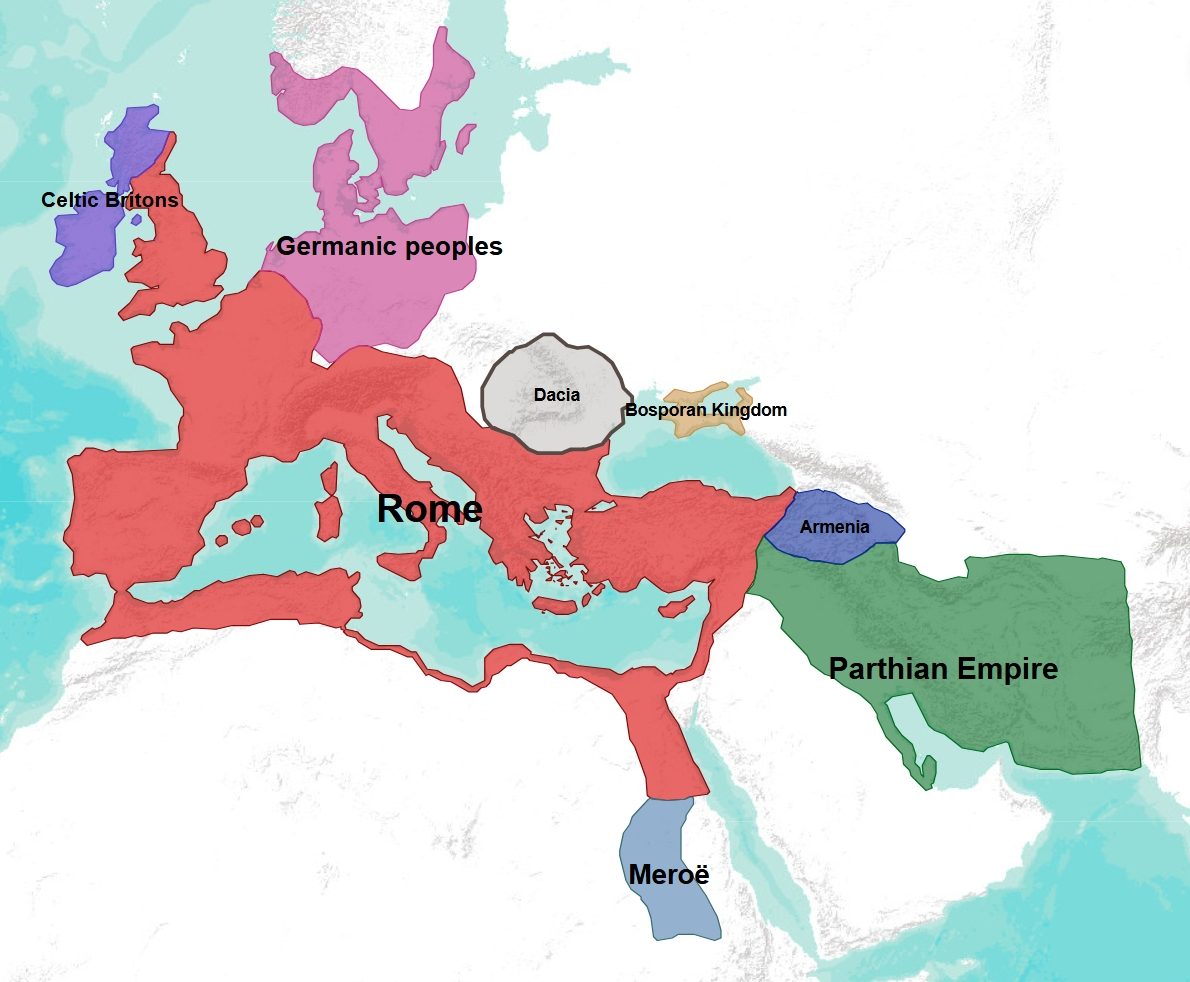
The story begins not in Rome but in Tarsus, a city on the coast of Cilicia, in what is now Turkey, where Paul was born and lived for the first part of his life and where he returned, at some point, after the events that changed him, and where he stayed for years the sources describe only as years of silence. It begins with a short man with bandy legs, whose voice we will hear in full in the next chapter, and whose life was larger than his appearance and more complicated than his enemies thought, and more difficult than his friends wanted.
That is the man. This is his story.
Tarsus
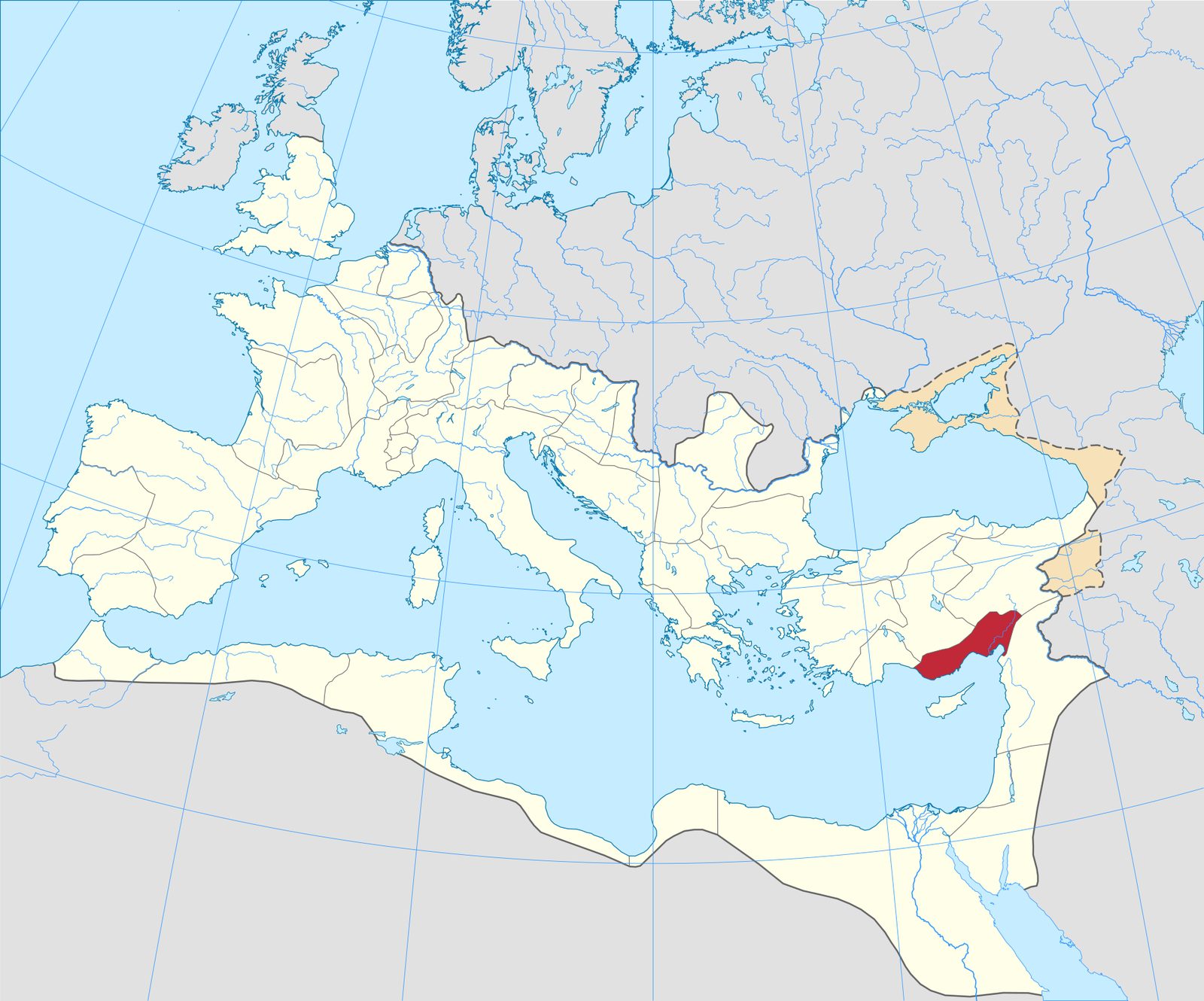
In the middle of the first century, when Paul was born, Tarsus was already old. It was old in a way that only cities in the eastern Mediterranean could be old — not just old in years, but old in the sense of having accumulated centuries of ruin and rebuilding, of having been a Greek city and a Persian possession and a Hellenistic kingdom's prize and a Roman province's administrative centre, all of which left layers of memory in the streets and in the names people used for things. It sat on the Cydnus River, about ten miles inland from the Mediterranean coast of what is now Turkey, in the province of Cilicia, and by Paul's time it was a self-governing city with the right to call itself more senior and more honourable — than a hundred other cities, which was the kind of boast that mattered to people who lived in cities and thought about their cities the way people in the modern world think about their national identities.
It was a Greek city. That is, the language of the street and the market and the school was Greek, and the institutions of the city — the gymnasium, the council, the theatre — were Greek institutions, even though the city was in a province that had once been Persian and was now Roman and had a population that included people who still spoke Aramaic and people who had never left their village and people who were there because the Romans had moved them. Being a Greek city was not a matter of ethnicity. It was a matter of culture and status, and it was the kind of thing a city could claim and lose and claim again over the centuries, as Tarsus had done more than once.
It was also a university city. Cicero called it ludus philosophiae — a school of philosophy — and Strabo, the geographer who wrote about it in the early years of Paul's life, said that the students there were so numerous and so dedicated that the city was in effect a university before there was such a thing as a university, in the sense that there were teachers with regular students, a curriculum, and a reputation that drew people from outside the city the way that modern universities draw students from other countries. The philosophers who taught there were not all of one school. Tarsus had produced its own philosophical tradition — the Stoic school had some of its most important figures there — and it had attracted philosophers from other schools as well, so that a young man growing up there would have heard arguments about virtue and the good life and the role of reason in human affairs in several different voices, all of them Greek, all of them competing.
The philosophical tradition of Tarsus is not the most famous thing about Tarsus, and it does not get much space in the books that are written about Paul's life, because the books tend to focus on the things that were unusual about him — his Jewishness, his persecution of the Jesus movement, his conversion, his letters — and the things that were ordinary about him get less attention than they deserve. But the ordinary things are important. Paul was a man who had been educated in a city that was a school of philosophy. He had heard arguments about virtue and reason and the proper life before he ever heard about the Jesus movement, and those arguments had shaped the categories he used when he tried to explain what he believed. When he wrote about the law, or about the flesh, or about the mind, or about the nature of the universe as God had made it, he was using concepts that his audience in Tarsus or Corinth or wherever he was would have recognised, even if they had never heard his Jewish God talked about in those terms. The Greek philosophical world was not an alien environment for him. It was the air he had breathed as a young man.
And yet it was not the only air. Paul was a Jew. His family was a Jewish family, and there were Jewish families in Tarsus, and there had been Jewish families in Tarsus for a long time, and that was one of the things that made Tarsus what it was — a city where Jews and non-Jews lived together in a way that was normal for the eastern Mediterranean in the first century, where the synagogue was one institution among others and the Jewish people were one community among others, but a community with its own laws and its own identity and its own ways of doing things, and a community that Paul's family belonged to and that Paul himself, in his own way, never stopped belonging to.
The Jewish community in Tarsus was not, by the standards of the eastern Mediterranean, an unusual one. There were Jewish communities in most of the cities of the eastern Mediterranean by the first century, and they had been there for a long time, and they had established synagogues and ports of trade and connections with Jerusalem that went back generations. The Jews of Tarsus were part of the Jewish diaspora — the Jewish people spread outside the land of Israel — and the diaspora was not a small thing. It was the majority of the Jewish people in the first century, living in cities from Rome to Alexandria to Antioch to Tarsus, and they were, in the ordinary sense, Jews who lived outside Judea and observed the Torah as best they could and maintained their identity as Jews in communities where they were surrounded by people who were not Jews.
Paul was, by his own account, from this diaspora. He says in his letters that he was a Hebrew of the Hebrews, a Pharisee, a son of a Pharisee, and that he was zealous for the traditions of his fathers before he became a follower of the Jesus movement. These are not casual claims. They are claims about his background, and they are claims that tell you something specific about the kind of Jew he was. "Hebrew of the Hebrews" is a phrase that suggests a family that had kept its Jewish identity in a particularly pure or uncompromising way, perhaps in a way that was not typical of all diaspora Jews. "Pharisee" is a claim about his religious affiliation — he belonged to the Pharisaic party, one of the several Jewish groups active in the first century, which is to say that he was part of a movement that was concerned with the interpretation and observance of the Torah and with the application of Jewish law to everyday life. "Zealous" is a claim about his attitude toward his religious tradition — he was not a passive Jew but a committed one, the sort of Jew who would act to defend the traditions of his people when he thought they were threatened.
These claims are made in letters that were written after his life had been transformed by the Jesus movement, and they are made for a purpose — they are part of the story he is telling about himself, and they are part of the argument he is making about why his authority was what it was and why what he believed was what it was. They are not simple autobiographical statements. They are strategic. But they are not untrue, and they tell you something real about the world he came from before the movement that changed his life.
The most interesting thing about that world is that Paul almost certainly never refers to it directly, at least not in any of his letters that survive. He mentions Tarsus only once, in passing, and he tells you nothing about it. He mentions his family only a few times, and mostly to say that they had delivered him out of danger at one point or that he had a relative in the court of the Roman governor in Jerusalem or that his father had been a Pharisee. He does not tell you what Tarsus was like. He does not tell you what it felt like to grow up in a city that was both Greek and Jewish, or what it meant to be a Jewish boy in a Greek city in the first century, or what he thought about the philosophy that surrounded him before he encountered the movement that changed his life. He leaves all of that blank.
This is the kind of silence that makes biography difficult, because it is the kind of silence that invites you to fill it in, and filling it in means constructing things from the materials around you rather than from the source itself. You have the city — you know it was a Greek city and a university city and a diaspora Jewish community and a Roman city, and you can look at the other cities of the eastern Mediterranean that are similar to it and use them to understand what Tarsus would have been like. You have the kind of Jew Paul says he was — a Pharisee, a Hebrew of the Hebrews, zealous — and you can look at what those things meant in the first century to understand what his background might have been. You have the letters themselves, and you can read them to see whether the language and the ideas in them bear traces of the education he had and the community he came from.
But you do not have Paul telling you any of this. He does not tell you that he grew up in a city that was so Greek that it could call itself a school of philosophy, or that his family was part of a Jewish community that was large enough to have a synagogue and connections to Jerusalem and a place in the life of the city. He does not tell you that he learned Greek as a child and that he probably learned it the way children in the diaspora learned it — as a second language, perhaps, but one that they learned so completely that it became the language of their minds by the time they were grown, or perhaps as a first language, if his family was the kind of family that spoke Greek at home — and he does not tell you anything about the tension that might have produced, the sense of being in two worlds at once, or the sense of never quite belonging to either one.
That sense of never quite belonging is one of the things that people who write about Paul tend to say about him, because it is one of the things that seems to fit the evidence and because it makes for a good story. A boy born in a Greek city to a Jewish family, growing up in a world where Greek culture and Jewish tradition coexisted without fully merging, who belonged to neither world completely and who eventually ended up somewhere else entirely — that is a story with a shape to it, and it is a story that has the advantage of being both plausible and, in some important sense, true.
It is plausible because that is what diaspora Jewish life was like in the first century — you belonged to a Jewish community, but you lived in a city where the dominant culture was not Jewish, and you navigated the two in one way or another, and different families and different people navigated them in different ways, and some of them ended up with a stronger attachment to one than the other and some of them never quite settled into either. It is true because Paul's own letters suggest that he was a man who moved between worlds — who could argue about Torah with Jews and about philosophy with Gentiles and who wrote to communities of mixed background in a language that belonged to neither world entirely but was a kind of bridge between them.
And it is a good story because it gives the young Paul a shape before the story really starts — it tells you where he came from and what kind of person he was before the events that changed his life, and it tells you something about the resources he had when the crisis came. If he was a man who had grown up in a Greek city and been educated in its schools and made a place for himself in its Jewish community, then he had resources of language and thought and social connection that were available to him when he needed them, and those resources are visible in the letters he wrote later, even if he does not describe where they came from.
But there is a danger in this story, and the danger is the one that every biographer has to guard against — the danger of making a person too coherent, of fitting their life together in a way that makes sense but may not be the way it actually made sense to them. Paul was, by his own account, a man who was zealous for the traditions of his fathers before he became a follower of the Jesus movement, and that is a fact. But it is not a fact that necessarily implies that he was comfortable in the Greek world or that the Greek world was a comfortable home for him. It is possible that he was tense in both worlds and that the sense of never quite belonging was more painful than the standard story allows. It is possible that his background in Tarsus was something he carried with him as a kind of loss — something that gave him abilities he used all his life but that he never fully made peace with.
This is a guess. It is a plausible guess, and it is a guess that fits the shape of the evidence, but it is a guess, and it should be treated as a guess and not as a fact. The evidence for Paul's childhood is almost entirely silent, and the evidence we do have is evidence about the adult Paul — the Paul who wrote the letters — and the rest has to be reconstructed from what a man who was as educated and as committed and as strange as he was might have had as a background.
The best way to approach this is to start with the city and work out from it, because the city is the thing we know most about, and because the city is the thing that shaped the man before he had any choice in the matter. Tarsus was a Greek city in Cilicia, with a university and a large Jewish community, in a Roman province, on the edge of the Mediterranean world. It was not an unusual city for the first century. It was, in fact, a typical city for the kind of life Paul led — a typical city for a diaspora Jew with ambition and education, and a typical city for a Greek-speaking person who wanted to make something of themselves in the eastern Mediterranean.
What happened to him in that city is not something we can know. Whether he was happy there or restless, whether he was already forming the ideas that would later define him or whether his life was still waiting for the event that would give it shape — none of this is something we can recover from the letters, because the letters begin after the event that changed everything. They begin after the thing he does not describe in detail and does not describe in a way that fills in the world around him.
What we can say is that the city gave him something. The Greek language, or at least the fluency in Greek that made his letters possible. The philosophical traditions of the city, which gave him the concepts he used and the categories he argued in. The Jewish community, which gave him the identity he claimed and the zeal he said he had. And the sense — perhaps not a sense at all, perhaps just the unspoken fact — that he was from somewhere that was not Jerusalem, that was not Judea, that was not the centre of the Jewish world in the way that Jerusalem was the centre, and that this distant place was going to be part of the story he told about himself in ways he never fully explained.
That is Tarsus. It is the city he was from, and it is the city he returned to at some point — after the event that changed his life, when he had been rejected by the Jerusalem leadership and had wandered and had begun the work that would make him the most influential figure in the early Jesus movement — and it is a city that remains important to his story in ways that he never fully articulated, and that the later tradition did not much notice, and that the book has to notice now.
The Citizenship Question
Paul was, according to the only source that says so, a Roman citizen. The claim appears twice in the Book of Acts, both times when Paul is in trouble with Roman authorities and both times when the claim saves him or might save him — once when he is about to be flogged in Jerusalem and tells the centurion that he is a Roman citizen, and once later, when he is in Caesarea and tells the governor that he has the right to appeal to Caesar because he is a Roman citizen. The book does not say he was a citizen on any other occasion, and it does not explain how he got it, or when, or from whom. It simply asserts that he was one, and uses that assertion in two scenes where it makes a dramatic difference.
The matter is important in the story Acts is telling, because Roman citizenship was a legal status that gave a person specific rights — the right not to be tortured or bound or imprisoned without cause, the right to a trial before a magistrate rather than a summary flogging, the right to appeal a sentence to the emperor — and because the people who had it were not always easy to identify from their appearance or their behaviour. A Roman citizen in the eastern provinces might look like any other Greek-speaking person, might dress like any other person from the diaspora, might live in a city where citizenship of the city was more immediately meaningful than citizenship of the empire. The claim to Roman citizenship was something that had to be made, and made at the right moment, and then the authorities had to be convinced that it was real — which in the case of Paul seems to have worked both times, though in the first case the centurion was alarmed by the fact that he had already ordered the flogging, and in the second case the governor was politely surprised and then had to decide what to do about the appeal.
The claim is the kind of detail that a writer includes when he wants to show that a person had rights and that those rights mattered in the story. It is not the kind of detail that is easy to verify from other sources, and in the case of Paul it is not verified by any other source, because the other source — the letters — never mentions it.
That is the first puzzle. Paul was, by his own account, a man who was in Roman custody and who appealed to Caesar and who was sent to Rome for trial before the emperor. In the Roman legal world, the appeal to Caesar was a right that belonged to Roman citizens, and it was a right that could be exercised by anyone who had it, regardless of whether they were a citizen by birth or by grant or by purchase. A person who was not a Roman citizen could not appeal to Caesar in this way, or at least could not do so with the legal effect that Paul seems to have had — the governor in Acts 25 is obliged to send him to Rome because Paul has invoked his right as a citizen. So the letters, despite being about Paul's trials and his custody and his journey to Rome, do not mention his citizenship once, even when the matter would have been central to any defence he was making or any explanation he was giving of his rights.
This is not a small omission. It is a significant silence, and it is the kind of silence that makes historians uncomfortable, because it is a silence in the one source that should mention it if it were a real and important part of Paul's identity, and it is a silence that is filled in by a different source that has reasons of its own for wanting to make Paul a citizen. The Book of Acts is not a neutral account of Paul's life. It is a book written at a later time, by a later writer, with a later agenda, and one of the things that agenda seems to do is to make Paul into a person who had Roman citizenship — not necessarily because that is what happened, but because that is what makes the story in Acts work in the way Acts wants it to work.
The reason Acts needs Paul to be a Roman citizen is that the argument of Acts, at least in its later chapters, depends on Paul having rights under Roman law, and on the Roman authorities being bound by those rights in ways that allow the story to unfold as it does. If Paul were not a citizen, then the governor in Caesarea would have more discretion in what to do with him, and the appeal to Caesar would not have the effect that it has in the story. The dramatic structure of the arrest and the appeal and the voyage to Rome depends on Paul having the legal standing that the book gives him. The citizenship is not the point of the story, but it is the mechanism that makes the story possible, and it is the mechanism that the book asserts without explaining and without any other source corroborating it.
This does not mean that Paul was not a Roman citizen. It is perfectly possible that he was, and there are arguments in favour of the claim that go beyond Acts — the name itself, the fact that he was a Jew in a diaspora city where Roman citizenship was sometimes available to Jews, the fact that he moved with some assurance in the Roman world and seems to have had a status that was more than ordinary. The claim is not absurd, and it is not impossible. The question is whether we have enough reason to believe it from sources other than Acts, and the answer is that we do not. The letters do not mention it, and the letters are the only source that describes Paul in his own words, and the letters are the source we should prefer when they and Acts disagree, for the reasons that were explained in the first chapter.
So the citizenship question is a small mystery, and it is a small mystery that teaches the reader something about the whole source problem in the Paul story. The two sources for his life — the letters and Acts — disagree on matters large and small, and the disagreement is not always about facts that are easy to establish from outside both sources. Sometimes it is about something as simple as whether a man was a Roman citizen or not, and that simple question has consequences for the way the story is told and for the way we understand the man who is at the centre of it.
The citizenship question also teaches the reader something about the way that legal status worked in the Roman world. Roman citizenship was not the same as the citizenship of the city you lived in, and it was not the same as the nationality of the people you were among, and it was not something that you could always rely on other people to know or to respect. A Roman citizen in the eastern provinces could be anyone, and the claim to citizenship had to be made explicitly and had to be backed by something — a birth certificate, a grant, a register, a witness — and the authorities had to be persuaded that it was legitimate. The scenes in Acts show a man who makes the claim at the right moment and who is believed, but they do not show the evidence behind the claim, and they do not show how he got it. The reader is left with the assertion and no way to test it from inside the story.
This is one of the things that makes the history of Paul difficult. The sources are often not sources in the sense of providing information that can be checked against other sources. They are sources in the sense of providing a story, and the story has to be read with the knowledge that it may be shaped by purposes that have nothing to do with the truth of the facts it contains. Acts is a book that shapes the story of Paul in a particular way, and one of the ways it shapes it is to give him Roman citizenship, which makes the ending of the book — the appeal to Caesar, the voyage, the arrival in Rome — work as a story about a man who is under Roman protection and who exercises his rights under Roman law. The letters do not shape the story in this way, and they do not mention the citizenship, which is one of the ways they disagree with Acts.
The reader who picks up Acts and reads the story of Paul's arrest and his appeal and his voyage to Rome will, if they read it as a story, accept the citizenship as part of the story and move on. The reader who picks up the letters and reads them for what they say about Paul's life will notice that the citizenship is never mentioned and will wonder why. The reader who does both will see the disagreement and will have to decide which source to trust and why. That decision is not a trivial one, because it affects the way the story of Paul's later life is understood — the arrest, the custody, the appeal, the voyage, the arrival in Rome — and because it affects the way Paul's relationship with the Roman authorities is understood. If he was a citizen, then the authorities had obligations to him that they might not have had to a non-citizen, and the story of his imprisonment and his journey is a story about a man who had rights and was able to exercise them. If he was not a citizen, then the authorities had less obligation to him, and the story of his imprisonment is a story about a man who was, in some important sense, unprotected.
This is not a question that can be settled once and for all. It is a question that has to be answered in the context of the whole source problem, and the answer has to be provisional, and the answer has to be stated with the knowledge that it may be wrong. The most reasonable answer, given the sources we have, is that the citizenship is not something we can confirm from Paul's own words, and that we should not assume it is a fact when the source that asserts it has reasons of its own for asserting it and the source that does not assert it is the one that is closer to Paul's own voice. This does not mean that he was not a citizen. It means that we cannot know, and that the citizenship is one of the things that is claimed for him by a source that is not his own, and that we should be careful about treating that claim as if it were established.
The smaller point of the chapter is that the citizenship question is a good example of the method the book will use throughout: start with the letters, use Acts with caution, notice where they disagree, and explain why the disagreement matters. The larger point is that the citizenship question is a good example of the kind of thing that makes the story of Paul interesting — a small factual question that opens into a larger question about sources and methods and the way that history is constructed from the remains of a life that is not fully documented.
Paul himself does not mention his citizenship in any of his letters. He mentions his arrest and his custody and his appeal to Caesar in 2 Corinthians and in Philemon and in the letter to the Philippians, but he does not say he was a citizen. He says that he was in danger from the Gentiles and from his own people and from the city, and that he was rescued by the Lord. He says that he appeals to Caesar and that he is going to Jerusalem in chains. He never says he was a citizen. He never says he had rights under Roman law. He does not say anything about the legal basis of his custody or his appeal or his journey.
This silence is not because Paul had nothing to say about his legal status. It is because the letters were not written to explain his legal status. They were written to churches and individuals about matters that had nothing to do with Roman law, and the legal status he had was not a topic that came up in those letters. The letters are not a record of his legal case. They are a record of his thoughts and his arguments and his instructions to the people he wrote to. The citizenship, if he had it, was a fact about him that was relevant to his legal situation but not to the content of the letters, and so it does not appear in them. That is the most obvious explanation for the silence, and it is probably the right one.
But it is also true that if Paul had had the kind of citizenship that Acts says he had, then the claim would have been useful in some of the situations the letters describe, and that the failure to mention it is a fact about the letters that is worth noting. The letters describe a man who was in danger from his own people and from Gentiles and who was sometimes in custody and sometimes in danger of being punished, and the claim to Roman citizenship would have been something he might have mentioned if he had wanted to explain why he was not being punished more severely or why he had certain rights. He does not mention it. He does not use it as a defence or an explanation in any of the letters. This is the other side of the silence — not that the letters do not explain his legal status, but that the legal status he had, if he had it, is not used by him in the letters as a fact about himself that was relevant to the situations he describes.
This is enough to make the citizenship question a small mystery but a real one. It is not enough to make it a contradiction in the sources, because the sources are not in direct contradiction on the matter — Acts says he was a citizen, the letters do not say he was or was not, and the silence of the letters is not a denial of the claim. It is enough to make it a question about the sources that has to be answered by looking at the sources as sources and not just as stories, and by applying the method the book uses throughout: prefer the source that is closer to the man himself unless there is a good reason not to, and read the other source with the knowledge that it may have its own reasons for the things it says.
The citizenship question is one of those questions. It is a small question, and it is one that can be answered provisionally, and it is one that illustrates the method the book will use for larger questions.
Zealous
Paul says, in one of his letters, that he was a Pharisee, a son of a Pharisee, and that before his life was changed by the Jesus movement he was zealous for the traditions of his fathers. These are not casual claims. They are claims about his background, and they are claims that tell you something specific about the kind of Jew he was and the kind of person he was before the event that changed everything.
The first claim — that he was a Pharisee — is the claim that tells you he belonged to a particular Jewish party. The Pharisees were one of the several Jewish groups active in the first century, and they were a group with distinctive beliefs and practices and a distinctive relationship to the Torah. They were not, as they are sometimes represented in later tradition, mere legalists who were interested in small points of law and who had lost sight of the larger questions of justice and compassion. They were, in fact, a group that was deeply concerned with the interpretation and application of the Torah to everyday life, and that believed that the Torah contained more than the written text — that it contained an oral tradition, passed down from the teachers of the law, that explained and extended the written law in ways that were binding on the Jewish people.
The Sadducees were the party of the temple and the priesthood, the wealthy and the politically connected, and they denied the resurrection and the oral law and the existence of angels. The Essenes were the group that lived in communities apart from the world and that produced the Dead Sea Scrolls. And the "people of the land" were the ordinary Jews who did not belong to any particular party and who observed the Torah as they understood it.
The Pharisees were, in this context, the party that was most concerned with the interpretation of the law and with the life of the Jewish people outside the temple — the party that was most concerned with the application of the Torah to the ordinary circumstances of daily life, and that believed that the Jewish people had a calling to live in a particular way in the world as it was, and that the way they were called to live was defined by the Torah and by the traditions that explained the Torah.
The Pharisees were, in the judgment of Josephus, the party with the most followers among the ordinary people, and they were the party that had the most influence on the way the Jewish people actually lived their lives, because they were the party that taught the law to the people and that interpreted the law in ways that were accessible to the people and that were applied to the situations the people faced. They were not the party that held the most direct power in the Jewish state and in the temple — that was the Sadducees — but they were the party that had the most influence on the ordinary life of the Jewish people, and they were the party that most directly shaped the way the Jewish people understood their calling and their obligations.
The Pharisees believed in the resurrection of the dead, and they believed in the existence of angels and spirits, and they believed in the importance of the oral law and the traditions that explained the Torah. They were, in the later tradition, the party that preserved and transmitted the oral law in the form that it took in the Mishnah and the Talmud, and they were the party that was most concerned with the life of the Jewish people outside the temple, and with the application of the Torah to the ordinary circumstances of daily life.
Paul says he was a Pharisee. This means that he belonged to this party, and that he shared its beliefs and its practices, and that he was educated in its traditions and its methods of interpreting the law. It means that he was a Jew who was concerned with the interpretation and application of the Torah to everyday life, and that he believed that the Torah contained more than the written text, and that he believed that the Jewish people had a calling to live in a particular way in the world as it was, and that the way they were called to live was defined by the Torah and by the traditions that explained the Torah.
The Jesus movement, from the point of view of a Pharisee like Paul, was a movement that was making a claim about the Torah and about the traditions that explained it, and that was making a claim about the Jewish people and about the calling of the Jewish people, and that was making a claim about God and about what God had done and about what God was doing. The claim was that something had happened — that Jesus of Nazareth had been raised from the dead by God, and that this event was the sign that God had acted in a new way for the Jewish people and for the world, and that the response to this event was to belong to the Jesus movement and to live in the way that the movement taught.
From the point of view of a Pharisee who was zealous for the traditions of his fathers, this claim was dangerous, because it seemed to undermine the authority of the Torah and the traditions, and because it seemed to redefine what it meant to belong to God's people, and because it seemed to say that something had happened that changed the terms of Jewish life in a way that the traditions did not anticipate and did not allow. The claim was that God had acted in a new way, and that the response to this action was to belong to the Jesus movement, and that the Jesus movement was the people of God in a way that the Jewish people had not been before. This was, from the point of view of a Pharisee, a claim that had to be resisted, because it seemed to undermine the truth of the Torah and the traditions and the calling of the Jewish people.
The threat was real to Paul, and the threat was real in the way that a threat to something you believe is real. It was not a threat to Judaism as a whole — the Jesus movement was a movement within Judaism, and the people in it were Jews, and the movement did not claim to be a new religion but a new understanding of what it meant to belong to God's people. But it was a threat to a particular understanding of what Judaism required, and it was a threat to the traditions of Paul's fathers, and it was a threat to the authority of the Torah as Paul understood it. And Paul responded to the threat with the force that his understanding of zeal required.
What kind of threat was the Jesus movement to a Pharisee like Paul?
The threat was not the threat of a new religion. The Jesus movement was not a new religion in the first century. It was a movement within Judaism, and the people in it were Jews, and the movement did not claim to be a new religion but a new understanding of what it meant to belong to God's people. The threat was not the threat of a rival religious system.
The threat was the threat of a claim that seemed to undermine the authority of the Torah and the traditions, and that seemed to redefine what it meant to belong to God's people. The claim was that something had happened — that Jesus of Nazareth had been raised from the dead by God, and that this event was the sign that God had acted in a new way for the Jewish people and for the world, and that the response to this event was to belong to the Jesus movement and to live in the way that the movement taught. This was a claim that was different from the claim of the Pharisees, and that was different from the claim of the Sadducees, and that was different from the claim of the Essenes, and that was different from the claim of the ordinary Jewish people who did not belong to any particular party. It was a claim that was made by a particular group of Jews who believed that something had happened and that this something changed the terms of Jewish life in a way that the traditions did not anticipate and did not allow.
The threat was not the threat of a rival political power. The Roman empire was the political power that ruled the world, and the Jewish people lived under Roman rule, and the threat of Roman rule was a real threat to the Jewish people and to the temple and to the Torah. The Jesus movement was not a political movement in the first century, and it did not claim to be a political movement. It was a movement that was about the meaning of Jewish life and the response to what God had done, and it did not claim to be a movement that would overthrow the Roman empire or restore the Jewish state. The threat was not the threat of a political rival.
The threat was the threat of a claim that was made about God and about the Torah and about the Jewish people, and that was made by a group of Jews who believed that the claim was true. The claim was that God had acted in a new way, and that the response to this action was to belong to the Jesus movement, and that the Jesus movement was the people of God in a way that the Jewish people had not been before. This was a claim that was dangerous to a Pharisee like Paul, because it seemed to undermine the authority of the Torah and the traditions, and because it seemed to redefine what it meant to belong to God's people, and because it seemed to say that something had happened that changed the terms of Jewish life in a way that the traditions did not anticipate and did not allow.
The threat was real to Paul, and the threat was real in the way that a threat to something you believe is real. It was not a threat to Judaism as a whole, and it was not a threat to the Jewish people as a whole, and it was not a threat to the temple or to the priesthood or to the state. But it was a threat to a particular understanding of what Judaism required, and it was a threat to the traditions of Paul's fathers, and it was a threat to the authority of the Torah as Paul understood it. And Paul responded to the threat with the force that his understanding of zeal required.
The response was not senseless. It was a response to a threat that Paul believed was real, and it was a response that was consistent with the understanding of zeal that Paul had learned from his Pharisaic background. The response was not the response of a man who was wicked or who was evil or who was bad. It was the response of a man who believed that the traditions of his fathers were worth defending, and that the Jesus movement was a threat to those traditions, and that the threat had to be answered.
This does not mean that the response was right. It was wrong. The threat was not what Paul thought it was, and the Jesus movement was not what Paul thought it was, and the claim that God had acted in a new way was not a claim that undermined the Torah and the traditions but a claim that fulfilled them in a way that Paul could not yet see. But the response was not senseless, and it was not the response of a man who was simply wicked or evil or bad. It was the response of a man who believed in something and who defended it against what he believed was a threat, and who was wrong about what the threat was and wrong about what the response should be.
The wrongness of the response does not make it less real, and it does not make the man who made it less human, and it does not make the story less interesting. The wrongness is part of the story, and it is part of the story that makes the rest of the story — the call, the reversal, the life of argument and conflict — possible. The wrongness is what makes Paul the man he was, and it is what makes the call the event it was, and it is what makes the life of the early Jesus movement the story it is.
The Pharisees were not the only Jewish party in the first century, and Paul was not the only Jew who was zealous for the traditions. But Paul was, by his own account, a Pharisee and a son of a Pharisee and zealous for the traditions, and these claims are claims that tell you something specific about him and his background, and they are claims that are worth paying attention to, because they are the claims that explain, in part, why he was the man he was and why he did what he did before the movement changed his life.
The threat was real to him. The fact that he was wrong does not make the threat less real. The fact that he was wrong does not make the response less human. The fact that he was wrong does not make the story less interesting. The wrongness is part of the story, and it is part of the story that makes the rest of the story possible, and it is part of the story that makes Paul the man he was, and it is part of the story that makes the conversion the event it was.
This is the point of the chapter. The Pharisee and the zeal and the threat are not facts that are simply there. They are facts that have to be understood, and they have to be understood in the context of the first century and in the context of the Jewish world that Paul came from, and they have to be understood in the context of the threat that the Jesus movement posed to a Jew like Paul, and in the context of the response that Paul made to that threat. The chapter is not a chapter about the Pharisees or about zeal or about the threat. It is a chapter about Paul and his background, and about the way that background made him the man he was, and about the way that background made the conversion the event it was.
The next chapter is the chapter about what Paul did when he was on the other side, and what he did was wrong, and what he did was wrong in a way that he never told us in detail, and what he did was wrong in a way that we have to reconstruct from what he did tell us and from what we know about the world he lived in. That is the chapter about the persecutor, and it is the chapter that is the most delicate in Part One, because it is about the actions that Paul took before the movement changed his life, and because those actions are the actions that make the rest of the story possible, and because those actions are the actions that make Paul the man he was.
The Persecutor
He tells us he tried to destroy the movement. He tells us this in several letters, in several ways, and he tells us it with a kind of contempt and remembrance that is hard to misunderstand and hard to forget. "I persecuted the church of God." "I advanced in Judaism beyond many of my own age among my people." "I was a blasphemer and a persecutor and a violent man." "I was furiously enraged against them and tried to force them to blaspheme." These are not the words of a man making a small confession or a small admission. They are the words of a man describing a part of his life he does not like to remember and does not like to forget, and that he is describing in a way that makes it clear he did something serious and knows what he did and is not going to pretend he did not do it.
But he does not tell us, in these letters, what he did. He does not tell us how he persecuted the church. He does not tell us whether he threw people in prison, or beat them, or turned them over to the authorities, or bullied them in the synagogue, or denounced them, or frightened them, or did any of the other things a man determined to destroy a movement might do. He tells us the result — that he persecuted, that he was violent, that he tried to force people to blaspheme — but he does not tell us the method, and he does not tell us the detail, and he does not tell us the shape of the persecution in the way a historian would want to know it.
This is the silence that makes the chapter difficult. The persecutor is a figure necessary to the story — the man before the conversion, the man on the other side, the man whose violence made the conversion possible — but the figure is one Paul does not describe in detail, and that the other sources do not describe in detail, and that we have to reconstruct from what we know about the world he lived in, and from what we know about the movement he was trying to destroy, and from what we know about the kind of persecution a zealous Jew like Paul might have carried out in the first century.
The first thing to say about the persecution is that it was real. Paul does not say he tried to destroy the movement in a metaphorical sense or a gentle sense. He says he persecuted, and he says he was violent, and he says he tried to force blasphemy. He says these things in letters that are mostly about other matters, and he says them in a tone that suggests he is not inventing or exaggerating, and that he is not minimizing or maximizing, but simply stating what he did and what he was. The persecution was real, and it was serious, and it was the kind of thing a man who was later to become the most influential figure in the early Jesus movement would have to account for and to remember and to describe.
The second thing to say about the persecution is that it was not, from Paul's point of view, unjust. He does not describe it as unjust in the letters, and he does not describe it as a mistake he made because he was confused or misled or because he did not know what he was doing. He describes it as something he did, and as something that was wrong in the way all his actions were wrong before the conversion, but he does not describe it as a mistake in the sense of a legal mistake or a factual mistake or a misunderstanding. He describes it as a part of his life before the conversion, and as a part of his life that was part of the wrongness of that life, and as a part of his life he had to recover from and answer for.
The third thing to say about the persecution is that it was the response to a threat Paul believed was real, and that the threat was the threat of a movement that seemed to undermine the authority of the Torah and the traditions and the calling of the Jewish people, and that seemed to redefine what it meant to belong to God's people, and that seemed to say that something had happened that changed the terms of Jewish life in a way the traditions did not anticipate and did not allow. The persecution was the response to that threat, and it was the response of a man who believed in the traditions and who believed in the authority of the Torah and who believed that the Jesus movement was a threat to both, and who believed that the threat had to be answered.
This much we can say with confidence, because it is what Paul says about himself and what the other sources say about the time and the place and the movement, and it is what can be deduced from the background of the man and the movement and the world. But the detail — the shape of the persecution, the specific actions, the people involved, the places where it happened, the way it was carried out — this is the part that is not there, and that we have to fill in with what we know about the world and what we know about the kind of persecution a zealous Jew might have carried out, and what we know about the movement and the people in it and the way it was organised and the way it was vulnerable.
The most plausible form of the persecution, in the first instance, is that it was carried out in the synagogues. The Jesus movement in the first century was, for the most part, a movement of Jews who met in synagogues or in houses or in other places, and who continued to attend the synagogue or to use it as a place of meeting and worship and teaching, and who were, in many cases, recognised as part of the Jewish people by the Jewish authorities and by the ordinary Jewish people. The movement was not an obvious outsider — it was a movement within Judaism, and the people in it were Jews, and they met in places that were familiar to other Jews, and they used language and ideas that were familiar to other Jews.
The persecution of such a movement would not have been, in the first instance, a persecution by the Roman authorities, though it might in some cases have led to Roman intervention. It would have been, in the first instance, a persecution by the Jewish authorities and by the Jews who were opposed to the movement, and it would have taken the form of pressure on the people in the movement, and on the leaders of the movement, and on the communities where the movement was established, and it would have taken the form of threats and denunciations and perhaps physical violence, and it would have taken the form of the expulsion of people from the synagogue and the exclusion of people from the Jewish community, and it would have taken the form of the turning over of people to the Roman authorities when the Jewish authorities thought that was necessary or useful.
This is the form that persecution took in many cases in the first century, and it is the form that it takes in the story of the early Jesus movement in Acts and in the letters, and it is the form that it takes in the story of Paul's own persecution of the movement. The synagogues were the places where the movement was most vulnerable, because they were the places where the movement was most visible, and where the movement was most likely to be seen as a threat, and where the movement was most likely to be opposed by the Jewish authorities and by the Jews who were opposed to it.
The second plausible form of the persecution is that it was carried out with the support of the high priest and the Sanhedrin, or with the support of the leading priests and the people who were in power in Jerusalem. Paul mentions, in one of his letters, that he received letters from the high priest and from the council of the elders, and that he went to Damascus with the authority of those letters to bring people in the Jesus movement back to Jerusalem for punishment. This is a detail that is given in the letters and that is confirmed by Acts, and it is a detail that tells us something about the scale of the persecution and about the involvement of the Jewish authorities in Jerusalem.
The involvement of the high priest and the council is significant, because it tells us that the persecution was not just a personal matter or a local matter, but a matter that involved the people who were in power in the Jewish community in Jerusalem, and that involved the people who had the authority to act against the movement. The high priest and the council were the people who had the authority to pursue the movement, and the fact that Paul received their letters and their authority means that the persecution was authorised by the people who had the authority to authorise it, and that it was carried out by a man who had the authority of the people who had the authority to authorise it.
This does not mean the persecution was carried out by the high priest and the council directly, or that they were the ones who did the violence. It means that the persecution was authorised by them, and that Paul was acting with their authority, and that he was carrying out the persecution on their behalf, and that he was the man who was given the task of pursuing the movement and of bringing its people to Jerusalem for punishment.
The third plausible form of the persecution is that it included violence and threat and denunciation and the turning over of people to the authorities, and that it included the kind of violence a man determined to destroy a movement might carry out — the flogging of people, the beating of people, the imprisonment of people, the threat of imprisonment, the denunciation of people, the fear that was spread through the communities where the movement was established.
Paul mentions, in one of his letters, that he went from house to house to seize men and women and to bring them to prison, and that he tried to force people to blaspheme and that he was furiously enraged against them. These are details that are given in the letters and that are confirmed by Acts, and they are details that tell us something about the nature of the persecution and about the intensity of it and about the way it was carried out.
The detail about going from house to house is significant, because it tells us the persecution was carried out in the homes of the people in the movement, and that the people in the movement were reached in the places where they lived and where they met, and that the persecution was carried out with the intensity and the determination of a man who was determined to destroy the movement and who was willing to go into the homes of the people in the movement to seize them and to bring them to prison.
The detail about trying to force people to blaspheme is significant, because it tells us the persecution was not just about imprisonment or violence, but about forcing people to renounce their belief in the movement and to denounce it, and that the persecution was about forcing people to do something they believed was wrong and that they believed was against their faith, and that the persecution was about forcing people to betray the movement and to betray their belief in it.
The detail about being furiously enraged is significant, because it tells us the persecution was carried out in a state of anger and intensity, and that the persecution was not a cold or calculated thing but a thing that was driven by anger and zeal and a determination to destroy the movement, and that the persecution was the kind of thing a man determined to destroy a movement would do when he was angry and when he was zealous and when he was determined.
This is the persecution that Paul describes, and this is the persecution that we can reconstruct from what he tells us and from what we know about the world and the movement and the people in it and the kind of persecution a zealous Jew like Paul might have carried out in the first century. It is not a detailed picture — it is not a picture of specific people or specific places or specific events — but it is a picture that is plausible and that is consistent with what Paul tells us and with what we know about the world and the movement and the people in it, and it is a picture that is enough to make the man who did it the man he was, and the persecution the thing it was, and the conversion the event it was.
The persecution is not the only thing Paul tells us about his life before the conversion. He tells us that he was zealous for the traditions of his fathers, and that he was a Pharisee, and that he was a son of a Pharisee, and that he advanced in Judaism beyond many of his own age among his people, and that he was blameless under the law, and that he was enrolled in the camp of the saints, and that he was in the camp of the saints and not outside it.
These are the claims Paul makes about himself in the letters, and they are the claims that tell us what kind of Jew he was and what kind of person he was before the movement changed his life. They are the claims that tell us that he was a Pharisee, and that he was a son of a Pharisee, and that he was zealous for the traditions, and that he advanced in Judaism beyond many of his own age among his people, and that he was blameless under the law, and that he was enrolled in the camp of the saints, and that he was in the camp of the saints and not outside it.
The claims are not all the same claim. The claim that he was a Pharisee is the claim that he belonged to a particular Jewish party. The claim that he was a son of a Pharisee is the claim that his father was a Pharisee and that he came from a family that belonged to the party. The claim that he was zealous for the traditions is the claim that he was the kind of Jew who would defend the traditions with force if he thought they were threatened. The claim that he advanced in Judaism beyond many of his own age among his people is the claim that he was educated in the traditions and that he was more educated than many of his contemporaries. The claim that he was blameless under the law is the claim that he observed the law in the way that was expected of a Pharisee and that he was not guilty of any particular breaking of the law. The claim that he was enrolled in the camp of the saints is the claim that he was part of the Jewish people and that he was not an outsider to the Jewish people.
These are the claims that make the persecution possible. If Paul had not been a Pharisee and a son of a Pharisee and zealous for the traditions, and if he had not advanced in Judaism beyond many of his own age among his people, and if he had not been blameless under the law, and if he had not been enrolled in the camp of the saints, and if he had not been in the camp of the saints and not outside it, then he would not have been the man who persecuted the movement in the way that he did, and he would not have been the man who was given the authority of the high priest and the council to pursue the movement and to bring its people to Jerusalem for punishment, and he would not have been the man who went from house to house to seize men and women and to bring them to prison, and he would not have been the man who tried to force people to blaspheme and who was furiously enraged against them.
These are the claims that make the persecution possible, and they are the claims that make the conversion the event it was. The persecution was the action of a man who was committed to the traditions and to the law and to the Jewish people, and who believed that the Jesus movement was a threat to those things, and who believed that the threat had to be answered. The conversion was the reversal of that commitment and that belief and that response, and it was the reversal of the man who had been committed to the traditions and to the law and to the Jewish people, and who had believed that the Jesus movement was a threat to those things, and who had believed that the threat had to be answered.
The conversion is the event that changed the man, and it is the event that made the man who he became, and it is the event that made the life of the early Jesus movement the story it is. The persecution is the part of the story that comes before the conversion, and it is the part of the story that is necessary to the story, and it is the part of the story that is the most difficult to know in detail, because Paul does not tell us the detail, and because the other sources do not tell us the detail, and because we have to reconstruct the detail from what we know about the world and the movement and the people in it and the kind of persecution a zealous Jew like Paul might have carried out in the first century.
This is the chapter about the persecutor. It is the chapter about the man who tried to destroy the movement, and it is the chapter about the man who did it in a way that we can only partly reconstruct, and it is the chapter about the man who did it in a way that was wrong, and it is the chapter about the man who did it in a way that was wrong in a way that he never told us in detail, and that we have to reconstruct from what he did tell us and from what we know about the world he lived in. It is the chapter that is the most delicate in Part One, because it is about the actions that Paul took before the movement changed his life, and because those actions are the actions that make the rest of the story possible, and because those actions are the actions that make Paul the man he was.
The chapter is not a chapter about the details of the persecution, because the details are not there, and because the details are not the point of the chapter. The chapter is a chapter about the persecution, and about the man who did it, and about the way that the persecution made him the man he was, and about the way that the persecution made the conversion the event it was, and about the way that the persecution made the life of the early Jesus movement the story it is.
The next chapter is the chapter about the conversion, and about Damascus, and about the way that the conversion happened, and about the way that the conversion changed the man, and about the way that the conversion made the man who he became. That is the chapter that begins the story of the man after the conversion, and that is the chapter that begins the story of the life of the early Jesus movement after the conversion of its most influential figure.