Judaism / The Man Who Never Saw the Land
Part Three: The Story As They Told It
The Basket
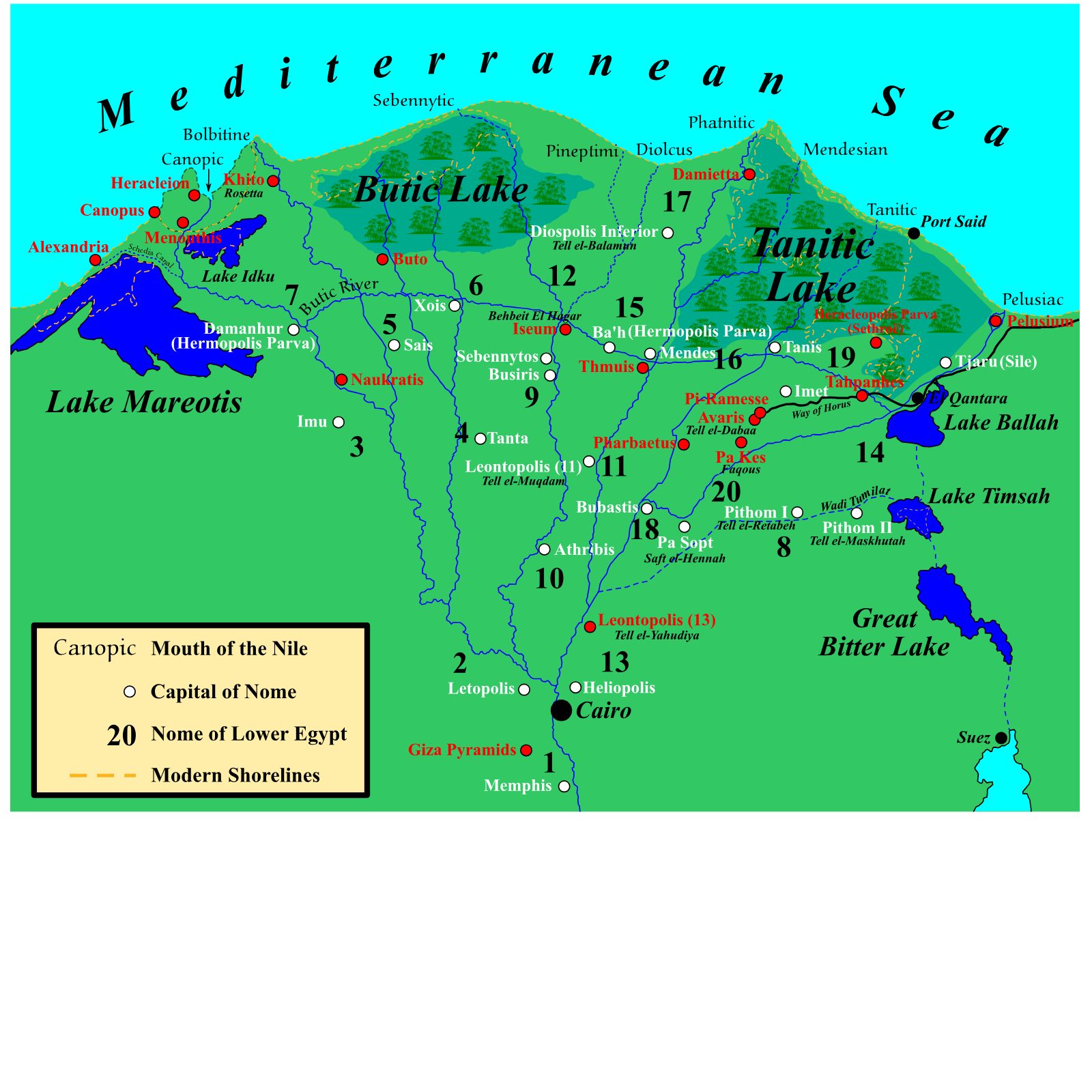
The story begins on the Nile.
Not with a speech. Not with a theophany. Not with a law. With a baby in a basket among the reeds, and a daughter of Pharaoh coming down to the water to bathe, and the most improbable rescue in the history of literature.
The opening is deliberate. The story of Moses is not going to begin with authority. It is going to begin with vulnerability, with an infant placed in the water by his mother, hidden among the reeds, discovered by the enemy, and saved. The founder of the Exodus story starts his life as a foundling on the river, and the story never forgets it.
This is the first chapter of Part Three — the narrative part of the book. These chapters tell the story the way the biblical text tells it, scene by scene, in full narrative mode, without the interruption of the analysis. The reader who has followed the context in Part Two now gets the story itself, told as the story. The analysis comes later, in Part Five, when we discuss who wrote what and when.
But the story deserves to be told on its own terms. It is one of the great narratives of the ancient world, and it is worth reading straight, scene by scene, for what it says and how it says it.
The situation
The story starts with a political situation. A new king has come to power in Egypt, a pharaoh who did not know Joseph — meaning, the text implies, that he did not know the history of how the Israelites came to be in Egypt, or did not care about it, or was hostile to what he knew. The Israelites have multiplied and become numerous, filling the land. The pharaoh is alarmed. He says to his people: "Behold, the people of the children of Israel are more and mightier than we. Come on, let us deal wisely with them, lest they multiply, and it come to pass, that when there cometh any war, they join also unto our enemies, and fight against us, and so get them up out of the land."
The text is careful to give the pharaoh's logic. This is not an irrational monster. This is a ruler who sees a demographic threat and decides to manage it. The Israelites are numerous. They might join the enemy in a war. They might leave. The pharaoh decides to counter this with forced labour — "to oppress them with their burdens, and in hating them to diminish them, and to diminish their number" — and when forced labour does not reduce their numbers but they "multiply and grow exceedingly," the pharaoh escalates to the killing of the newborn boys.
The escalation is specific. The pharaoh commands the Hebrew midwives — Shiphrah and Puah, two of the few named women in the entire Pentateuch — to kill every Hebrew boy at birth. "And if it be a son, then ye shall kill him: but if it be a daughter, then she shall live."
The midwives, the text says, "feared God" and did not do as the pharaoh commanded. They let the boys live. When the pharaoh confronts them, they give a clever and audacious answer: "Because the Hebrew women are not as the Egyptian women; for they are lively, and are delivered ere the midwives come in unto them." The Hebrew women, they say, give birth so quickly that the midwives cannot get there in time.
The text's portrait of the midwives is extraordinary. They are women in a system of power, and they defy it. They tell a lie — whether the lie is true or not is not the point, the point is the defiance — and they survive. They are two of the most courageous figures in the entire story, and the text gives them names when it gives almost no one else names.
The pharaoh, enraged, escalates to the public decree: every Hebrew boy is to be thrown into the Nile. The state now has a policy of killing its own subjects' children. The situation is desperate.
The mother
Moses' mother is unnamed in the narrative. The text calls her "a woman of the Levites" — one of the people of Levi, the tribe from which Moses and Aaron will come, the tribe that is most closely tied to the Egyptian origin of the story. She sees that her son is a "goodly child" — the Hebrew says tov, "good," the same word God uses in the creation story to describe the world before it is finished. She hides him for three months.
The hiding cannot last. The decree is public, the enforcement is active, and the mother knows that the child will be discovered. So she makes a plan. She takes a basket — in the Hebrew, tevah, the same word used for the ark that Noah builds, the word for a sealed chest or container that carries something through the water — and she coats it with bitumen and pitch, waterproofing it against the river. She puts the child in it. She sets it among the reeds by the riverbank.
The mother's plan is perilous and specific. She is not abandoning the child. She is placing him in a waterproof container among the reeds, at a place where he might be found by someone who would take pity on him. She arranges for her daughter — Miriam, who is later identified as his sister — to stand at a distance and watch what happens to him.
The arrangement of Miriam at a distance is one of the most delicate details in the story. The mother cannot be seen. She cannot approach. But someone has to be there, at a distance, to intervene if the child is discovered and to direct the rescue. Miriam is placed there, at a distance, watching. She is the lookout. She is the one who will step in when the moment comes.
The mother's hope is specific and desperate: that the child will be found by someone who will take pity on him, rather than by someone who will obey the decree. She places him in the water, in a sealed basket, and trusts that the river will carry him to the right person.
The river, in the story, is not hostile. It is dangerous, but it is also the route of salvation. The Nile is the place of death — the pharaoh has ordered that every Hebrew boy be thrown into it — but it is also the place of rescue, because the daughter of Pharaoh comes down to the water, and the child is found by her, and the water that was meant to kill him becomes the route of his salvation.
This is the first half of the story's great irony: the river that is meant to destroy the Hebrew children becomes the route by which the child who will destroy the pharaoh's power is saved. The water that is the instrument of death becomes the route of salvation.
The daughter of Pharaoh
Pharaoh's daughter comes down to the river to bathe. The text is precise: "And the daughter of Pharaoh came down to wash herself at the river; and her maidens walked along by the river's side." Bathing in the Nile was a normal Egyptian practice. The river was sacred, and bathing in it was part of the religious and daily life of the Egyptians. The daughter of the pharaoh, a royal woman, goes to the river for a ritual bath. This is not an unusual action.
She sees the basket among the reeds. She sends a maid to fetch it. She opens it and sees the child, and the child weeps. The text says: "And when she had opened it, she saw the child: and behold the child wept. And she had compassion on him, and said, This is one of the Hebrews' children."
The compassion of Pharaoh's daughter is the pivot of the scene. She knows the child is Hebrew. She knows the decree. She knows what should happen to him. And she has compassion. The compassion of a royal woman, the daughter of the man who ordered the killing of the Hebrew boys, overrides the decree. She does not obey the policy. She defies it, and she does it quietly, without fanfare.
Her compassion is not sentimental. It is political. It is an act of disobedience to her father's order, and it is done in secret, in the reeds, away from the eyes of the court. The story is clear that this is a risky act. The daughter of the pharaoh cannot simply save a Hebrew child without consequences. But she does it anyway, and the story signals that this act of compassion is as important as the later acts of defiance by the midwives and by Moses himself.
The child is weeping. The sight of the weeping infant moves her to pity. This is a universal human response — the crying of a baby, the sight of vulnerability, the instinct to rescue. The story uses this response to explain the otherwise inexplicable act of compassion by the enemy. The pharaoh's daughter is moved by what any human being would be moved by, and she defies the policy.
Miriam's intervention
Miriam, the sister, is standing at a distance, watching. When she sees that the child has been found and that the daughter of Pharaoh has pity on him, she steps forward. The text says: "Then said his sister to Pharaoh's daughter, Shall I go and call to thee a nurse of the Hebrew women, that she may nurse the child for thee?"
This is one of the most audacious moves in the story. Miriam, a Hebrew girl, a child herself, steps into the space of the pharaoh's daughter and offers a solution. She suggests that the pharaoh's daughter should hire a Hebrew nurse to care for the child. And the pharaoh's daughter agrees.
The suggestion is a ruse, of course. Miriam is proposing that the child be nursed by a Hebrew woman, and the pharaoh's daughter does not know — or does know, and does not care — that the woman Miriam will call is the child's mother. The pharaoh's daughter, in her compassion, has saved the child's life. Miriam's intervention saves the child's identity. The child will be raised, in part, by his own mother.
The text then says: "And Pharaoh's daughter said to her, Go. And the maid went and called the child's mother." The child's mother is brought, and the pharaoh's daughter says: "Take this child away, and nurse it for me, and I will give thee thy wages."
The mother is paid to nurse her own child. The pharaoh's daughter does not know who she is. She thinks she is hiring a Hebrew nurse. The mother nurses the child, and the story says: "And the women conceived, and bare a son: and when she saw him that he was a goodly child, she hid him three months."
The story has come full circle. The mother hid her son for three months. Now, through the intervention of her daughter and the compassion of the enemy, she is paid to nurse him. The child is saved. The child is raised. The child is given back to his mother, in a way, while remaining the property of the pharaoh's daughter.
The economy of the scene is remarkable. The mother is saved from the impossible choice — abandon the child or watch him die — and she is paid to nurse him. The child is saved from death and is given a place in the royal household. The sister, Miriam, has played her role and has secured the child's future. The pharaoh's daughter has defied her father's decree and has saved a child she knows is Hebrew.
Every element of the scene is precise. Nothing is wasted. The mother's hiding, the basket, the reeds, the daughter's arrival, the weeping, the compassion, the suggestion, the nurse, the wages — each detail serves the story.
The child in the palace
The child is brought into the royal household. The text says: "And the child grew, and she brought him unto Pharaoh's daughter, and he became her son. And she called his name Moses, saying, Because I drew him out of the water."
The child is adopted. He becomes the son of the pharaoh's daughter. He is raised in the Egyptian court, with Egyptian education, Egyptian language, Egyptian culture, Egyptian name. He is a Hebrew by birth, an Egyptian by upbringing, a foundling by origin, and a prince by adoption.
The name is Egyptian. We have discussed this in the previous chapter. The name Moses is Egyptian — mose, "born of" — and the pharaoh's daughter gives it to him, with a Hebrew etymology attached. The name is Egyptian, and the tradition never covers it up.
The child grows up. He grows up as an Egyptian prince, with the education and privilege that implies. He grows up with the knowledge of his Hebrew origin, though the text does not say exactly when or how he learns it. He grows up with the tension between his two worlds — the world of the Egyptians, in which he is a prince, and the world of the Hebrews, in which he is one of the oppressed.
The story of his upbringing is summarized in a single sentence, in the New Testament's reading of the story: "By faith Moses, when he was come to years, refused to be called the son of the daughter of Pharaoh, choosing rather to suffer affliction with the people of God, than to enjoy the pleasures of sin for a season; esteeming the reproach of Christ greater riches than the treasures in Egypt" (Hebrews 11:24–26).
The New Testament reading has a theological point, but it also captures something true about the story: Moses, as he comes of age, has to choose between his Egyptian upbringing and his Hebrew identity. The text of Exodus does not narrate this choice in detail, but the story implies it, and the later tradition — the New Testament, the rabbis, Philo — makes the choice explicit. Moses rejects the palace. He chooses the people. He draws the line.
The choice is not narrated in the Exodus text. It is inferred. But the inference is strong. A man raised in Pharaoh's court, with an Egyptian name, an Egyptian education, and the power of the Egyptian state behind him, who nevertheless identifies with the Hebrew slaves and rejects the palace — this is a man who has made a choice. The story plants the seed of this choice in the adoption scene: the child is given to the mother, paid for by the pharaoh's daughter, raised in the palace, but known by the mother and by Miriam and by the community. The child's origin is preserved. The choice is waiting.
The Sargon parallel
The birth story of Moses has a striking parallel in the ancient Near Eastern literature: the birth of Sargon of Akkad, the great Mesopotamian king of the third millennium BCE.
The Sargon birth legend, known from later Mesopotamian texts, tells how Sargon was born in secret, placed in a basket of reeds sealed with bitumen, and set adrift on the river. He was found by a drawer of water — a man named Akki — who raised him and made him a gardener. He eventually rose to become king of Akkad.
The parallels are specific. The secret birth, the basket of reeds, the sealing with bitumen, the exposure on the river, the discovery by someone who takes pity, the rearing by a person who is not the biological parent, the eventual rise to power — all of these elements are present in both stories.
The question of which story came first, or whether both drew on a common tradition, has been debated for a long time. The Sargon legend is known from texts that are later than the biblical texts in their final form, but the tradition behind it may be older. The most likely scenario is that the motif of the exposed infant who becomes a great leader is a common ancient Near Eastern literary type, and both the Sargon story and the Moses story draw on it. The motif is not copied; it is inherited.
This is important for the reader to understand, because the Sargon parallel is sometimes used to argue that the Moses story is a copy of the Sargon story, and therefore that Moses is a fictitious figure based on Sargon. This is not a fair reading of the evidence. The motif is a type, a literary pattern that was available in the ancient world, and both stories use it. The use of a common type does not make one story a copy of the other, and it does not make the figure fictional. It means the storyteller chose a type that was available and filled it with specific content.
The Moses story uses the exposed-infant type, but it fills it with content that is specific and distinct from the Sargon story. The basket is found by a daughter of the pharaoh, not by a gardener. The child is rescued by an enemy, not by a subject. The child's mother is brought back to nurse him, rather than the child being raised by his rescuer. The child's origin as a Hebrew is preserved despite his adoption. The child's name is Egyptian. The child's later actions are specific to the Israelite context.
The Moses story uses the type, but it is not the type. The story's content is its own. The Sargon parallel is a clue to the literary tradition behind the story, not a proof of fiction. The reader should understand this distinction, because it matters for how the story is read.
The setting of the scene
The scene is set on the Nile, in the marshy region of the eastern Delta, where the river flows through the reeds and the papyrus and the shallow water. The geography is the setting — the river, the reeds, the basket among the reeds, the shore where the daughter of Pharaoh comes down to bathe. The setting is the Delta, and the Delta is the setting of the whole story.
The scene is also set in the tension between the decree and the deliverance. The pharaoh has ordered the killing of the Hebrew boys. The river is the instrument of the decree. And yet the river is also the route of rescue, because the daughter of the pharaoh comes down to the water, and the child is found, and the water that was meant to kill him becomes the means of his salvation.
The scene is set in the tension between the Egyptian household and the Hebrew family. The child is in the river, between the two worlds, and he is rescued by the daughter of the enemy, and he is nursed by his mother, and he is raised in the palace, but his origin is preserved. The child is the bridge between the two worlds, and the story is the story of the bridge.
The scene is set in the tension between the mother's love and the mother's powerlessness. The mother cannot save the child by force. She cannot fight the decree. She can only place the child in the basket and trust the river and trust the daughter of the enemy and trust her daughter Miriam to intervene. The mother's power is in the arrangement — the basket, the reeds, the sister at a distance — and her power is in the trust she places in the compassion of someone who should not have it.
The scene is set in the tension between the political and the personal. The pharaoh's decree is political — a policy to control a population. The mother's response is personal — a mother's love, a mother's plan, a mother's trust. The daughter of the pharaoh's intervention is personal — compassion for a weeping infant. And the result is that the political system is defied by a series of personal acts, each one small, each one risky, and together sufficient to save the child.
The scene is dense with meaning, and the meaning is not imposed afterward. It is built into the scene, piece by piece, by a storyteller who knows what he is doing.
What the story does
The story of the basket does several things at once.
It introduces the hero in a position of absolute vulnerability. Moses begins his life as a foundling, a baby in a basket, dependent on the river and the compassion of an enemy. The story never lets him forget this. The founder of the Exodus is a rescued baby, and the rescue is by the enemy.
It introduces the theme of defiance of the state by ordinary people. The midwives defy the decree. The mother defies the decree. The daughter of the pharaoh defies the decree. Miriam defies the decree. Each one, in her own way, disobeys the policy and saves the child. The story's first act is an act of political disobedience by a series of women, and the story makes it clear that this is the point.
It introduces the theme of the enemy as rescuer. The pharaoh's daughter is the daughter of the man who ordered the killing, and she saves the child. The story does not shy away from this irony. It makes it central. The enemy is the rescuer, and the rescue is by the enemy, and the hero is indebted to the enemy for his life.
It introduces the theme of the hidden identity. The child is hidden by his mother, hidden among the reeds, hidden in the basket, hidden in the care of the daughter of the enemy. His identity as a Hebrew is preserved despite his adoption. The story sets up the tension that will run through the whole narrative: the man who is an Egyptian prince by upbringing but a Hebrew by origin, and who has to choose between the two.
It introduces the theme of the river as both death and life. The river is the place of the decree — throw the boys into the river. And the river is the route of rescue — the basket in the river, the daughter of the pharaoh coming down to the water, the rescue of the child. The water is death and life, and the story does not resolve this tension. It holds it.
It introduces the theme of the Levite origin. The mother is a Levite. Miriam is a Levite. The story plants the Levite origin at the beginning, and this origin will become important later, when the Levites become the priestly tribe and the tribe most associated with the Moses story.
It introduces the theme of the name. Moses is given an Egyptian name by the daughter of the pharaoh, and the name is preserved throughout. The name is the evidence of the Egyptian origin, and the story does not hide it.
Each of these themes will run through the entire story. The basket scene is not just the birth story. It is the introduction of the story's great themes, all at once, in a single compact scene.
The scene's power
The scene is one of the most powerful in all of religious literature, and its power comes from its simplicity and its specificity.
The basket. The reeds. The weeping child. The compassion of the royal woman. The girl at a distance. The suggestion. The nurse. The wages. The child returned to the mother. The name.
Each element is concrete. Each element is specific. The story does not abstract. It does not generalize. It gives you the basket, the reeds, the tears, the woman's pity, the girl's offer, the mother's wages, the name.
The power of the scene is that it does not need to be taught. It needs to be read. A reader who reads it straight, without the analysis, without the historical context, without the source criticism, will feel the power of it. The power is in the scene itself, in the sequence of events, in the irony, in the compassion, in the risk, in the hope.
This is the story as Israel told it. It is told on its own terms, in full, without interruption. The reader should feel it before the reader analyses it.
The next chapter continues the story. The child has grown up in the palace. He is now an adult. He sees an Egyptian oppressing a Hebrew. He acts. He kills a man. And he flees.
The basket scene is the beginning. The next scene is the murder. And the murder is the first thing we learn about Moses' character: that he has a temper and no plan.
The Prince Who Killed a Man
The child has grown up. He is a man now, a grown man in the house of Pharaoh, with the education and the standing and the implied future of a prince. And the first thing the story tells us about him is that he has a temper, and no plan.
This is an unusual way to begin the portrait of a hero. The story does not begin by telling us that Moses was wise, or pious, or patient, or faithful. It begins by telling us that he saw an Egyptian beating a Hebrew slave, and that his response was immediate and violent, and that he looked around to see if anyone was watching, and that he killed the Egyptian and buried him in the sand.
The story is telling us, in the first scene we see of Moses as an adult, that he is a man of action without a plan. He sees injustice. He reacts. He kills a man. He buries the body. And the next day, when he tries to intervene in a fight between two Hebrews, he discovers that his secret is out, and he flees.
This is the first portrait of Moses in the narrative, and it is a portrait of a man who is not yet the leader we will come to know. He is impulsive. He has a sense of justice, but it is not tempered by wisdom. He has a capacity for violence, and no strategy for what comes after. The story presents him honestly, and it does not flatter him.
The setting
The story says: "And it came to pass in those days, when Moses was grown, that he went out unto his brethren, and looked on their burdens: and he saw an Egyptian smiting a Hebrew, one of his brethren."
The text is careful about the sequence. Moses has grown up. He goes out to his brethren — meaning, the Hebrews, the people of his origin, even though he has been raised as Egyptian. He looks on their burdens. He sees the forced labour. He sees an Egyptian smiting a Hebrew — the verb is nakah, to strike, to beat, to smite. The Egyptian taskmaster is beating a Hebrew slave.
The setting is the building site, the brickfields, the quarries, the Delta. The forced labour that the story described in the previous chapters is happening here. Moses, the prince, goes out and sees it. He sees a Hebrew being beaten. And he acts.
The murder
The text says: "And he looked this way and that way, and when he saw that there was no man, he smote the Egyptian, and hid him in the sand."
The sequence is specific and telling. Moses looks this way and that way — he checks to see if anyone is watching. He assesses the risk. He acts when he is sure he is unobserved. He smites the Egyptian. He hides the body in the sand.
The looking around is an important detail. It tells us that Moses knew what he was doing was wrong — or at least, that it was risky, that it would not be approved, that there would be consequences. He checked. He acted in secret. He hid the body.
The murder is committed with no plan. Moses does not organise a rebellion. He does not bring the matter to the authorities. He does not negotiate. He sees a beating, and he kills the beater, and he buries him.
The text is honest about this. The murder is not presented as a noble act of liberation. It is presented as an impulsive act of violence, committed in secret, and followed by concealment. The story does not say that Moses thought about the consequences, or that he had a strategy, or that he had a plan for what to do next. He saw an injustice, and he killed the man, and that was the end of the plan.
The next day
The next day — "And when he went out the second day" — Moses goes out again, and he sees two Hebrews fighting. He intervenes. He says to the one who is doing wrong: "Wherefore smitest thou thy neighbour?"
The Hebrew's response is the turning point of the scene. He says: "Who made thee a prince and a judge over us? intendest thou to kill me, as thou killedst the Egyptian?"
The Hebrew knows. Or he suspects. He has heard. Word of the murder has spread among the Hebrews. The man who killed the taskmaster is identified. The secret is out.
The question is devastating. Who made thee a prince and a judge over us? The Hebrew is saying: you are not our leader. You are not our judge. You have no authority over us. And the second part of the question — intendest thou to kill me, as thou killedst the Egyptian? — is a direct accusation. You killed an Egyptian. Will you kill me too?
The accusation carries an implication that Moses is like the Egyptian taskmaster — a man who uses violence to impose his will. The Hebrew sees the parallel, and he is afraid.
Moses is frightened. The text says: "And Moses feared, and said, Surely this thing is known." He realises that the murder is known. He realises that there will be consequences. He realises that his act of violence, intended to defend a Hebrew, has identified him to the Hebrews as a man who kills, and to the Egyptians as a man who has killed an Egyptian taskmaster.
The pharaoh hears. The text says: "Now when Pharaoh heard this, he sought to slay Moses. But Moses fled from the face of Pharaoh, and dwelt in the land of Midian."
The pharaoh's response is immediate. Moses has killed an Egyptian taskmaster — an official of the state — and the pharaoh wants him dead. Moses flees. He leaves Egypt. He goes to Midian.
The portrait of Moses
What does this scene tell us about Moses?
First, it tells us that he has a sense of justice. He sees a Hebrew being beaten, and he cannot stand by. He acts. The injustice of the forced labour, the beating of the slaves, the degradation of his people — this moves him to action. He has a feeling for his people, even though he has been raised apart from them.
Second, it tells us that he is impulsive. He does not plan. He does not negotiate. He sees an injustice, and he kills the man, and he buries the body, and he has no next step. The action is pure reaction.
Third, it tells us that he is reckless. He looks around, he acts, he hides the body, but he does not consider the consequences in advance. He acts without a plan, and the consequences — the exposure, the flight, the forty years in Midian — are the result.
Fourth, it tells us that he is afraid. When the secret is out, he fears. He understands the danger. He flees. He is not the unshakable hero of later tradition. He is a man who knows fear when he faces it.
Fifth, it tells us that the Hebrews do not yet see him as their leader. The Hebrew who speaks to him — "Who made thee a prince and a judge over us?" — is challenging his authority. He is a prince by adoption in the Egyptian court, but he is not a prince to the Hebrews. He has no authority among them. He has to earn it, and he has not yet started.
The portrait is layered. Moses is not a saint here. He is a man of action, with a temper, with a sense of justice, with no plan, with a capacity for violence, with fear when he faces the consequences. The story presents him honestly, and it does not flatter him.
What the story does here
The story is doing something important in this scene, and it is worth understanding what it is doing.
First, it is establishing Moses' character before the call. The story will later give him the call at the bush, and the assignment, and the confrontation with the pharaoh. But before all of that, the story shows us who he is: a man of action, a man of violence, a man without a plan. The bush scene will come later, and the call will come later, and the refusal will come later. But the first thing we know about Moses is that he killed a man and fled.
Second, it is establishing the pattern of the story's honesty about its hero. The story does not hide Moses' violence. It does not disguise his impulsiveness. It does not pretend that he was a wise and patient man from the beginning. It shows him as he was, and it trusts the reader to understand that the man who will become the leader has to start from here.
Third, it is establishing the irony of the scene. Moses kills an Egyptian to defend a Hebrew, and the result is that he has to flee, and the Hebrews are afraid of him, and he is separated from the people he wanted to defend. The act that was meant to help the Hebrews results in his separation from them. The story is aware of this irony, and it presents it without comment.
Fourth, it is establishing the geography of the next forty years. Moses flees to Midian, and he will stay there for forty years, until the call at the bush. The murder is the reason for the exile. The murder is the reason for the gap in the story. The story will pick up again after forty years, with the call, but the murder is the reason for the interruption.
Fifth, it is establishing the theme of the leader who has to learn. Moses is a man of action without a plan. The story will give him the plan — the call, the signs, the confrontation with the pharaoh — but only after he has learned, in Midian, what it means to wait, to listen, to be a shepherd. The murder shows him as he is; the bush will show him as he becomes.
The absence from the story
The murder scene ends with Moses fleeing to Midian. And then the story says nothing about him for forty years.
The silence is deliberate. The story skips the forty years. We do not know what Moses did in Midian during those years. We do not know how he lived. We do not know how he changed. We do not know what he learned. We do not know how he became ready for the call.
The gap is part of the story. The story tells us that Moses fled, that he sat down by a well, that he met the daughters of Jethro, that he married one of them, that he became a shepherd. But the forty years between the murder and the call are not narrated. They are a silence in the story, and the silence is meaningful.
The silence tells us that the years in Midian were ordinary. The story does not fill them with events. It does not tell us that Moses was preparing for the call, or that he was practising his leadership, or that he was studying. The story does not tell us anything. It simply says that he fled, and that he dwelt in Midian, and that after a long time, the call came.
This is one of the story's great devices. The forty years of silence is the story's way of saying that the time was not dramatic. It was ordinary. It was waiting. It was preparation, but not in the way the reader might expect. Moses did not prepare by doing things. He prepared by living, by watching, by learning, by becoming the man who could receive the call.
The next chapter — Midian — will fill in some of the details. The story will tell us about the well, the daughters of Jethro, the marriage, the shepherding. But the forty years of silence remain, and the silence is part of the character of the story.
What we learn about Moses here
We learn that Moses, as a young man, was capable of violence. We learn that his sense of justice was real, but it was not tempered by wisdom. We learn that he acted without a plan. We learn that he feared the consequences. We learn that the Hebrews did not see him as their leader.
We learn that the story will not flatter him. The story will tell us what he is, and what he becomes, and what he fails at, and what he achieves. The story will not hide his violence, his fear, his failure, his doubt. The story will be honest about him, from the first scene to the last.
We learn that the first act of the story is an act of violence, and that this violence is the reason for the exile, and that the exile is the preparation for the call.
We learn that Moses is not yet the man he will become. The murder shows him as he is. The bush will show him as he becomes.
The scene's place in the story
The murder scene is the second scene in the narrative of Moses' adult life. The first scene is the basket — the birth, the rescue, the adoption, the naming. The murder scene is the second scene. It shows the man grown, acting, failing, fleeing.
The third scene will be Midian — the exile, the well, the marriage, the forty years. The fourth scene will be the bush — the call, the name, the argument. The fifth scene will be the plagues. The sixth will be the sea. Each scene is a step in the story, and the murder scene is the second step.
The murder scene is also the scene that shows the first failure of Moses as a leader. He acts, and the act is right in intention but wrong in method, and the result is exile. The bush scene will show the second failure — or rather, the refusal to accept the call. And the failure at Meribah will show the third and final failure. The story is a story of failures, and the murder is the first of them.
This is one of the things that makes the story honest. The hero fails. He fails at the beginning. He fails in the middle. He fails at the end. And the story tells us. The story does not hide the failures. It builds them into the narrative.
The honesty of the story
The story of the murder is one of the most honest scenes in the Moses narrative. It does not try to justify the act. It does not pretend that the murder was necessary, or wise, or part of a larger plan. It tells us that Moses killed a man, and hid the body, and fled. It tells us that the act was impulsive, and that the consequences were severe, and that the man who did it was afraid.
The story's honesty about this scene is the model for the rest of the narrative. The story will be honest about the plagues — the destruction of the Egyptian firstborn. It will be honest about the golden calf — the collapse of the covenant. It will be honest about the mutiny — the challenge to Moses' leadership. It will be honest about the failure at Meribah — the one act that costs Moses the promised land. The story does not hide the failures. It builds them into the narrative.
The murder scene is the first of these honest scenes. It tells us that Moses was capable of violence, and that his violence was unpremeditated, and that the consequences were exile. The story tells us this and does not try to explain it away. The story trusts the reader to understand that this was Moses, before the call, before the training, before the forty years.
The reader who understands this scene will understand the rest of the story. The man who kills a taskmaster and flees is not yet the man who confronts the pharaoh and parts the sea. The story is the story of the change.
Midian
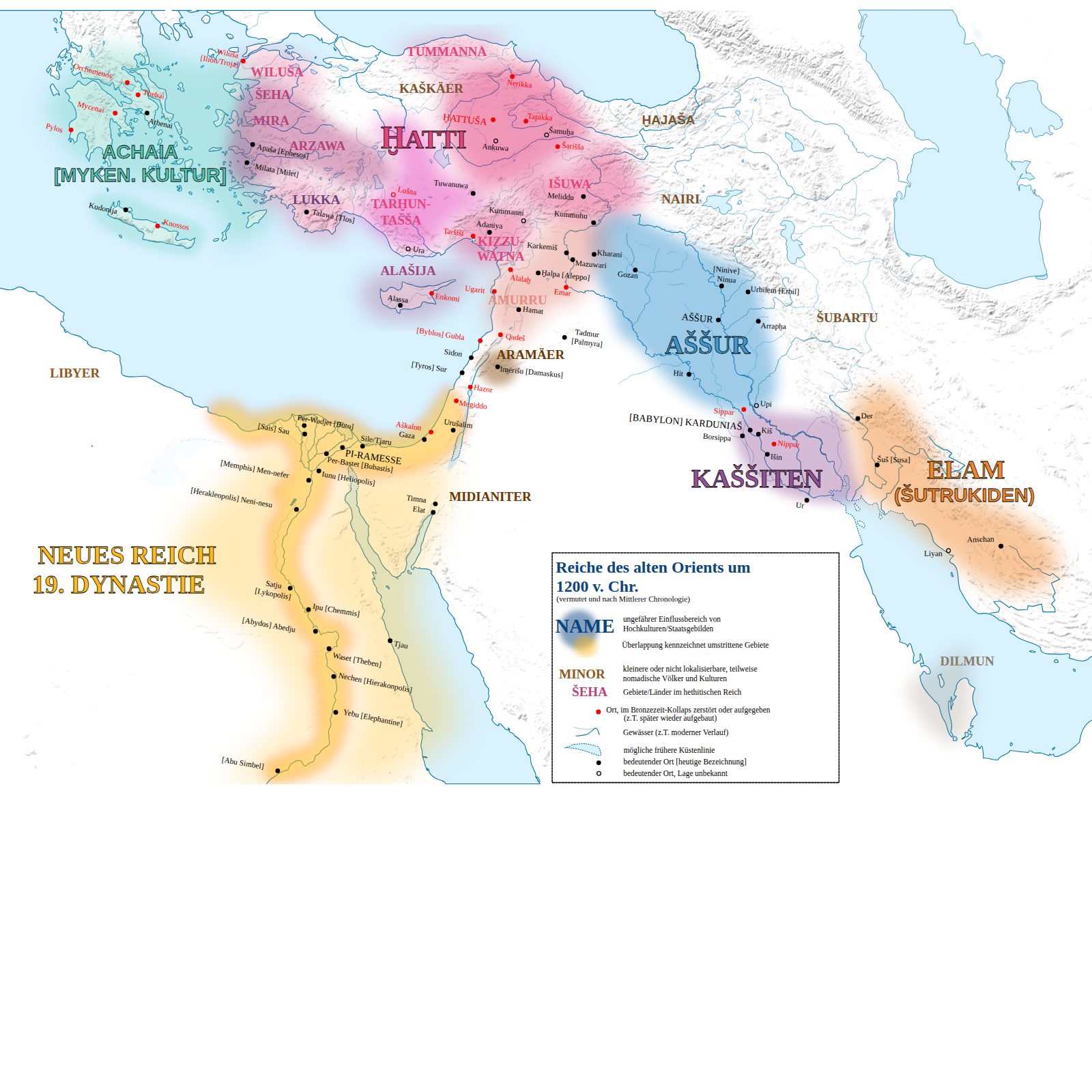
Moses has killed a man. The pharaoh wants him dead. He flees.
And for forty years, the story goes silent.
The silence is deliberate. The story does not tell us what happened in those forty years. It does not tell us how Moses lived in Midian, how he changed, how he prepared for the call that will come at the end of the period. It tells us some details — the well, the daughters of Jethro, the marriage, the sheep — but the forty years themselves are a blank space in the narrative, and the blankness is part of the story.
The reason for the blankness is that the forty years were not dramatic. They were ordinary. They were waiting. They were the years in which Moses went from the man who killed a taskmaster and fled to the man who would stand before the pharaoh and demand the release of a nation. But the story does not fill the gap with events. It simply marks the time and moves on.
This is one of the story's great devices, and it is worth understanding before we enter the details that are given.
The flight to Midian
Midian is in the northwestern Arabian peninsula, in the region of the modern Gulf of Aqaba, east of the southern Sinai and south of Edom. It is a land of wells and grazing, of desert and hills, of Semitic-speaking peoples who traded with the settled lands and who moved between the settled and the marginal.
The Midianites are known in the biblical tradition in several contexts. They are the people with whom Moses takes refuge. They are the people of Jethro, the priest who becomes his father-in-law. They are the people with whom Balaam has his dealings in the story of Numbers. And they are associated with the worship of Yahweh in some of the biblical traditions — the Kenites, a subgroup of the Midianites, are said to have come from the region and to have brought knowledge of Yahweh into Israel.
The geography of Midian matters for the story because it is a place outside Egypt, away from the pharaoh, away from the forced labour, away from the court. It is a place where Moses can disappear, where he can start again, where he can wait.
The flight itself is not described in detail. The story says: "But Moses fled from the face of Pharaoh, and dwelt in the land of Midian." That is all. He leaves Egypt. He goes to Midian. He dwells there. The journey is not described. The place is named. The time is given as forty years, later.
The well
The first scene in Midian — the only scene from the early part of the exile that the story narrates — is at a well.
"Moses fled from the face of Pharaoh, and he sat down by a well." The well is the meeting place. In many ancient societies, the well is the place where people gather, where news is exchanged, where encounters happen. The well in Midian is where Moses meets the daughters of Jethro.
The story says: "Now the priest of Midian had seven daughters: and they came and drew water, and filled the troughs to water their father's flocks. And the shepherds came and drove them away: but Moses stood up and helped them, and watered their flocks."
The scene is a reversal of the murder scene. Moses sees a wrong, and he intervenes. But this time, he intervenes peaceably. He stands up. He helps the women. He waters the flocks. There is no violence. There is no burial in the sand. There is no flight.
The story is telling us, by this reversal, that Moses has changed. The man who killed a taskmaster and fled has become a man who helps shepherds' daughters water their flocks. The anger is still there — the sense of injustice is still there — but the action is different. The violence is gone. The intervention is peaceful.
This is one of the most effective single details in the story. The contrast between the murder scene and the well scene is the story's way of showing us that Moses has changed, without telling us directly. We see it in what he does.
The daughters report to their father that an Egyptian had rescued them. Jethro invites Moses to stay. Moses stays. He marries one of the daughters, Zipporah. He becomes part of the family.
Jethro
Jethro is the priest of Midian. The name "Jethro" is the Hebrew rendering; in the text, he is also called Reuel. The two names are used in different passages, and scholars have debated whether they refer to the same person or to two different individuals. The most common resolution is that "Reuel" is a personal name meaning "friend of God" and "Jethro" is a title meaning "his excellence" or "his surplus," and that the same person is known by both. The text uses both names.
Jethro is a priest. The text does not say which god he worships. The Midianites are a Semitic-speaking people, and the region in which they live is associated with the worship of Yahweh in some biblical traditions — the Kenites, associated with the Midianites, are said to have brought knowledge of Yahweh into Israel. The story does not make Jethro an Israelite or a worshipper of Yahweh in the Israelite sense. He is a priest of the Midianite religion, whatever that is, and Moses marries his daughter and lives with him.
The detail that Moses' father-in-law is a priest of someone else's god is one of the most striking in the story. Moses, the future lawgiver and prophet of Israel, marries the daughter of a non-Israelite priest. His family is connected to the religious world of the region, not just to Israel. The story does not hide this. It presents it matter-of-factly.
This detail is consistent with the picture we have already built: Moses has an Egyptian name. He is a Levite. He is raised in the Egyptian court. He fled to Midian. He marries the daughter of a Midianite priest. His life is woven into the wider world of the ancient Near East, not confined to Israel. The story preserves these connections, and they are part of what makes the portrait specific and real.
Jethro will appear later in the story, in Exodus 18, to give Moses management advice. That appearance is one of the most human scenes in the entire narrative, and it will be the subject of a later chapter. But for now, Jethro is the father-in-law who takes Moses in, who gives him a home, who gives him a wife, who gives him a place to wait.
Zipporah
Zipporah is Moses' wife. Her name means "bird" — a small, quick thing. She is one of the daughters of Jethro. She becomes Moses' wife. She has a son, Gershom, whose name means "a stranger there," because Moses says: "I have been a stranger in a strange land."
The circumcision episode, which will appear later in the story, involves Zipporah in one of its most puzzling and disturbing scenes. In Exodus 4:24–26, on the way back to Egypt, Yahweh meets Moses and seeks to kill him — for reasons that are not fully explained, but that have to do with the uncircumcised son. Zipporah cuts off her son's foreskin and touches it to Moses' feet, saying: "A bloody husband art thou because of the circumcision." The threat is averted.
The scene is strange. It is violent. It is brief. It is unexplained in the text. It is one of the great puzzles of the Moses story, and it deserves a chapter of its own later in the book. For now, it is enough to note that Zipporah appears in it, with a knife, and that the scene is one of the moments where the story's roughness shows through.
Zipporah is not a major character in the story, but she is present in the key moments — the marriage, the son, the circumcision. She is the woman Moses marries in exile, the woman who bears his first son, the woman who saves him at the circumcision. The story does not give her much space, but it gives her these moments, and they are real moments.
The forty years
The story says that Moses dwelt in Midian for forty years. The number forty is a biblical symbol for a generation, for a complete period of waiting, for the time it takes for a people or a person to change. The wilderness wandering is forty years. The flood lasts forty days and forty nights. The number means a long, complete period.
The forty years in Midian are a period of waiting. Moses waits for the call. He waits in the desert. He shepherds. He lives with Jethro. He has a family. He becomes a shepherd. He learns the desert. He waits.
The story does not tell us what Moses thought, or what he prayed, or what he dreamed. It does not tell us that he was preparing for the call. It does not tell us that he was studying the desert or learning leadership or practising his speaking. It simply tells us that he dwelt in Midian for forty years.
The silence is deliberate. The story is saying that the waiting was not dramatic. It was ordinary. It was the time it takes for a man to become the man he needs to be. The call comes after the waiting, not during it. The story does not fill the waiting with events because the waiting was not made of events. It was made of time.
This is one of the story's great truths about preparation. Preparation is not always visible. It is not always dramatic. Sometimes it is just time, and patience, and living in the desert. The caller — the one who calls — does not arrive until the waiting is over. The story respects the waiting. It does not rush it. It marks it with a number and moves on.
The landscape of Midian
To understand the forty years, it helps to understand the landscape.
Midian is desert and hills and wells. It is the land of the northwestern Arabian peninsula, east of the Gulf of Aqaba. The landscape is open, arid, and beautiful. The wells are the resources. The grazing is the economy. The movement of flocks is the life.
The desert is a place of solitude. It is a place where a man can be alone with his thoughts, if he has thoughts to be alone with. It is a place where the noise of Egypt is gone, the noise of the court, the noise of the forced labour, the noise of the pharaoh's demand — all of it is gone, and there is only the desert and the sheep and the well and the family.
The desert is a place of change. It is a place where a man can change in ways that are not visible to anyone else. Moses spent forty years in the desert. The story does not tell us what changed, but it tells us that he was different when the call came. The man who answered the call at the bush was not the man who killed the taskmaster. The desert was part of the difference.
The landscape is also the setting for the call. The call comes at Mount Horeb, the mountain of God, in the wilderness of Midian or near it. The bush is on the mountain. The call is in the desert. The story takes the call to the desert, because the desert is the place of waiting and the place of the call.
The silence and its meaning
The forty years of silence is one of the story's great structural devices. The story skips the time. It does not fill it. It marks it with a number and moves on to the next event.
The reason is that the time was not dramatic. The forty years were ordinary. They were waiting. They were the time it took for Moses to become ready. The story does not narrate the waiting because the waiting was not dramatic. It was a period of life, and the story moves from the flight to the call without filling the gap.
The silence also has a theological point. The call comes from God, and the time before the call is God's time. The waiting is not the man's doing. It is the time God gives, or the time the story gives, before the call comes. The silence is the time between the act and the calling, and the story respects the silence.
The silence is also a narrative device. The story sets up the contrast between the man who killed and fled and the man who answers the call. The forty years are the bridge between the two. The story does not fill the bridge with events because the bridge is a period of change that is not easily narrated. The change is in the man, not in the events. The story respects this.
What we know about Moses in Midian
We know that he fled. We know that he dwelt in Midian. We know that he sat by a well. We know that he helped the daughters of Jethro water their flocks. We know that he was invited to stay. We know that he married Zipporah. We know that he had a son, Gershom. We know that he was a shepherd. We know that he stayed for forty years.
These are the facts. They are sparse. They are deliberate. The story gives us the facts and does not try to embellish them. The story trusts the facts to carry the weight.
The sparseness is part of the honesty of the story. The story does not invent details to fill the gap. It does not tell us that Moses studied the prophets or that he built a school or that he wrote a book. It tells us the facts and leaves the rest in silence.
The silence is part of the integrity of the story. The story does not pretend to know more than it knows. It tells us what it tells us, and it does not tell us the rest.
The call is coming
The forty years end with the call. The call comes at the bush, on Mount Horeb. The call is the next event in the story. The story moves from the silence to the call.
The call is the great turning point of the story. Moses is a shepherd in Midian. He is living an ordinary life. And the call comes. The bush burns. The voice speaks. The name is given. The assignment is given. The objections begin.
The call is the event that changes everything. The man who was a shepherd in Midian becomes the man who confronts the pharaoh. The silence ends. The story begins again.
But the call comes only after the forty years. The story does not rush. The story waits. The call comes when the waiting is over. The story respects the waiting.
The next chapter — the bush — is the call. The scene is one of the most important in the story. The bush, the name, the five objections, the argument, the loss. The reader should come to it knowing that the silence has ended, and that the story is about to move.
The Bush
Forty years in Midian. A shepherd's life. A man grown older, quieter, changed by time and desert.
And then, one day, a bush that burns but is not consumed.
This is the scene that changes everything. This is the call. This is the moment when the silence ends and the story begins again. The man who has been waiting for forty years is called. He argues. He loses. He is sent.
This is the most important single scene in the early part of the Moses story, because it is the moment of assignment. Everything before it — the basket, the murder, the flight to Midian, the forty years — leads to this. Everything after it — the plagues, the sea, the law, the wilderness, the failure at Meribah, the death on the mountain — follows from this.
The scene is one of the most carefully constructed in the entire narrative, and it deserves to be read slowly, scene by scene, for what it says and how it works.
The setting
Moses is a shepherd. He is tending the flock of his father-in-law Jethro. He drives the flock into the wilderness, to the west, to the mountain of God — Horeb, which is another name for Sinai. He is in the desert. He is alone, with the sheep.
The mountain is called the mountain of God. The name tells us that this place is already known as holy, or is about to become known as holy. The story does not tell us why it is called the mountain of God at this point. It simply tells us that it is.
Moses is in the wilderness, far from Egypt, far from the court, far from the forced labour, far from the people he wanted to defend. He is in the place of waiting, the place of solitude, the place of change. And the call comes here.
The location is deliberate. The call does not come in the palace. It does not come in the brickfields. It does not come in the presence of the pharaoh. It comes in the desert, to a shepherd, in the silence of the years. The call comes in the place where Moses has been waiting, and the waiting is now over.
The bush
The angel of Yahweh appears to Moses in a flame of fire from the midst of a bush. Moses sees it. The bush is burning. But the bush is not consumed. The fire does not go out. The bush does not turn to ash.
Moses says: "I will now turn aside, and see this great sight, why the bush is not burnt."
Moses turns aside to look. This is one of the most important movements in the scene. Moses does not ignore the burning bush. He turns aside to see it. He is curious. He is drawn. He pauses from his shepherding to look at the wonder.
And when he turns aside, God calls to him from the midst of the bush. "Moses, Moses." And Moses says: "Here am I."
The pattern is deliberate. The call requires a turning aside. Moses has to stop what he is doing and look. The call does not come to the busy man. It comes to the man who notices. The call comes to the man who turned aside to see.
The burning bush is a theophany — a visible appearance of God. The angel of Yahweh is in the bush. The bush is the place. The fire is the presence. And the sign is that the bush burns but is not consumed — a symbol, if one wants to read it, of the people of Israel in the fire of Egypt, burning but not destroyed, a symbol of the weak that is not consumed by the power that surrounds it, a symbol of the man who has been through the fire and is still there.
This is one of the great images in religious literature. The bush burning without being consumed is an image that has stuck. It is the image of the call. It is the image of the presence that does not destroy. It is the image that has been painted and imagined and thought about for three thousand years.
Take off your sandals
God says: "Do not draw near here. Take your sandals off your feet, for the place where you stand is holy ground."
The command is about reverence, about the holiness of the place, about the limit that the presence sets. Moses must not approach casually. He must take off his sandals. The ground is holy. The presence has made it so.
The act of taking off the sandals is a gesture of respect, of separation from the ordinary, of entering the holy. It is the same gesture that appears in other theophanies — the washing of feet, the unveiling, the act of approaching the presence with humility.
The holiness of the ground is the holiness of the presence. The place is holy because God is there. The command is about the relationship between the human and the divine: the human must approach with humility, with the recognition that the ground is holy, with the recognition that the presence sets a limit.
Moses hides his face. The text says: "Moses hid his face, for he was afraid to look at God." The fear is the appropriate response to the presence. Moses does not look. He hides his face. He is afraid. The fear is the recognition of the otherness of God.
The commission
God says: "I have surely seen the oppression of my people who are in Egypt, and have heard their cry because of their taskmasters; for I know their sorrows. So I have come down to deliver them from the hand of the Egyptians, and to bring them up from that land to a good and broad land, a land flowing with milk and honey, to the place of the Canaanite, the Hittite, the Amorite, the Perizzite, the Hivite, and the Jebusite. Come now, therefore, and I will send you to Pharaoh, that you may bring My people, the children of Israel, out of Egypt."
The commission is the heart of the scene. God tells Moses what God has seen and heard and known — the oppression, the cry, the sorrows. God says: I have come down to deliver them. I have come down to bring them to a good and broad land, a land flowing with milk and honey, to the land of the Canaanite and the Hittite and the Amorite and the Perizzite and the Hivite and the Jebusite.
The list of the peoples of Canaan is specific. The land is not empty. It is occupied by peoples. The promise is not a promise of vacant land. It is a promise of a land that is inhabited, and that will have to be entered. The story is already aware that the promised land is not vacant, and the list of peoples is the first sign of the tension that will run through the rest of the story.
The commission is: Go to Pharaoh. Bring the people out. This is the assignment. This is the task. The man who has been waiting for forty years is given the task of confronting the pharaoh and liberating the nation.
The language is deliberate. God says: "I have come down." The divine presence is not remote. God has come down to see and to hear and to act. The story presents a God who is close to the suffering of the people, who sees and hears and knows their sorrows, and who comes down in response.
The first objection: "Who am I?"
Moses answers: "Who am I, that I should go to Pharaoh, and that I should bring the children of Israel out of Egypt?"
The first objection is the question of identity and adequacy. Moses is saying: I am not the person for this. I am not qualified. I am just a shepherd. I am a man who fled Egypt. I am not a leader. I am not a prince anymore. Who am I to do this?
The objection is the first of five. Moses does not accept the commission. He argues. He resists. This is not a story of eager acceptance. This is a story of reluctance. The man who is called does not want to be called. He argues. He loses. He is sent.
God's answer to the first objection is: "I will be with you." The sign of the adequacy is not Moses' own ability. It is God's presence. The task is not to be done by Moses' strength. It is to be done by God's presence with Moses. The answer is not a reassurance of Moses' own power. It is the promise of the presence.
The sign of the commission is the return: "When you have brought the people out of Egypt, you shall serve God on this mountain." The sign is that Moses will return to this mountain, to the place of the call, after the liberation. The mountain is the sign that the commission is real.
The second objection: "What is his name?"
Moses says: "Behold, when I come to the children of Israel, and say to them, 'The God of your fathers has sent me to you,' and they say to me, 'What is His name?' what shall I say to them?"
The second objection is the question of the name. Moses knows that the people will ask for the name of the God who is sending him. The Hebrew name of God is a matter of tradition and mystery. Moses needs to know what to say.
God answers: "I AM WHO I AM." In Hebrew: Ehyeh Asher Ehyeh. And God says: "Thus you shall say to the children of Israel, 'I AM has sent me to you.'"
And God continues: "Thus you shall say to the children of Israel, 'Yahweh, the God of your fathers, the God of Abraham, the God of Isaac, and the God of Jacob, has sent me to you.' This is My name for ever, and this is My memorial to all generations."
The name is one of the most famous and most discussed in religious history. Ehyeh Asher Ehyeh is deliberately ambiguous. It can mean "I am who I am" — the absolute being, the one who is, the unchanging presence. It can mean "I will be who I will be" — the future, the becoming, the one who is not fixed in any one form. It can mean "I am what I am" — the self-definition, the one who defines himself.
The ambiguity is deliberate. The name is not a clear definition. It is a revelation that keeps its distance. God says: I am. I will be. This is how you answer. The name is the presence, and the presence is the name, and the name is the presence, and both are beyond full comprehension.
The name Yahweh is given as the name to be used in relation to the people. The God of Abraham, Isaac, and Jacob — the God of the fathers, the God of the covenant, the God who has been with the people before — is the God who is sending Moses. The name is connected to the tradition, to the history, to the covenant.
The revelation of the name is the revelation of the God who sends Moses. The name is the God of the fathers, the God of the covenant, the God who is present, the God who comes down, the God who liberates. This is the name of the God of the Exodus.
The third objection: "They will not believe me"
Moses says: "But behold, they will not believe me, nor hearken to my voice; for they will say, 'Yahweh has not appeared to you.'"
The third objection is the question of credibility. Moses knows that the people will not believe him. He knows that he will be seen as a stranger, as a man who has no authority, as a man who is not credible. He knows the problem.
God's answer is to give Moses signs. Three signs.
The first sign: "Take your staff in your hand, and go, and the staff will become a serpent." Moses takes the staff. He throws it on the ground. It becomes a serpent. He picks it up by the tail. It becomes a staff again.
The second sign: "Put your hand into your bosom." Moses puts his hand into his bosom. He takes it out, and it is leprous — white as snow. He puts it back. He takes it out, and it is healed.
The third sign: "If they will not believe you, nor hearken to the voice of the first sign, they will believe the voice of the latter sign. And it shall come to pass, if they will not believe you also for this second sign, that you shall take of the water of the river, and pour it on the dry land; and it shall become blood."
The signs are the credentials. They are the proof that the call is real. They are the power that accompanies the commission. The staff that becomes a serpent and back, the hand that becomes leprous and back, the water that becomes blood — these are the signs that Moses will use to show the people that the God of the fathers has appeared to him.
The signs are also the signs that Moses will use in the confrontation with the pharaoh. The staff becomes a serpent. Aaron throws it down. The Egyptian magicians replicate it. The contest is on.
The signs are the interface between the divine call and the human mission. They are the visible evidence of the invisible reality. They are the thing that makes the mission credible.
The fourth objection: "I am not a man of words"
Moses says: "O my Lord, I am not a man of words, neither heretofore, nor since you have spoken to your servant; for I am slow of speech, and of a slow tongue."
The fourth objection is the speech impediment. This is the objection that will become a chapter of its own later. Moses says: I am not a man of words. I am not an orator. I am slow of speech. I am slow of tongue. I cannot do this. I am the wrong person.
The objection is one of the most important in the scene, because it reveals something essential about Moses. He is not a natural speaker. He is not a man of words. This will be a recurring theme in the story, and it is one of the things that makes the portrait honest and specific.
God's answer is one of the most remarkable in the scene. God says: "Who has made man's mouth? Or who makes the dumb, or mute, or the blind, or the seeing? Have not I the Lord? Now therefore go, and I will be with your mouth, and teach you what you shall speak."
God's answer is not a removal of the impediment. It is a promise of presence. God will be with Moses' mouth. God will teach him what to speak. The impediment is not removed. The presence is provided.
The answer is also a theological point. Who made the mouth? Who makes the dumb and the mute and the blind and the seeing? God made it all. The impediment is from God, or at least within the range of God's power, and God will work with it. The impediment is not a disqualification. It is the human condition, and God will use it.
Aaron is appointed. God says: "Now take Aaron your brother, and bring him back to you. He will speak for you. He will be your mouth, and you will be for him as God and as a prophet."
The speech impediment is not solved. Aaron is the solution. Moses will be the prophet. Aaron will be the mouth. The division of roles is the accommodation of the human condition. Moses is not a man of words. Aaron is. Together, they will do what needs to be done.
The fifth objection: "Send someone else"
Moses says: "O my Lord, please send, by the hand of him whom you will send."
The fifth objection is the refusal. Moses is saying: Send someone else. Anyone but me. The call is too much. The assignment is too dangerous. I am the wrong person. I am not the person. Send someone else.
The refusal is the last of the five. It is the most complete. It is the refusal to accept the call at all. And it is the point at which the story says: enough.
God's anger is hot. The text says: "And the anger of Yahweh burned against Moses." The refusal has consequences. The call is not negotiable. The assignment is given. The man who refuses will be sent anyway.
The story says: "Is not Aaron the Levite your brother? I know that he will speak well. And look, he is coming out to meet you. And when he sees you, he will be glad in his heart. And you shall speak to him, and put the words in his mouth. And I will be with your mouth and with his mouth, and will teach you what you shall do. And he will be a mouth for you, and you will be for him in the place of God. And take this staff in your hand, with which you will do the signs."
God has the solution. Aaron is the brother. Aaron is a Levite. Aaron speaks well. Aaron is coming to meet Moses. Aaron will be the mouth. Aaron will do the speaking. Moses will be the prophet. The staff is the instrument. The signs are the credentials. The commission is given.
The fifth objection is the last. Moses has argued five times. He has lost five times. He is sent.
The question of reluctance
The five objections are the most important part of the scene for the reader who wants to understand Moses' character.
Moses does not accept the call eagerly. He argues. He resists. He says: Who am I? What is the name? They will not believe me. I am not a man of words. Send someone else.
The five objections are specific. They are not vague nonsense. They are real objections, the kind of objections a sensible man would make.
Who am I? — I am a fugitive. I am a shepherd. I am not a leader. I am not a prince anymore.
What is the name? — I do not know what to say. I do not know how to answer the people. I need the name.
They will not believe me. — I have no credibility. I have no authority. I am not credible.
I am not a man of words. — I cannot speak. I am slow of speech. I am slow of tongue. I am the wrong person for a task that requires words.
Send someone else. — I will not do this. I am the wrong person. I will not.
The objections are real. The reluctance is real. The story presents the reluctance honestly. The man who is called does not want to be called. He argues. He resists. He loses.
This is one of the things that makes the portrait honest. The story does not pretend that Moses was eager. The story does not pretend that the call was a welcome thing. The story presents the reluctance as part of the character. The man who argues with the call is the man who will become the leader of the people. The reluctance is part of the story, and the story does not hide it.
The story is also aware that the reluctance is not just resistance. It is also a kind of humility. Moses does not think he is the right person for the job. He is right. He is not. But the call is not about Moses being the right person. It is about God being present with the wrong person. The call is not a reward for the qualified. It is a mission for the reluctant.
The name of the bush
The burning bush is one of the great images of the story, and it is an image that has a life of its own.
The bush is seneh in Hebrew — a bramble bush, a thorny bush, a shrub. The bush is not a glorious tree. It is a shrub, a thorny thing, a common plant. The fire is in the common bush. The presence is in the ordinary.
The image is that God is in the ordinary thing, in the common bush, in the thorny shrub. The presence is not in the palace. It is not in the temple. It is not in the beautiful and the grand. It is in the common. It is in the bush. It is in the ordinary.
The fire is that the bush burns but is not consumed. The fire is the presence. The bush is the vessel. The fire does not destroy the vessel. The presence is in the thing, and the thing is not consumed. The presence is the fire, and the fire is the presence, and the bush is the bush, and the fire is the fire, and the bush burns but is not consumed.
The image is one of the great symbols of the story. The bush is a symbol of the people in the fire, burning but not destroyed. The bush is a symbol of the weak in the presence of the powerful, not consumed. The bush is a symbol of the man who has been through the fire and is still there. The bush is a symbol of the presence that does not destroy.
The image has a life of its own, and it is one of the things that has made the story last. The burning bush is the image of the call. The burning bush is the image of the presence. The burning bush is the image of the mystery.
The signs
The three signs — the staff that becomes a serpent, the hand that becomes leprous, the water that becomes blood — are the credentials of the call.
The signs are not just magic tricks. They are the visible evidence of the invisible reality. They are the thing that bridges the gap between the call and the mission. They are the proof that the call is real.
The signs are also the signs that Moses will use in the confrontation with the pharaoh. The staff that becomes a serpent. Aaron throws it down. The Egyptian magicians replicate it. The contest is on. The signs are the beginning of the confrontation.
The signs are also the signs of the power of God. The staff is a common thing. It becomes a serpent. The hand is a common thing. It becomes leprous and back. The water is a common thing. It becomes blood. The signs are the power of God in the common things. The signs are the presence of God in the ordinary.
The signs are the beginning of the story of the plagues. The staff becomes a serpent. The water becomes blood. The signs are the prelude to the plagues. The signs are the beginning of the confrontation.
The signs are also the signs of the credibility of Moses. Moses is a man who is not credible. The signs make him credible. The signs are the thing that makes the mission possible.
The signs are the beginning of the story. The story of the plagues, the sea, the law, the wilderness — all of it begins with the signs. The signs are the first visible act of the story. They are the first proof. They are the first step.
The call is given
The call is given. The silence is over. The forty years are ended. Moses is called. He argues. He loses. He is sent.
The call is the turning point of the story. Everything before it — the basket, the murder, the flight, the exile, the silence — leads to this. Everything after it — the plagues, the sea, the law, the wilderness, the failure, the death — follows from this.
The call is the event that changes everything. The man who was a shepherd in Midian becomes the man who confronts the pharaoh. The silence ends. The story begins again.
The call is the great scene of the story. The burning bush, the name, the five objections, the signs, the loss. The scene is the most important in the early part of the story, and it is the scene that sets the tone for the rest.
The scene is also the scene that reveals Moses' character most clearly. The man who argues, the man who resists, the man who is reluctant, the man who is not a man of words, the man who is sent anyway. This is the man who will become the leader of the people. This is the man who will stand before the pharaoh. This is the man who will lead the people to the sea.
This is the man who will fail at Meribah. This is the man who will die on the mountain. This is the man who will be buried by God in an unmarked grave.
The call is the beginning of the story of this man. The call is the event that makes the story possible. The call is the event that sets the story in motion.
The next chapter — the speech impediment — will develop the fourth objection in more detail, and will discuss what it means that the tradition kept this detail about the man who is the lawgiver and the prophet and the man who spoke with God.
The call has been given. The story is on its way.
I Have Never Been a Man of Words
Moses has argued five times. He has lost five times. He is sent.
The fifth objection was the most complete: "Send someone else." Moses does not want this. Moses resists. Moses loses. And the story gives him Aaron.
But before the story gives him Aaron, before the story lets Moses off the hook, it gives us one of the most specific and most preserved details in the entire portrait: Moses' speech impediment.
This is the one detail that, more than any other, tells us something genuine about the man behind the story. Not that he existed. Not that he did what the story says. But that he was not the man of words we might expect the founder of a great tradition to be.
The objection
The time is the bush. The Great Commission is given. Moses has just lost the fourth argument, the one about the signs. And he says:
O my Lord, I am not a man of words, neither heretofore, nor since thou hast spoken unto thy servant: for I am of a slow mouth and a slow tongue.
The Hebrew is worth seeing directly, because it is one of the most specific things in the text.
The phrase is kaved peh — "heavy of mouth" — and aroked lashon — "slow of tongue."
Kaved is the word for heavy, weighty, difficult. A kaved peh is a mouth that is heavy, that is not easy to move, that is not easy to speak with. A mouth that is slow to respond, slow to form words.
Aroked is the word for slow, lazy, dull. A aroked lashon is a tongue that is slow, that does not move easily, that is not quick with words.
The combination — heavy mouth, slow tongue — is specific. It is not a metaphor. It is not a figure of speech for "I am shy." It is a physical description. It is the description of a man who has a difficulty with speech.
And the record is absolute. Moses says: neither heretofore, nor since thou hast spoken unto thy servant. This is not a new problem. This is the problem that has always been there. This is the man's condition.
The condition is not hidden. The condition is named. The condition is part of the portrait.
What the impairment is
Scholars have debated this for as long as scholars have debated anything about Moses. What kind of speech problem is this?
The most straightforward reading is a stammer or a speech defect — a difficulty with articulating words, a hesitancy, a problem with the mouth and the tongue. The description — heavy mouth, slow tongue — sounds like a stammer. A man who stammers does not speak quickly. His mouth is heavy with the effort of words. His tongue is slow to find its place.
Another reading is a general difficulty with public speaking — not a physical defect, but a temperament, a man who is not an orator, who is slow and hesitant when he has to speak to a crowd or to a court or to a king. The phrase could describe a man who is not a natural speaker, who finds speaking difficult, who is slow to find the right words.
Another reading is a metaphorical use of the phrase — the story is describing Moses' reluctance in a physical way, using the body to express the will. The man who does not want to speak says: my mouth is heavy, my tongue is slow. The reluctance is expressed as a physical condition.
The honest answer is that we do not know exactly what the text means, and that the honest book should say so. The phrase is specific, and it is physical, and it describes a difficulty, but the exact nature of the difficulty — stammer, speech defect, temperament, metaphor — is not settled, and the book should not pretend to settle it.
What is settled is this: the text describes Moses as a man with a difficulty with speech, and it describes this difficulty as something that has always been there, and it describes this difficulty as something that is part of who Moses is.
The thing that is striking: the tradition kept it
This is the striking thing. The founder of the greatest speech-based tradition in the ancient world — the man who received the law, the man who spoke with God, the man who led the people, the man who is the centre of the story — is described as a man who cannot speak.
The founder is not a man of words. The founder is slow of mouth. The founder is slow of tongue. The founder cannot speak.
This is not the portrait we would make up. If we were writing a story about the founder of a great tradition, we would make him eloquent. We would give him the words. We would make him the speaker. We would make him the man who had the gift.
The story does not do this. The story presents Moses as a man who cannot speak. The story presents Moses as a man who needs Aaron. The story presents Moses as a man who speaks poorly, or not at all, and relies on someone else for the words.
And the tradition keeps this. The rabbis do not fix it. They do not erase it. They do not pretend that Moses was eloquent. The tradition preserves the difficulty. The tradition preserves the slow mouth and the slow tongue.
This is one of the things that makes the portrait honest. The story does not flatter Moses. The story does not give him what we would give him. The story gives him what he is. A man with a difficulty with speech.
The significance of the detail
The significance of the detail is that it tells us something true about the man behind the story — something that is hard to invent, and that the tradition would have no reason to invent.
Think about it from the point of view of the tradition. If Moses was a real person, and the tradition remembered him as a man with a speech difficulty, then the story would preserve the difficulty. The tradition would remember the man who stammered, the man who was slow of mouth, the man who needed Aaron. The tradition would preserve this because it was true, because it was part of who Moses was, because it was part of the memory.
If Moses was not a real person, if the story was invented, then we would have to ask: why would the inventor give his hero a speech difficulty? Why would the inventor make the founder of the tradition a man who cannot speak? This is not something an inventor does. An inventor makes the hero eloquent. An inventor makes the hero the man of words.
The detail is the kind of detail that a real person leaves behind. The detail is the kind of detail that memory preserves. The detail is the kind of detail that an inventor would not invent.
This is the argument that the detail is evidence. The detail is evidence that the portrait is built around a real person, or around a memory of a real person, and that the portrait preserves the person's real characteristics, even the difficult ones.
God's answer
The story gives us God's answer to the objection. And God's answer is one of the most remarkable in the scene.
God says: Who hath made man's mouth? or who maketh the dumb, or mute, or the blind, or the seeing? have not I the Lord? now therefore go, and I will be with thy mouth, and teach thee what thou shalt speak.
The answer is not a healing. It is a presence. God does not remove the impediment. God does not fix the mouth. God does not make the tongue quick. God says: I will be with your mouth. God will teach you what to speak.
The impediment remains. The presence is provided. The problem is not solved. The presence is the solution.
The answer is also a theological claim. Who made the mouth? Who made the dumb and the mute and the blind and the seeing? God made it all. The impediment is from God, or at least within the range of God's power, and God will work with it. The impediment is not a disqualification. It is the human condition. It is the thing that God made. It is the thing that God will use.
The answer is also a division of labour. Moses speaks. Moses is slow. God is with Moses' mouth. God teaches Moses what to speak. The words are God's, not Moses'. Moses is the channel. Moses is the mouth, but the words are God's.
This is the speech of Moses is the speech of God, not the speech of Moses. Moses is the man of the slow mouth, but the words are God's. The slow mouth is the vessel for the words of God.
Aaron
And then God gives Moses the solution to the problem of speech: Now take Aaron your brother, and bring him back to you. He will speak for you. He will be your mouth, and you will be for him as God and as a prophet.
Aaron is the mouth. Aaron is the spokesman. Aaron speaks. Moses is the prophet. Moses is the one who hears God. Moses is the one who carries the words. Aaron is the one who speaks them.
The division is clear. Moses is the prophet. Aaron is the spokesman. Moses hears. Aaron speaks. Moses carries the words. Aaron delivers the words.
The division is the solution to the problem of the slow mouth. Moses cannot speak. Aaron can. Together, they do what needs to be done.
The division is also the division of the future. Aaron is the first high priest. Aaron is the father of the priestly line. Aaron is the spokesman for the leader who is not a speaker. The division is the beginning of the pattern of the future: the prophet and the priest, the man of the word and the man of the mouth, the one who hears and the one who speaks.
The division is also the division of the character. Moses is the man of the slow mouth. Aaron is the man of the quick mouth. Moses is the man of the word of God. Aaron is the man of the voice of Moses. The division is the division of the two brothers, and the division runs through the story.
The contrast with later tradition
The later tradition — Philo, the rabbis, the Christian tradition — tries to make Moses eloquent. The later tradition tries to fix the problem. The later tradition does not like the portrait of the man who cannot speak.
Philo reads Moses as the philosopher, the man who knows the truth, the man who has the perfect knowledge. Philo has to deal with the impediment, and he does so by reading it as a metaphor for the soul's ascent, for the difficulty of expressing the divine in human words. Philo does not deny the impediment. He reinterprets it.
The rabbis preserve the impediment, but they also amplify Moses' authority. The rabbis make Moses the greatest of prophets, the man who spoke with God face to face, the man who received the law, the man who had the greatest knowledge. The rabbis do not erase the impediment. They keep it. But they also give Moses the authority that the impediment seems to deny.
The later tradition is uneasy with the impediment. The later tradition wants a Moses who is eloquent, who is a speaker, who is the man of words. The later tradition does not fully succeed in erasing the impediment, but it tries. The later tradition is the unease.
The biblical text is not uneasy. The biblical text presents the impediment. The biblical text does not try to fix it. The biblical text does not try to explain it away. The biblical text presents the man with the slow mouth and the slow tongue, and the biblical text says: this is Moses, and this is who he is, and this is part of the portrait.
The biblical text is more honest than the later tradition. The biblical text preserves the difficulty. The later tradition tries to resolve it. The biblical text is the more honest portrait.
What this means for the portrait
The portrait of Moses is built on this detail. The man who cannot speak is the man who leads. The man who is slow of mouth is the man of the word of God. The man who needs Aaron is the man who will stand before the pharaoh.
The portrait is built on the contrast. The man who cannot speak is the man who leads. The man who is not a man of words is the man who speaks the word of God. The man who is slow of mouth is the man who carries the word of God.
The portrait is built on the humility. The man who cannot speak is the man who knows he cannot speak. The man who is slow of mouth is the man who knows his limitation. The man who needs Aaron is the man who accepts help. The man who is the founder is the man who is dependent on his brother.
The portrait is built on the truth. The man who cannot speak is the man who is real. The man who is slow of mouth is the man who is remembered. The man who needs Aaron is the man who is not invented.
The portrait is built on the honesty. The story does not hide the difficulty. The story does not pretend that Moses was eloquent. The story does not give Moses what we would give him. The story gives Moses what he is. A man with a difficulty with speech.
The portrait is built on the humanity. The man who cannot speak is human. The man who is slow of mouth is human. The man who needs Aaron is human. The founder is human. The founder is not the perfect speaker. The founder is the man with the slow mouth.
The theme runs through the story
The theme of the slow mouth runs through the story. It runs through the plagues, where Moses has to speak to the pharaoh, and Aaron speaks. It runs through the law, where Moses receives the words and Aaron delivers them. It runs through the wilderness, where Moses speaks to God and to the people, and Aaron is the voice. It runs through the failure at Meribah, where Moses speaks in anger and the words are his, and the failure is his. It runs through the end, where Moses speaks his last words, and the words are his, and the man who has been slow of mouth speaks what he has to say.
The theme is the theme of the story. The man with the slow mouth is the man of the word of God. The man who cannot speak is the man who speaks. The man who is slow of tongue is the man who carries the word. The man who needs Aaron is the man who leads.
The theme is the theme of the honesty. The story does not hide the slow mouth. The story does not hide the slow tongue. The story does not hide the need for Aaron. The story presents the man as he is, and the man is a man with a difficulty with speech.
The theme is the theme of the humanity. The founder is human. The founder is not the perfect speaker. The founder is the man with the slow mouth. The founder is the man who needs Aaron. The founder is the man who is slow of tongue.
The detail is the evidence
The detail is the evidence that the portrait is built around a real person, or around a memory of a real person, and that the portrait preserves the person's real characteristics, even the difficult ones.
The detail is the evidence that the story is not invented by a man who wanted to make a hero. The detail is the evidence that the story is built around a person who had this difficulty, and that the story preserved the difficulty because it was true.
The detail is the evidence that the tradition is honest. The tradition preserved the difficulty. The tradition did not fix it. The tradition did not pretend that Moses was eloquent. The tradition kept the slow mouth and the slow tongue.
The detail is the evidence that the portrait is specific. The portrait is not a general portrait of a great leader. The portrait is a specific portrait of a man with a difficulty with speech. The portrait is detailed. The portrait is specific. The portrait is honest.
The detail is the evidence that the story is built on memory, not on invention. The detail is too specific, too physical, too difficult to have been invented. The detail is the kind of detail that memory preserves. The detail is the kind of detail that an inventor would not invent.
The detail is the evidence that the story is built on the man who cannot speak, and that the story does not hide this. The story does not hide the slow mouth. The story does not hide the slow tongue. The story does not hide the need for Aaron.
The detail is the truth
The detail is the truth. The detail is the truth about Moses. The detail is the truth about the portrait. The detail is the truth about the tradition.
The detail is the truth that the founder of a great tradition is not a man of words. The detail is the truth that the man who received the law is a man of the slow mouth. The detail is the truth that the man who spoke with God is a man who cannot speak.
The detail is the truth that the story is honest. The story does not hide the slow mouth. The story does not hide the slow tongue. The story does not hide the need for Aaron.
The detail is the truth that the tradition is honest. The tradition preserved the difficulty. The tradition did not fix it. The tradition did not pretend that Moses was eloquent. The tradition kept the slow mouth and the slow tongue.
The detail is the truth that the story is built on memory, not on invention. The detail is the kind of detail that memory preserves. The detail is the kind of detail that an inventor would not invent.
The detail is the truth that the story is built on the man who cannot speak, and that the story does not hide this. The story does not hide the slow mouth. The story does not hide the slow tongue. The story does not hide the need for Aaron.
The detail is the portrait
The detail is the portrait. The portrait of Moses is the portrait of the man with the slow mouth. The portrait of Moses is the portrait of the man with the slow tongue. The portrait of Moses is the portrait of the man who needs Aaron.
The portrait is the portrait of the man who is not a man of words. The portrait is the portrait of the man who is slow of speech. The portrait is the portrait of the man who is slow of tongue.
The portrait is the portrait of the man who is the founder of a great tradition, and who cannot speak. The portrait is the portrait of the man who received the law, and who is slow of mouth. The portrait is the portrait of the man who spoke with God, and who is slow of tongue.
The portrait is the portrait of the man who is human. The portrait is the portrait of the man who is not the perfect speaker. The portrait is the portrait of the man who is the man with the slow mouth.
The portrait is the portrait of the man who is honest. The portrait is the portrait of the man who is specific. The portrait is the portrait of the man who is real. The portrait is the portrait of the man who is not invented.
The portrait is the portrait of the man who is Moses.
Ten Disasters
The confrontation begins.
Moses and Aaron stand before the pharaoh. They deliver the message. The pharaoh refuses. And the plagues begin.
The story of the plagues is the longest and most elaborate sequence in the Exodus narrative. It is the confrontation between the God of Israel and the Egyptian state, between the demand for liberation and the power that refuses to yield. The plagues are the argument of the story, the demonstration, the escalation, the thing that finally breaks the resistance.
The story is rich enough for more than one reading. A natural-cascade reading sees the plagues as a sequence of natural events that build on each other — the water turns, the frogs leave, the insects come, the diseases follow, the weather breaks, the locusts descend, the darkness comes, the death comes. A theological reading sees the plagues as a challenge to the Egyptian gods — the Nile, the frog goddess, the sun god, the whole order of Egyptian religion — and a demonstration that the God of Israel is greater than all of them. These readings are not mutually exclusive. The story is large enough for both, and an honest book should give the reader both without pretending that one replaces the other.
This chapter will tell the story of the plagues, and will give the reader the two readings, and will let the reader feel the force of the sequence. The next chapter will be the sea. The plagues end. The sea begins.
The first plague: blood
The first plague is blood. Moses and Aaron do as God commands. Aaron takes the staff and strikes the waters of the Nile. The waters turn to blood. The fish die. The river stinks. The Egyptians cannot drink the water. The blood is throughout the land.
Aaron's staff, the staff that became a serpent at the bush, is the instrument. The strike on the water is the act. The blood is the result.
The plague of blood challenges Hapi, the god of the Nile, the god of the annual flood, the god who gives the water of life to Egypt. The Nile is the source of Egyptian life. The Nile is sacred. And the plague turns the Nile to blood. The life-source becomes death. The god of the Nile is challenged by the God of Israel.
The time is seven days. The text says the plague lasts seven days. The blood is in the river. The Egyptians cannot drink. The magicians — the court wizards, the ones who serve the pharaoh — replicate the sign. They turn water to blood with their enchantments. But the plague is real. The river is blood. The magicians can do the same trick, but the river is still blood. The plague is not ended by the magic. The plague is the power of God, and the magic is a copy.
The pharaoh's heart is hardened. The text says: And Pharaoh's heart was hardened, and he did not listen to them, as Yahweh had said.
The hardening of the heart is the beginning of the pattern. The pharaoh refuses. The heart is hardened. The plague is over. The next plague comes.
The second plague: frogs
The second plague is frogs. Moses and Aaron are told to tell the pharaoh: Let my people go, that they may serve me. The pharaoh refuses. And the frogs come.
The frogs come up from the river. They cover the land. They go into the houses, the chambers, the beds, the kneading bowls, the ovens. They are on the people. The frogs are everywhere.
The plague of frogs challenges Heqet, the frog-headed goddess of birth and fertility. Heqet is the goddess of the frog, the goddess of the birth, the goddess of the life that comes from the Nile. And the plague sends the frogs as a plague, not as a blessing. The goddess of fertility becomes the agent of death. The symbol of life becomes the instrument of plague.
The text is vivid. The frogs are on the people. The frogs are in the beds. The frogs are in the kneading bowls. The frogs are everywhere. The plague is a nuisance, but it is also a humiliation. The symbol of the Egyptian god is everywhere, and it is an embarrassment.
Pharaoh calls Moses and Aaron and says: Entreat Yahweh, and let the frogs be destroyed from me and from my people. But he adds: I will let you go, that you may sacrifice to Yahweh.
The pharaoh offers a partial concession. He will let them go — but to sacrifice in the land, not to leave. The concession is not enough. Moses says: I will go out from you, and I will entreat Yahweh, and the frogs will be destroyed from you and from your people, and they will remain in the river only.
Moses goes out. He entreats. The frogs die. They are gathered in heaps. The land stinks.
The text says: And they gathered the frogs, and they died in the houses, in the courts, and in the fields. The dead frogs are everywhere. The smell is everywhere. The plague is over, but the consequences remain. The smell is the consequence. The dead frogs are the evidence. The plague is over, but the pharaoh does not keep his word. The pharaoh hardens his heart. The text says: And Pharaoh saw that there was respite, and he hardened his heart, and he did not listen to them, as Yahweh had said.
The pattern is set. The plague ends. The heart is hardened. The next plague comes.
The third plague: lice (or gnats)
The third plague is lice, or in some translations, gnats. The Hebrew word is kinnim, which can mean lice, gnats, mosquitoes, or small flying insects. The translators have argued about the meaning for a long time. The most common modern rendering is "gnats" or "mosquitoes" — small flying insects that come from the dust.
The plague is different from the first two. The magicians cannot replicate it. The magicians try. They cannot do it. The magicians say: This is the finger of God. The plague is the finger of God — the direct act of God that the magicians cannot copy.
The plague comes from the dust of the land. Moses and Aaron are told: Take your staff in your hand, and the dust of the land, and it will become lice in man and in beast, throughout all the land of Egypt.
Aaron strikes the dust. The dust becomes lice. The lice are on man and beast. The plague is everywhere. The Egyptians cannot escape it. The plague is in the dust, and the dust is everywhere.
The plague is the first one the magicians cannot replicate. The magicians' failure is the sign that this plague is different. This plague is the finger of God, and the magicians cannot do the finger of God. The magicians admit it. The magicians say: This is the finger of God.
The pharaoh's heart is hardened. The pharaoh refuses. The plague ends. The next plague comes.
The fourth plague: swarms
The fourth plague is swarms — of flies, or perhaps of wild beasts, or of insects. The Hebrew word is arov, which is difficult to translate. The most common rendering is "swarms of flies." Some translations render it "swarms of wild beasts." The meaning is debated, and the honest book should say so. The most common modern reading is that the plague is of flies, of swarms of insects, that come upon the land.
The swarms come upon the land. The swarms are on the people. The swarms are on the beasts. The swarms fill the houses. The swarms are everywhere.
The plague is different from the others in one important way: the land of Goshen is spared. The text says: And I will put a division between my people and your people; tomorrow this sign will be in the land.
The division is the sign. The plague comes on the Egyptians. The plague does not come on the Israelites. The land of Goshen — the region in the Delta where the Israelites live — is spared. The division is the demonstration that the God of Israel is the God of the Israelites, and that the Israelites are not subject to the same forces as the Egyptians.
The pharaoh calls Moses and Aaron and says: Go, sacrifice to your God in the land.
The pharaoh offers to let them sacrifice in Egypt. Moses says: It is not proper to do so, for we will sacrifice the abomination of the Egyptians to Yahweh our God. If we sacrifice the abomination of the Egyptians before their eyes, will they not stone us?
The objection is practical. The sacrifice of the Israelites would be an abomination to the Egyptians. The Egyptians would not tolerate it. The sacrifice must be in the wilderness, away from the Egyptians. The concession is not enough.
The plague ends. The swarms are removed. The pharaoh hardens his heart. The text says: And Pharaoh did not let them go.
The fifth plague: pestilence
The fifth plague is pestilence on the livestock. The plague is on the horses, the donkeys, the camels, the cattle, the sheep. The plague is on the livestock of Egypt.
The plague is different from the others. It is a disease. It is a biological catastrophe. The livestock die. The plague is on the livestock, and the livestock are the wealth of Egypt. The wealth dies.
The plague is on the livestock. The plague is on the Egyptian livestock. The plague does not come on the livestock of the Israelites. The text says: And Yahweh will make a division between the livestock of Israel and the livestock of Egypt. Nothing will die of the livestock of Israel.
The division is the sign. The plague comes on the Egyptians. The plague does not come on the Israelites. The division is the demonstration.
The pharaoh sends to check. The pharaoh sends men to see if the livestock of Israel have died. They have not. The plague is real. The division is real. The plague is on the Egyptians. The plague is not on the Israelites.
The pharaoh's heart is hardened. The pharaoh refuses. The plague ends. The next plague comes.
The sixth plague: boils
The sixth plague is boils. Moses and Aaron take the soot of the furnaces. They throw it into the air. The soot becomes boils on man and beast. The boils are on the Egyptians. The boils are painful. The boils are everywhere.
The plague is on the skin. The plague is on the body. The plague is painful. The plague is on the Egyptians. The plague is not on the Israelites.
The magicians are affected. The text says: And the magicians could not stand before Moses because of the boils. For the boils were on the magicians, and on all the Egyptians.
The magicians are struck by the plague. The magicians cannot stand before Moses. The magicians are helpless. The plague is on the magicians. The plague is on the court. The plague is on the power. The plague is everywhere.
The pharaoh's heart is hardened. The pharaoh refuses. The plague ends. The next plague comes.
The seventh plague: hail
The seventh plague is hail. The hail is mixed with fire. The hail is large. The hail is destructive.
The hail is on the land. The hail strikes the people, the beasts, the plants. The hail breaks the trees. The hail destroys the crops. The hail is a weather catastrophe.
The text says: And the hail struck throughout the land of Egypt, all that was in the field, both man and beast. And the hail struck all the plants of the field, and broke the trees of the field. Only in the land of Goshen, where the children of Israel were, there was no hail.
The hail is the plague that destroys the crops. The hail is the plague that breaks the trees. The hail is the plague that strikes the land. The hail is the plague that the Egyptians have never seen. The text says: For he had not been as this in the land since Egypt became a nation.
The plague is the most destructive so far. The hail destroys the crops. The hail breaks the trees. The hail strikes the land. The hail is the plague that the Egyptians cannot survive. The hail is the plague that forces the pharaoh to concede.
Pharaoh sends for Moses and Aaron. He says: I have sinned this time. Yahweh is righteous. I and my people are the wicked ones. Entreat Yahweh, and the thunder and the hail will cease. And I will let you go.
The concession is real. The pharaoh says: I have sinned. The pharaoh admits the righteousness of God. The pharaoh admits his own wickedness. The pharaoh asks for the plague to cease.
Moses says: I will go out, and I will spread out my hands to Yahweh. The thunder will cease. The hail will stop. And you will know that the earth is Yahweh's.
Moses goes out. He spreads out his hands. The thunder ceases. The hail stops.
But the pharaoh reneges. The text says: And Pharaoh saw that the rain and the hail and the thunder had ceased, and he sinned further, and he hardened his heart, he and his servants. And the heart of Pharaoh was hardened, and he did not let the people go.
The pattern is clear. The plague comes. The pharaoh concedes. The plague ends. The pharaoh reneges. The heart is hardened. The next plague comes.
The eighth plague: locusts
The eighth plague is locusts. The locusts come up over the land. The locusts consume the plants that the hail has left. The locusts consume the trees. The locusts leave nothing green.
The text says: And the locusts went up over all the land of Egypt, and rested in all the borders of Egypt. Very grievous were they. Before them there were no such locusts as they, neither after them shall be such as them.
The locusts are the worst. The locusts are the ones that leave nothing green. The locusts consume the crops. The locusts consume the trees. The locusts leave the land bare.
The plague is on the land. The plague is on the economy. The plague is on the food supply. The locusts are the plague that brings the Egyptians to the edge of starvation. The locusts are the plague that breaks the resistance of the pharaoh.
The pharaoh's servants say: How long shall this man be a snare to us? Let the men go, that they may serve Yahweh their God. Do you not yet know that Egypt is destroyed?
The servants speak. The catastrophe is clear. The land is destroyed. The pharaoh must let them go.
The pharaoh calls Moses and Aaron. He says: Go, sacrifice to your God, you and your children, you and your flocks, as you said.
The concession is real. The pharaoh says: Go. The pharaoh says: Sacrifice.
Moses goes out. The locusts are removed. The text says: And Yahweh turned a strong west wind, and it took the locusts and drove them into the Red Sea. Not one locust remained in the borders of Egypt.
The locusts are gone. The plague is over. But the pharaoh hardens his heart. The text says: And Pharaoh's heart was hardened, and he did not let the people of Israel go.
The pattern holds. The plague ends. The pharaoh reneges. The heart is hardened. The next plague comes.
The ninth plague: darkness
The ninth plague is darkness. For three days a darkness settles over Egypt that the text says can be felt: a darkness that can be felt. People cannot see each other. They cannot move about their houses. The Israelites have light in their dwellings — the division again, the sign that this God acts with precision, distinguishing his people from the Egyptians.
The darkness is a challenge to Ra, the sun god, the central figure of the Egyptian pantheon. Ra is the god of light, the one who travels the sky each day and through the underworld each night, the god whose daily victory over darkness is the rhythm of Egyptian life. The plague suspends that rhythm. For three days the sun does not rise. The order of the world is interrupted. The god who guarantees the order cannot guarantee it.
Pharaoh calls Moses and offers a partial concession: go, serve Yahweh, but leave the flocks and herds behind. Moses refuses. They need the livestock for sacrifice, and they do not know what they will need until they reach the place where they will serve God. Not a hoof will remain. Pharaoh refuses. The darkness lifts. The heart is hardened. The next plague comes.
The tenth plague: the death of the firstborn
The tenth plague is the one that cannot be mimicked, cannot be replicated, cannot be explained away. At midnight the firstborn of Egypt die — from the heir of Pharaoh to the prisoner in the dungeon, from the firstborn of the cattle to the firstborn of the donkey. The plague is on the future of Egypt. It is on the succession, the inheritance, the continuity of the state.
The text does not soften this. It does not say that the plague was symbolic, or that only some died, or that the plague is best understood as a metaphor. It says the firstborn died, and it names the range: man and beast, palace and dungeon, human and animal. This is the plague that breaks the confrontation. Everything before it was escalation. This is the point where escalation becomes judgment.
The Passover is instituted in the hours before the plague. The people are told to take a lamb on the tenth day of the month, to keep it apart from the flock, to slaughter it on the fourteenth day at twilight, to put its blood on the doorposts and the lintel of their houses, to eat the roasted flesh with unleavened bread and bitter herbs, to eat in haste with sandals on their feet and staffs in their hands, because they will leave in a single night. The blood on the doorposts is the sign: when the destroyer comes through the land, he will see the blood and pass over that house. The meal is the memory, eaten before the event, and then remembered after. The institution of the Passover is the institution of a feast that will be kept for as long as the story is told.
At midnight the cry goes through Egypt. There is no house without someone dead. The text does not gild this. It does not say that the Egyptians deserved it, or that the justice of the plague is obvious, or that the reader should feel satisfied. It says that the firstborn died, and that the cry went through the land, and that Pharaoh sent for Moses and Aaron in the night. The pharaoh who refused for months now comes in the night, and says: arise, get out from among my people, you and the people of Israel, and go, serve Yahweh as you have said, and take your flocks and your herds, and be gone, and bless me also.
The request for a blessing is one of the strange sentences in the story. The man who has just lost his son asks the man who brought the death for a blessing. The request is either penitence or panic or the instinct of a man who has nothing left and knows that the man standing before him holds more power than any god of Egypt. The text does not parse the pharaoh's motive. It records the words and leaves them.
The people leave. The text gives a number — about six hundred thousand men on foot, besides women and children, and a mixed multitude, and flocks and herds, very many — and the number is large enough to matter. This is not a small group slipping out of the country. This is a departure that should have left a trace. The Egyptians are urgent, because they say: we shall all die. The people take silver and gold from the Egyptians. The request for articles of silver and gold, the text says, was granted. The departure is at last a departure.
The plagues are over. The confrontation is broken. The sea is waiting.
The two readings
There are two readings of the plagues, and the book should give the reader both without pretending that one replaces the other.
The natural-cascade reading sees the plagues as a sequence of natural events that build on each other. The water turns to blood, and the contamination drives the frogs from the river. The frogs die, and their bodies create the conditions for lice and gnats. The insects become swarms. The swarms carry disease. The disease becomes pestilence among the livestock. The boils follow. Then the hail — a weather event, unusual but not impossible in Egypt. Then the locusts, on the damaged crops. Then the darkness, which can be read as a khamsin sandstorm, a weather event that follows the sequence. And then the death of the firstborn, which the natural reading does not explain as a plague at all but as the unexplained climax.
The cascade is plausible as a sequence. It makes sense as a series of events that follow from the contamination of the water. It does not require the supernatural in the sense of the suspension of natural law. It simply sees the events as natural events that happen to build on each other. The reading is useful for the reader who wants to understand the sequence without the theological overlay. It is not exhaustive — it does not capture the challenge to the Egyptian gods, or the demonstration of the power of the God of Israel, or the meaning the story assigns to the sequence. But it is a real reading, and an honest book should name it.
The Egyptian-gods reading sees the plagues as a deliberate challenge to the Egyptian gods, one god at a time. The blood challenges Hapi, the god of the Nile, the source of Egyptian life. The frogs challenge Heqet, the frog-headed goddess of birth and fertility — her symbol becomes the agent of death. The swarms may challenge Set, the god of the desert and chaos. The pestilence and the boils challenge the gods of health and protection. The hail challenges the weather gods, the sky gods. The locusts challenge the gods of the harvest. The darkness challenges Ra, the sun god, the central deity of the Egyptian pantheon, the god whose daily victory over darkness is the rhythm of Egyptian life. And the death of the firstborn challenges the gods of life and death, the divine order that guarantees the succession and the continuity of the state.
This reading is the theological reading. It sees the plagues not as a sequence of disasters but as a dismantling of the Egyptian religious order, one god at a time, until the God of Israel stands above all of them. It is the reading that sees the meaning of the plagues as the argument of the story — the demonstration that the God of Israel is greater than the gods of Egypt, that the demand for liberation comes with authority, that the God who sends the plagues is the God who can break the power that refuses to yield.
The two readings are not mutually exclusive. The cascade can be real and the challenge to the gods can be real. The story is large enough for both. An honest book should give the reader both without pretending that one replaces the other.
The hardening of Pharaoh's heart
The hardening of Pharaoh's heart is one of the most discussed devices in the story, and it deserves honest attention.
The text uses different phrasing at different points. Sometimes it says: Pharaoh hardened his heart. Sometimes it says: I will harden his heart. Sometimes it says: The Lord hardened his heart. Sometimes it says: His heart was hardened. The variation is not accidental. The text presents a pattern, and the pattern contains a question that the reader must hold.
The question is responsibility. Who hardens the heart? Is it Pharaoh, who refuses again and again? Is it God, who uses the refusal to accomplish something larger? Is it both, in a way that the text does not fully explain? The pattern does not give a single answer. It gives the question. The reader must hold the question.
The hardening is also the device that makes the story dramatic. Without the hardening, the plagues end after the first or second. The pharaoh would yield. The story would be short. The hardening is the refusal that creates the tension, the refusal that makes the story the story. It is the device that delays the liberation, and the delay is the point — the plagues are not a quick fix, they are a confrontation that escalates until the power that refuses to yield is broken.
The hardening is the device that raises the question of the plagues' purpose. Are the plagues for Pharaoh, to convince him? Or are they for the Egyptians, to demonstrate the power of the God of Israel? Or are they for the Israelites, to show them that the God who delivers them is the God who can break the power that holds them? The text does not give a single answer. It gives the sequence, and the sequence contains the question. The reader must hold it.
The meaning of the plagues
The plagues are the confrontation between the God of Israel and the Egyptian state. They are the argument of the story, the demonstration, the escalation, the thing that finally breaks the resistance. They begin with the Nile — the source of Egyptian life — and end with the firstborn — the future of the Egyptian state. The sequence moves from the life-source to the life-continuity, from the river to the succession, from the present to the future. The confrontation is total.
The plagues are also the demonstration of the power of the God of Israel. The magicians can replicate the first two, but not the third. The division between the Egyptians and the Israelites appears in the swarms and is maintained through the rest. The plagues are not indiscriminate. They are directed. They distinguish. They show a God who acts with precision, who separates his people from the people who are not his people, who challenges the gods of Egypt one by one and does not yield.
The plagues are the thing that breaks the confrontation. Everything before the tenth plague was escalation. The tenth plague is judgment. After the tenth plague, the pharaoh yields. The people leave. The sea is waiting. The story of the plagues ends where the story of the Exodus begins — with the departure that the plagues made possible.
The Sea
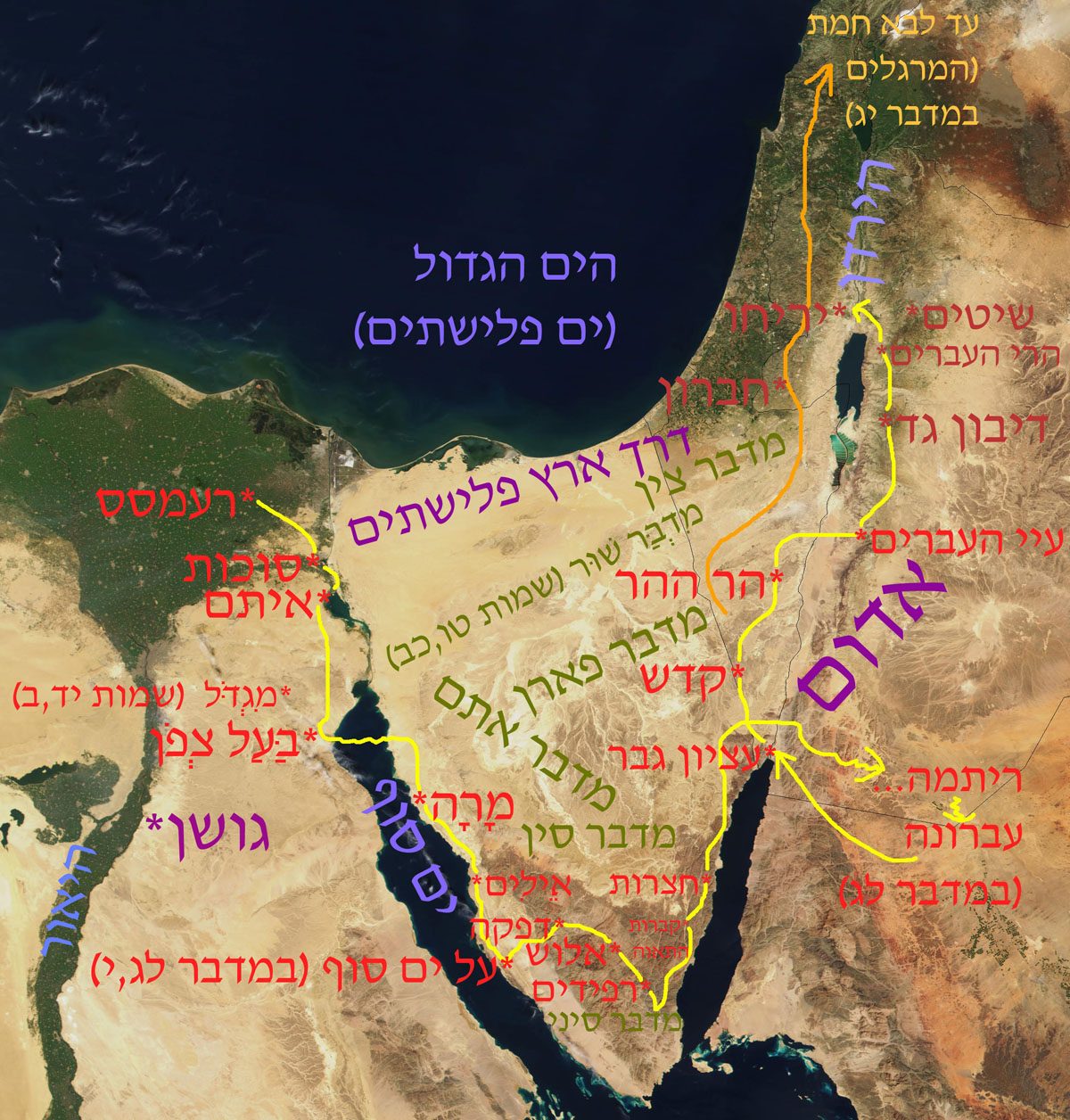
The single greatest scene in the Hebrew Bible breaks over nine verses in Exodus 14 and a poem older than the narrative around it in Exodus 15. Everything that has gone before — the forced labour in the Delta, the escape from the basket, the murder, the long silence in Midian, the burning bush, the confrontation of ten disasters — has been building toward this. The Israelites have walked out of Egypt. The Egyptian army is behind them. The sea is in front of them. There is nowhere else to go.
The scene does not need help. It succeeds on the directness of its own language. The book should give it that, first, before adding anything. What it needs from a reader is attention.
The geography problem is the first thing a modern reader is likely to notice, and it is worth saying plainly. The Hebrew text says yam suf — literally, the Sea of Reeds, or the Reed Sea. The traditional name "the Red Sea" comes from the Septuagint, the Greek translation made in Egypt in the third and second centuries BCE, which translated yam suf as Erythra Thalassa. That is a translation convention, not a geographical claim, and it has shaped the popular imagination for two and a half thousand years. The body of water the Israelites crossed, if the event happened as described and if a specific body of water is intended, is not necessarily the Red Sea of modern maps.
Scholars have proposed several candidates, and each has a case worth hearing seriously. The northern tip of the Gulf of Suez is the most common traditional suggestion; it sits close to the route one would expect from the eastern Delta and puts the crossing at a real body of salt water. Others have argued for the lakes of the eastern Delta canal system — Lake Timsah, the Bitter Lakes, or one of the marshes of the Wadi Tumilat — on the grounds that the Hebrew word reed fits a marshy freshwater or brackish lagoon better than a deep gulf, and that the geography of Exodus 13 places the Israelites in that region before the crossing. The northern branch of the Gulf of Aqaba has also been proposed, for reasons connected to the transport of large herds and the available fords, though it lies well to the south of the most natural route.
The argument over the crossing site is, in one sense, the argument over whether the geography of the story makes sense at all, and it is not one this book will settle. What it should do is give the reader the map of the debate, because it matters for one specific reason: the coast road.
The Israelites did not take the inland route through the wilderness of Sinai on their way out. They took the coastal road, the Way of Horus, the great highway that ran the length of the eastern Delta along the Mediterranean shore, the route armies moved on, the route Egyptian garrisons guarded, the route the story says Pharaoh took when he changed his mind. The Israelites moved into the marshy country of the eastern Delta — the region called the land of Goshen in the Joseph story — and then, when the Egyptian chariot force came in pursuit, they reached the water.
This is not the geography of the Sinai peninsula, the mountains, and the forty-year wander. It is the geography of the Delta's edge, the coastal plain, the line where Egypt's cultivated world met something else. That edge matters for the scene. The Israelites are at the boundary between the empire that enslaved them and whatever lies beyond it. The sea, however one defines it, is the line.
The narrative in Exodus 14 is not the oldest text in the chapter. Before it, Exodus 15 gives us the Song of the Sea, and most scholars agree that the poem is older than the prose narrative that surrounds it. It is one of the oldest texts in the Hebrew Bible, written in a style — parallelism, short rhythmic lines, the characteristic vocabulary of Hebrew poetry — that is recognisably more archaic than the prose of Exodus 14. It reads as a victory song, a celebration, the kind of thing a community would sing after a battle. It was likely sung before Exodus 14 was written.
I will sing to the LORD, for he has triumphed gloriously; the horse and his rider he has thrown into the sea. The LORD is my strength and my song, and he has become my salvation; this is my God, and I will praise him, my father's God, and I will exalt him.
Read the poem and the narrative together, and a tension becomes audible — not a contradiction that destroys the scene, but a difference in register that keeps both alive. The poem is celebratory and immediate and strangely spare: the sea swallows the Egyptian army, and the song moves on to the journey to the sanctuary. The narrative is more concerned, more anxious. It gives the people doubts. It gives the pillar of cloud. It gives the wind. It places the reader at the edge of the water, looking at the sea and then at the chariots coming down the coast road behind.
The two texts, old poem and later narrative, carry different emotional temperatures, and both belong to the scene. A book that treats only one of them loses something. The poem gives the scene its first and oldest form — the victory that became legend. The narrative gives it the detail that makes the reader feel the moment.
The scene itself, in Exodus 14, runs like this: the Israelites arrive at the sea, and they see the Egyptian army approaching, and they panic. They say to Moses, "Was it because there were no graves in Egypt that you have taken us away to die in the wilderness?" The question is bitter and specific, and it is one of the most honest lines in the entire story. The people who have just walked out of slavery are terrified the moment the route narrows. There is a reason this line survives.
God answers Moses, and the answer is practical, not merely inspirational: "Tell the people of Israel to go forward. Lift up your staff and stretch out your hand over the sea and divide it, and the people of Israel shall go into the midst of the sea on dry ground. And I will harden Pharaoh's heart, and he will pursue after them, and I will gain glory for myself, and the Egyptians shall know that I am the LORD." The instruction is given to Moses. The sea must be acted upon. The staff must be lifted. The event is not a vision; it is an act.
Then the pillar of cloud moves from before the people to behind them, standing between the Israelites and the Egyptians, cloud and darkness, so that neither side could come near the other all night. The text is economical. It does not explain the cloud. It simply says what it did.
Then the wind. "The LORD drove the sea back by a strong east wind all night, and made the sea dry land, and the waters were divided." The wind is specific. It is not a general miracle of disappearance; the text names the mechanism. The sea is driven back, the land appears, the Israelites go through. The narrative is careful with its physics, or at least careful to name them. Some readers find that detail useful. Some do not. The book should not argue about whether a wind could have done this. The text of Exodus says it did, and the scene's power does not depend on the reader's answer to that question.
The Egyptians pursue. The chariot wheels are clogged; the text says they "drove with difficulty." Pharaoh is close. The Egyptians say, "Let us flee from before Israel, for the LORD fights for them against the Egyptians." This line is worth quoting because it is almost never quoted. The Egyptians in the story recognise, in the moment, that something has happened. They do not argue. They flee. Moses stretches out his hand over the sea, the waters return, and the army is destroyed: the chariots, the horsemen, every last one of those Pharaoh sent.
"And Israel saw the great power that the LORD used against the Egyptians, so the people feared the LORD, and they believed in the LORD and in his servant Moses."
That is the end of the narrative. The scene closes on the reaction of the people who walked through the divided sea. Their fear and belief are recorded, plainly, without embellishment. The book does not tell us their grief for the Egyptians. It tells us what the Israelites saw.
The poem in Exodus 15 is different in register and older in date, and it gives the same event its celebratory version. It is the victory song, and like victory songs it does not linger on the complexity. The horse and rider are thrown into the sea. God is a warrior. The blast of the shout dries the sea. The enemy boasted, "I will pursue and overtake and divide the spoil," and God's wind covers them. The song ends with a sanctuary: "You will bring them in and plant them in the mountain of your inheritance, in the place, O LORD, which you have made for your habitation, the sanctuary, O Lord, which your hands have established."
Read back to back, the poem and the narrative carry the scene at both its temperatures: the victory that is celebrated, and the moment that is dramatised. One of the reasons the scene survives in the memory of half the world is that it is given in both forms.
A few things are worth saying plainly after the scene, rather than during it.
The first is about the wind. The old defence — that the text describes a wind-driven event that might correspond to something that actually happened in a shallow body of water — is a legitimate reading. It does not undo the scene as theology, as story, or as history. It is one way into it. The other way — the supernatural reading, the sea divided by fiat — is the reading the narrative presents. A book that insists on one and dismisses the other loses something the scene offers, which is that it can hold both without strain. The text says the wind drove the sea back. It also says the sea was divided. The scene does not need a physics lesson. It needs the reader to see what it sees.
The second is about the Egyptians in the scene. The extermination of the Egyptian army is the logical end of the plagues. Ten disasters, and then the army drowns. The scene does not dramatise the Egyptian soldiers as individuals. They are a force. The Pharaoh of the story has made his choice, and the power behind him is destroyed. If there is violence here that a modern reader finds difficult, it is worth naming it directly rather than pretending it is not there. The story is built around the destruction of a military force. It is one of the clearest moments in the narrative where the liberation of Israel requires the defeat of Egypt, and the defeat is total.
The third is about the hard question that the scene does not answer: what exactly happened, if anything, and whether a body of water actually divided. This book has spent enough chapters establishing that the evidence problem is real and that the honest position is somewhere in the middle — a small group enlarged by memory, a story shaped around something real — and the sea scene does not change that. It is the point where the story, at least in its narrative form, treats the event as an absolute divine act, and the reader is free to receive it as theology, as story, as legend built around a difficult historical kernel, or as all three. The scene does not argue with the reader. It asks for attention.
The fourth is the simplest thing about the scene, and the reason it has lasted: it is the moment the story turns. Before it, the people are leaving. After it, they are gone. The empire cannot follow them. Whatever the historical kernel may be, the story presents this as the moment when the pursuit ends and the journey — the forty years that have no events and fill eighteen chapters of Numbers — begins. The sea is the boundary that cannot be crossed back.
The geography, the poem, the wind, the Egyptian army destroyed, the people's fear and belief — the scene contains all of it in a few pages. It is why, in a book that spends five chapters on the evidence problem, thirty chapters on the making of the story, and the rest on the afterlife of Moses, the crossing of the sea gets its own chapter and nothing like the chapter it deserves. The brief is right: give it everything.
Fire on the Mountain
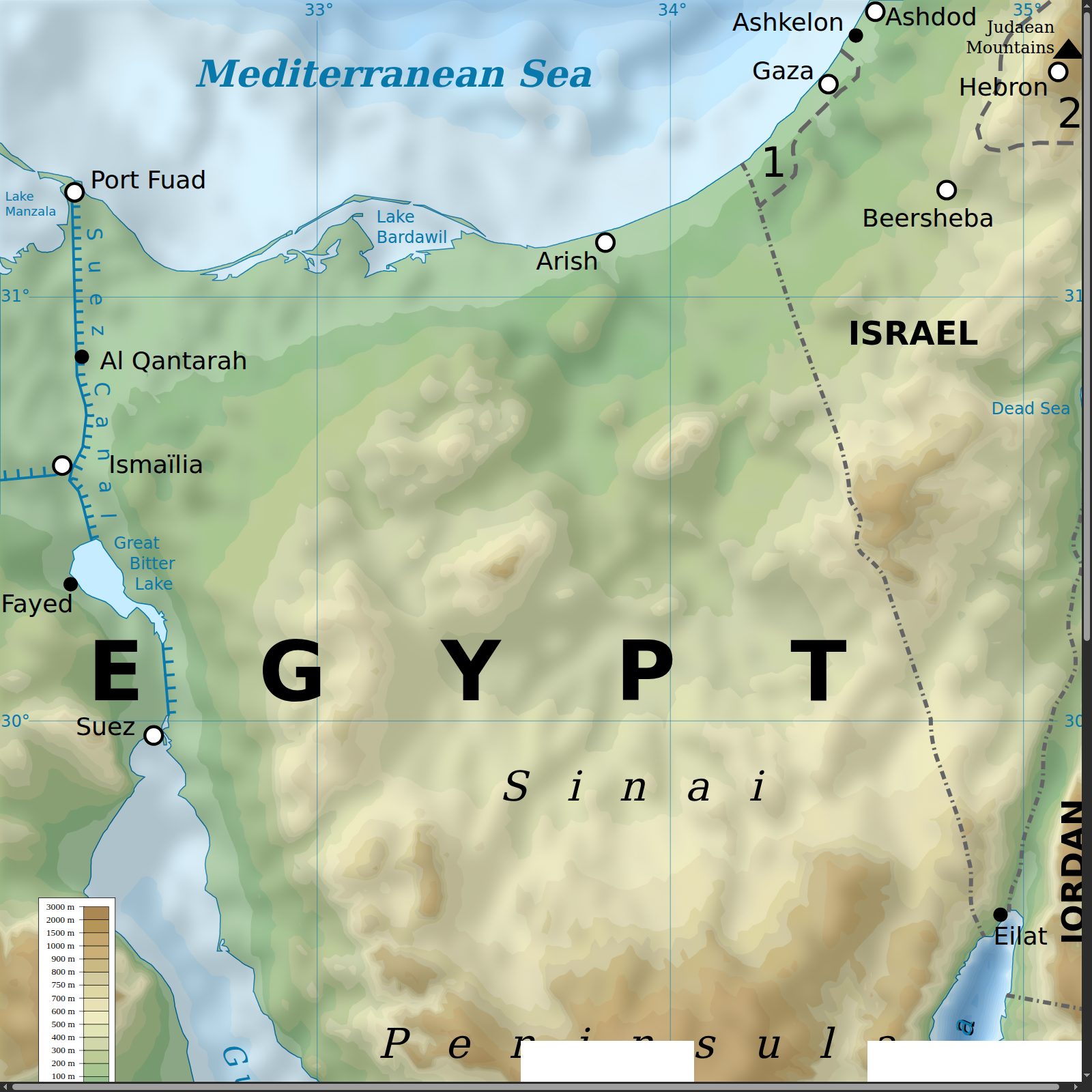
The mountain is called Sinai in the story most readers know, and Horeb in the telling of other passages, and the difference in names is itself a sign of how many hands have touched the mountain over the centuries. Sinai is where the law is given. Horeb is the mountain of God, the place where Moses tends the flock and where the bush burns. Whether the two names point to the same peak or to two traditions that later merged, the mountain in Exodus 19 is the same one: the place where the covenant is made, the place where the people hear the voice, the place where Israel becomes Israel in a legal sense, not just a tribal one.
The chapter has three parts, and they belong to three different motions. First, the approach and the preparation — the mountain as a place set apart, dangerous and holy and so strictly bounded that a fence of laws is built around it before anyone climbs it. Second, the theophany and the commandments — the dramatic moment at the summit, the voice from the fire, the ten words, and the form the law takes. Third, the covenant meal and the smoke — the ratification, the elders climbing partway, the shared meal, the fact that at the very peak of the story about the covenant, Moses alone goes up while the others look on from below.
Read straight, the scene is astonishingly tense. The people are warned, repeatedly, not to approach. The mountain is wrapped in smoke. The trumpet sound grows louder. They are afraid, in the precise way a text says they are afraid, and they step back. The law is given in a context of fear, and that context is not decoration. It is the shape of the revelation.
The geography of Sinai is a separate problem, and it is worth saying how uncertain it is before treating the mountain as a place in the story. The traditional site, the one marked by a monastery and a peak devoutly climbed by pilgrims for centuries, is Jebel Musa in the southern Sinai peninsula. It is a real mountain, and it fits the general direction the story gives — south, toward the wilderness — but its identification is late and not obviously secure. Other proposals have placed Sinai in the Transjordan, in the northern Arabian peninsula, or in the wilderness of Paran, on the grounds of different textual clues about where the wandering went and what the desert landscape looked like. The location of the mountain in the story and the location of any real journey are, once again, not the same question, and this book does not pretend they are.
What matters for the chapter is the mountain as the text presents it: as the place where the boundary is drawn, where the people are told they may go only so far and no further, where holiness is made spatially and practically legible. The mountain is a holy place that excludes. That is its first function in the story, and it is one of the most important things about how the covenant is structured.
The preparation in Exodus 19 is thorough. God tells Moses to set limits around the mountain, to warn the people that they may not touch the border, that anyone who does so shall be put to death, that no hand shall touch the mountain, that the people shall be consecrated and wash their clothes and abstain from sexual relations for three days. The instructions are practical, concrete, and alarmingly strict. The mountain is not a place to visit. It is a place that is approached under penalty.
Why the restrictions? One level of the answer is obvious: the mountain is the place of the presence, and the presence, in the story, is overwhelming. The limits mirror the limits in other theophany texts — the fear of seeing the face of God and living, the insistence on boundaries, the sense that the holy is dangerous as much as it is precious. But there is a second level that is less obvious and more interesting: the restrictions are part of the legal form the covenant takes.
The covenant at Sinai is given as a suzerainty treaty, the kind of treaty that the Hittite empire made with its vassal states in the Late Bronze Age, and later that the Assyrians and others made in a similar form. The structure of these treaties has been studied in enough detail that the parallel is not speculative. A suzerainty treaty has a fixed literary shape: a preamble identifying the great king, a historical prologue recounting what the king has done for the vassal, the stipulations — the obligations of the vassal — often expressed as a list, the blessings and curses that attach to keeping or breaking the treaty, and the provision for witnesses, deposit, and periodic reading.
The covenant in Exodus 19–24 has that shape, adapted to a different and extraordinary context — a covenant not between king and vassal but between the God who has just delivered a people from slavery and the people who have just walked out of that slavery. The preamble is God's identification: "I am the LORD your God." The historical prologue is the Exodus itself: "who brought you out of the land of Egypt, out of the house of slavery." The stipulations follow, first the Ten Commandments in Exodus 20, then the larger body of laws in the covenant code of Exodus 21–23. The blessings and curses come later, in a form that will recur most formally in Deuteronomy. The witnesses are the mountain, the blood, and the people themselves. The deposit is the tablet. The reading — the periodic public reading of the law — is built into the story from the start.
This is one of the genuinely thrilling details in the whole story, because it shows that the biblical writers were not inventing a legal form from nothing. They were taking a form that their readers would have recognised from international diplomacy and turning it inside out, using the language of empire's treaties to shape the relationship between God and a people who, in the logic of the story, have no empire behind them. The form is secular enough to be known and sacred enough to be new. That combination is one of the reasons the book has lasted, and it is worth letting the reader feel it.
The limits around the mountain are not just reverence. They are the spatial expression of a treaty relationship. The vassal does not enter the presence of the suzerain at will. There are protocols. There are restrictions. There is a boundary line across which permission must be given, and permission is given in the story through Moses. The mountain, hedged about with law, is the visual and physical form of the treaty that is being made.
The theophany at the summit is the dramatic heart of the chapter, and the text of Exodus 19–20 does not need much help. It is direct in a way that is almost modern. The mountain is wrapped in smoke, because the LORD has descended on it in fire. The smoke goes up like the smoke of a kiln. The whole mountain quakes. The trumpet sound grows louder and louder. Moses speaks, and God answers him in thunder. The people are terrified, and they ask Moses to be the intermediary, because they cannot bear to hear God directly and live.
The language of the theophany is sensory and overwhelming: fire, smoke, trumpet, thunder, quake. It is not static, not a calm revelation of philosophy. It is a mountain on fire, and the people stand at the edge of it and do not go in. The scene is intimate and terrifying at the same time. The God who gives the law is a God who appears in a context of fear, and the fear is not incidental.
The Ten Commandments themselves, in the form that the narrative gives them, are a mixture of the cultic and the social, of the vertical and the horizontal. The first several commandments are about relationship to God: no other gods, no images, the name not taken in vain, the Sabbath kept. The later commandments are about relationship to neighbour: honour parents, no murder, no adultery, no theft, no false witness, no coveting. The shape is familiar, but the content marks a shift in the story's world. The law is given at Sinai, after the exodus, and it belongs to a people who have just been set free. It is not the law of slavery. It is the law of a community that has crossed a boundary and is being given a structure to live within.
One of the points the chapter should make, without belabouring it, is that the law is given in a world where law is already everywhere, but where the form of law is different. Egypt is a world of god-kings and top-down decrees. Hammurabi and the great law codes of Mesopotamia present the law as the gift of a king-god, and the code is at the service of hierarchy. The covenant at Sinai deliberately differs: the law is presented not as the gift of a human king to his subjects but as the word of a God who has made a communal bond with the people, and the law is addressed to that community and to individuals in it. The difference is not that law did not exist outside Israel. It is that the covenantic form reframes law as a relationship rather than a decree, and as a community bond rather than a king's instrument.
That argument should be made carefully, and the careful version is stronger. It does not say that the covenant is the invention of law, and it does not deny the obvious parallels between the covenant code and earlier law codes. It says, rather, that the biblical text uses a form it has learned from its world — the treaty form — and reorients it toward a different political and spiritual shape. The law is given at Sinai as part of a covenant, and the covenant is a mutual bond framed by obligation and gift, not a unilateral imposition by a ruler on a ruled class. The people are warned not to approach the mountain, but they are also given the statutes. The boundary and the gift are two sides of the same revelation.
The ratification in Exodus 24 is the third movement, and it is one of the most striking passages in the chapter, largely because of what it leaves out. Moses says to the people, "All the words that the LORD has spoken, we will do." The people answer with one voice, "All that the LORD has spoken, we will do." Moses writes the words, builds an altar, sets up twelve pillars for the twelve tribes, and offers sacrifices. He reads the book of the covenant aloud. The people reaffirm: "All that the LORD has spoken, we will do, and we will be obedient." Then Moses takes the blood, halves it in basins, and throws some on the altar, and some on the people, and says, "Behold the blood of the covenant that the LORD has made with you in accordance with all these words."
The blood on the altar and the blood on the people are the two halves of the treaty deposit, the seal of the covenant. The language is symbol and ritual, but it is ritual with a legal function. The covenant is ratified in blood, in the form of a pact. The language of covenant and treaty is not just a metaphor here; it is the actual idiom of the scene.
Then the story does something that is easy to miss if read quickly. Moses, Joshua, Aaron, Nadab, Abihu, and the seventy elders go up the mountain. They see the God of Israel, and under his feet is something like a pavement of sapphire stone, clear as the sky. They eat and drink. The vision is given to a limited group, and the rest of the people are not brought up. Then Moses goes up alone, into the cloud, for forty days and forty nights.
The point of the passage is structural and theological. The covenant is made with the whole people — "all the people" answer, all the tribes are represented by the pillars, the blood is thrown on the people. But the deep entry into the presence is given to a few. The law is public and the theophany is private. The ratification is communal and the ascent is individual. Moses alone goes up for the duration. The rest of the story — the tabernacle, the priesthood, the continuing mediation of the law — flows from this asymmetry. The people are in covenant, but the mediator alone enters the cloud.
That asymmetry is one of the calmest and most important facts of the story, and it matters for what follows. It sets up the tabernacle as the place where the presence will dwell among the people, rather than only on the mountain. It sets up the sense that the law, though given to all, is mediated, and that mediation is not an afterthought but a structural feature of the covenant. It also sets up the rest of the wilderness story — the complaints, the failures, the sense that the people are not ready for the direct presence even when it has been offered — as a story about the ongoing management of a covenant that is more ambitious than the people.
The chapter is, then, a chapter about a mountain, a covenant, and a form. The mountain is holy and dangerous, and the people are warned to stay away from its edge. The covenant is a treaty given a new and stranger shape, the law of a people who were slaves now given a law of freedom, and the form of that law is the suzerainty treaty adapted to a God who liberates before he obliges. The theophany is dramatic fire and smoke and trumpet, and the ratification is blood and pillars and a meal that only some of the leaders share. Moses alone goes up into the cloud, and the rest of the story grows from the fact that the covenant is public and its full presence is private.
There is a detail worth adding at the end, and it is the detail that ties Sinai back to the whole argument of the book. The covenant at Sinai is the moment where the story, as Israel told it, becomes a law-giving story in a specific and lasting way. The law is not an appendix. It is given at the peak. And the form of the covenant — the treaty taken up and reoriented — is one of the clearest instances of the kind of thing the book has been tracing all along: a story shaped by a real tradition working inside a real form, making a character and a community and a set of obligations that have lasted because they are more than the sum of their historical uncertainties. The mountain may be uncertain. The covenant's form is legible. The story, at this point, stands on both.