Part Four: The Fight
The Question
The question that split everything was not theological in the way modern readers mean it. It was not an argument about the nature of Christ or the mechanics of salvation or the number of persons in a trinity that had not yet been invented. It was not about whether Jesus was divine or whether he rose from the dead or whether the tomb was empty. It was about a table.
The question was: do the people who are not Jews have to become Jews before they can sit at the table with the people who are Jews?
The question sounds simple. It sounds like the kind of thing that has a simple answer. It does not have a simple answer. It has the kind of answer that breaks a movement in two and takes twenty years of letters and confrontations and three visits to Jerusalem and one public row with Peter and a collection of money that never arrives and a man's life ending in custody to work through.
The reason the question has no simple answer is that the question was not abstract. It was concrete. The question was about whether a non-Jew could eat supper with a Jew. The question was about whether a non-Jew had to be circumcised to be part of the people of God. The question was about whether the non-Jew had to keep the food laws and the festival calendar and the Sabbath and the purity rules that the Jew had kept all his life and that the Jew had been taught were the boundary that kept Israel distinct and holy and safe.
The question was about the boundary. And the boundary was the thing that kept Paul's world in shape.
The boundary needs to be understood before the question can be understood.
The boundary was not a line in the sand or a law code that people studied and argued about. The boundary was the shape of ordinary life. It was the food you ate and the people with whom you ate it and the hours you kept on the Sabbath and the way you were circumcised if you were male and the way you did not mix with the unclean if you were careful and the way the land and the temple and the law and the people and the story were all of a piece and had been for a thousand years.
A Jew in the first century lived inside a world that was set apart by design. The food laws were not arbitrary restrictions. They were a daily practice — every meal was a reminder that you were not eating like the people around you, that you were part of a people who ate differently, that the boundary was enacted three times a day at the table. The food laws made the boundary visible in the mouth and the stomach. The Sabbath made the boundary visible in the calendar — one day in seven was different, and the differentness was not optional, it was commanded. Circumcision made the boundary visible in the body — the physical mark that was given to infant boys and that set them apart from the boys of the nations around them. The temple made the boundary visible in space — the place where the presence of the God of Israel lived, and where the sacrifices were made, and where the people gathered for the pilgrimage festivals, and where the Romans had already placed their standards and had already backed them out after a riot, and where the presence of the emperor's army was a reminder that the boundary was under pressure from outside.
The boundary held the world together. It was not a fence around an institution. It was the structure of a life. A Jew who kept the boundary was living inside the story of Israel — the story of the God who called Abraham out of Ur, who delivered Israel from Egypt, who gave the law at Sinai, who gave the land, who built the temple, who had already sent Israel into exile and brought Israel back, and who had now, in Paul's own reading, sent Israel a Messiah who was the fulfilment of the story and not the end of it.
The boundary was the thing that made Israel Israel. The question that split everything was the question of whether that boundary had to be crossed to become part of the people of the Messiah.
The movement that Paul had been part of and then had tried to destroy and then had been sent to join had begun inside the boundary. Jesus was a Jew. His disciples were Jews. The women who followed him were Jews. The feeding of the five thousand was the feeding of Jews. The last supper was a Passover meal. The tomb was in Jerusalem, the city of the temple, the city of the boundary. The first community in Jerusalem was a Jewish community that continued to keep the temple and the law and the Sabbath and the food laws and the calendar.
The boundary had not been crossed at the beginning. The movement had begun as a Jewish movement, a Jewish sect, a group of Jews who believed that the Messiah had come and that the story was complete and that the kingdom of Israel's God had arrived. The movement had started inside the boundary and had not yet stepped outside it.
What happened was that non-Jews started joining.
They joined in the mixed cities of the diaspora. They joined in Antioch, where the Greek-speaking Jews and the Gentile God-fearers and the non-Jews who were curious about the new movement lived close enough to one another that the boundary was already porous. They joined in the cities of Asia and Macedonia and Achaia, where the synagogue had a fringe of God-fearers and the God-fearers became Christians and the Christians brought their non-Jew friends and the non-Jew friends became Christians and the boundary that had been a single line was now a line that people were crossing every day.
The crossing of the boundary was not a decision made at a meeting. It was the slow, lived, practical reality of the mission as it moved out of Jerusalem and into the cities. It was not planned. It was the consequence of a Jewish Messiah movement going to the nations — which was what the Messiah movement had always expected to do. The prophets had said the nations would come to Israel's God. The mission to the nations was the thing Israel's scriptures had promised. But the question was: when the nations come, do they come as nations, or do they come by becoming Jews first?
That was the question. And the question had no simple answer because the scriptures did not give a simple answer and the practice of the movement had not yet settled the question and the two Jerusalem leaders — James and Peter — seemed to be on one side of the question and Paul was on the other side, and the side he was on was not the side that said the boundary did not matter, but the side that said the non-Jew did not have to cross it to be part of the people of the Messiah.
The difference between the two sides needs to be stated carefully, because it is the difference that the modern reader will otherwise mis-read.
The side that said the non-Jew had to become a Jew first was not the side that said the Messiah was only for Jews. It was the side that said the Messiah had come for the people of Israel and that the people of Israel were defined by the boundary, and that anyone who wanted to be part of the Messiah's people had to become part of the people of Israel, which meant becoming a Jew, which meant crossing the boundary.
This side was not malice. It was the most natural reading of the movement's origin. Jesus was a Jew. The disciples were Jews. The law was given to Israel. The temple was Israel's. The Messiah was Israel's Messiah. The non-Jew who wanted to join the movement was asking to join a Jewish movement, and the normal answer to that question was: become a Jew. That was what the proselyte did. That was what the God-fearer did if he wanted to go all the way. That was what the boundary implied.
The side that said the non-Jew did not have to become a Jew was not the side that said the boundary did not matter. Paul never said the law was abolished. He never said the food laws were worthless. He never said circumcision was a meaningless physical mark. He said, in his own letters, that the law was holy and the commandment was holy and the people of Israel were his brothers and his kinsmen according to the flesh and that the gifts and the calling of God were irrevocable. He said these things in the letter to the Romans, in the argument about Israel that most readers skip.
What Paul said was that the non-Jew did not have to become a Jew to be part of the people of the Messiah. He said that the non-Jew was grafted in, that the olive tree of Israel had wild branches grafted in, that the boundary of the law had not been abolished but had been redefined around the Messiah and not around the Torah as the entry requirement. He said that the non-Jew could be part of the people of the Messiah while remaining a non-Jew — eating non-Jewish food, not keeping the Sabbath in the Jewish way, not being circumcised, and still being part of the people of the Messiah.
The difference between the two sides was not the difference between keeping the boundary and abolishing the boundary. The difference was the difference between making the non-Jew cross the boundary to enter and making the Messiah the boundary around which the community was gathered. The difference was the difference between "become a Jew to join us" and "come as you are, because the Messiah has already opened the table."
The difference was enormous. It was the difference between a movement that remained a Jewish sect and a movement that became a multi-ethnic community that included non-Jews who had not become Jews. It was the difference between a movement that was small and a movement that was large. It was the difference between a movement that was contained by a boundary and a movement that crossed the boundary.
The most concrete expression of the question was the table.
Table fellowship was the place where the boundary became a meal. The Jew did not eat with the non-Jew because the non-Jew ate food that the Jew could not eat — meat that had not been slaughtered properly, food that had been offered to idols, wine that was not kosher, the open defilement of a table where the purity laws were not observed. A Jew who sat at a common table with a non-Jew was compromised. The compromise was not abstract. It was the act of eating what the other person had prepared, of accepting the hospitality of the other person, of crossing the boundary in the body and the mouth and the social relationship.
Table fellowship was the concrete thing that the question was about. The question was: can a Jew and a non-Jew sit at the same table and eat the same meal, or does the table have to be divided, or does the non-Jew have to eat like a Jew before sitting at the table?
The question was not about theology. It was about dinner. It was about who could eat with whom. It was about whether the community could eat together.
This is the reason the question split everything. A community that cannot eat together is a community that is divided at the most ordinary level of life. A community divided at the table is a community divided everywhere — in the house, at the meeting, in the streets, in the relationships that hold the community together. A community that cannot eat together is a community that is not a single community but two communities that share a name.
Paul's answer to the table question was that the non-Jew did not have to become a Jew to eat at the table. He said, in Galatians, that the other side's demand that the non-Jew be circumcised was a different gospel, a gospel that required the non-Jew to become a Jew to be saved, a gospel that he refused to accept and refused to let the non-Jew accept. He said that the non-Jew was free from the requirement of the Torah, free from the boundary, free to eat at the table as a non-Jew.
But Paul's answer was not the answer that the Jerusalem leadership accepted, at least not without qualifications. James, the leader of the Jerusalem church, seems to have been the one who insisted that the non-Jew keep certain practical requirements — no food sacrificed to idols, no blood, no meat of strangled animals, no unlawful sexual union — the four requirements of Acts 15, the requirements that the Jerusalem council imposed on the non-Jews who were turning to the Lord. The four requirements were not circumcision. They were not the full Torah. They were a practical table-fellowship compromise — the things that would make it possible for a Jew and a non-Jew to eat together without defilement.
The compromise was significant. It meant that the Jerusalem leadership had accepted, in principle, that the non-Jew did not have to become a Jew. It meant that the question had been answered at the council in Jerusalem, and the answer was "no, the non-Jew does not have to become a Jew, but the non-Jew does have to respect the table-fellowship requirements that make shared eating possible."
The compromise was also not enough for Paul. Paul thought that the compromise was a step toward the full answer — the non-Jew is free — but Paul also thought that the compromise was being used by the "circumcision party" to pressure the non-Jews to become Jews after all, because any requirement at all was a step in the direction of the Torah as the entry requirement, and any step in that direction was the wrong direction. Paul thought that the table was wide open by the Messiah, and that any limit on the table was a limit that the Jerusalem leadership was imposing on the freedom that the Messiah had given.
This was the disagreement. The Jerusalem leadership — James, Peter, John — had agreed that the non-Jew did not have to become a Jew. Paul had agreed with that answer in principle. But Paul thought that the compromise was a compromise too far, because it implied that the non-Jew was not fully free, and that the freedom the Messiah had given was not the freedom the Messiah had given. Paul thought that the table was fully open, and that any limit on the table was a limit on the gospel.
The disagreement was not settled. It was managed, if it was managed at all, by the four requirements, by the agreement of the council, by the letters that were sent to the churches explaining the agreement. But the disagreement did not go away. It surfaced again in Antioch, when Peter came to Antioch and ate with the non-Jews and then stopped eating with the non-Jews when the circumcision party arrived, and Paul confronted Peter to his face over it. It surfaced again in the letters to the Galatians and to the Corinthians, when the circumcision party teachers came to the churches and taught that the non-Jews had to be circumcised after all. It surfaced again in the collection, when the non-Jews were sending money to Jerusalem and the question was whether the money would be accepted and whether the Jerusalem leadership would accept the non-Jews as full members of the people of the Messiah.
The disagreement was the thing that split everything. It was not settled. It was the thing that the book will trace through the remaining chapters of this part — the Jerusalem meeting, the row at Antioch, the letter to the Galatians, the rivals who came to the churches and taught the wrong thing, and the collection that was supposed to reconcile the two sides and that was the thing that Paul bet his life on and that, in the end, may have been the thing that killed him.
The stakes of the question were not abstract. They were concrete and enormous.
The stake was whether the movement would be a Jewish sect or a multi-ethnic community. If the non-Jew had to become a Jew first, the movement would be small. It would be limited to the people who could become Jews — the men by circumcision, the women by conversion, the households by the decision of the male head. The movement would remain a Jewish sect, and the Jewish sect would remain a Jewish sect, and the mission to the nations would be limited to the nations that could become Jews.
If the non-Jew did not have to become a Jew first, the movement would be large. It would include any non-Jew who wanted to join, without the requirement of circumcision, without the requirement of the food laws, without the requirement of the boundary. The movement would be multi-ethnic, multi-cultural, multi-religious in its background, and the mission to the nations would be the mission to the nations that the scriptures had promised.
The stake was the shape of the movement. The stake was the size of the movement. The stake was whether the movement would be a small Jewish sect or a large multi-ethnic community.
The stake was also the relationship between the two sides of the movement — the Jerusalem side and the Pauline side. The Jerusalem side was the side of James and Peter and John, the mother church, the apostles, the pillars, the ones who had known the historical Jesus, the ones who had been the first to believe, the ones who had the authority of the beginning. The Pauline side was the side of Paul, the outsider, the late arrival, the one who had persecuted the movement and then been sent to it, the one who had the authority of the call, the one who had been sent to the nations.
The relationship between the two sides was not simply a disagreement about the Torah. It was a disagreement about authority. The Jerusalem side had the authority of the beginning — of the historical Jesus, of the first community, of the apostles who had been with him. The Pauline side had the authority of the call — of the revelation to Paul, of the commission to the nations, of the apostleship that was not dependent on the historical Jesus's personal call of the Twelve.
The two sides had different authority, and the disagreement was not simply about the Torah but about whose authority was the authority that defined the movement. The Jerusalem side thought the authority was the authority of the beginning — the apostles, the pillars, the mother church. The Pauline side thought the authority was the authority of the call — the revelation to Paul, the commission to the nations, the apostleship that was independent of the beginning.
The two sides both thought they were right. The book should let the reader see that both sides had a point, and that neither side was simply wrong. The Jerusalem side had the authority of the beginning, and the beginning was a Jewish beginning, and the movement had begun inside the boundary, and the people of the beginning had kept the boundary, and the request that the non-Jew respect the boundary was not crazy. The Pauline side had the authority of the call, and the call was to the nations, and the nations were not Jews, and the non-Jew was not required to become a Jew to join the mission, and the freedom the Messiah had given was the freedom the Messiah had given.
The disagreement was not simple. The reader should be told that it was not simple. The reader should be told that the book is not going to resolve it by saying that one side was right and the other side was wrong. The book is going to trace the disagreement through the letters and the Acts narrative and the council and the row and the collection and the end, and the reader will see that the disagreement was the thing that the movement was wrestling with for twenty years and that the disagreement was never fully settled and that the disagreement is the thing that the book is about in this part.
The way Paul argues the question in Galatians is the way the reader should see it — not as a theological argument, but as a man losing things and fighting for them.
The letter to the Galatians is the angriest letter in the New Testament. It is written by a man who thinks he is losing the churches he founded. It is written by a man who is furious at the people who are persuading his churches to accept a different gospel. It is written by a man who is defending his own authority and his own gospel and his own apostleship against the men who have come to the churches after him and told the non-Jews that they have to be circumcised.
The letter is angry. It is also, in the reader's judgment, the letter where Paul is most himself — most vivid, most human, most alive in his commitment and his fear and his anger and his love for the churches he founded. The book should treat the letter as it is: the angriest document in the New Testament, the document of a man who thinks he is losing, the document where the question that split everything is being fought over in the most concrete terms.
The letter should be walked through in the next chapter. For now, the point is that the question that split everything was not an abstract question. It was the question of the Galatians — whether the non-Jews who had believed the gospel Paul preached were going to be told by the circumcision party that they had to become Jews after all, and whether Paul's churches were going to accept that teaching, and whether Paul's authority and his gospel and his apostleship were going to survive the pressure from Jerusalem.
The question that split everything was the question that Paul fought over for twenty years. It was the question that the Jerusalem council tried to answer. It was the question that surfaced in Antioch when Peter ate with the non-Jews and then stopped. It was the question that Paul fought in Galatians, in Corinthians, in Romans, in the collection, in the letters to the churches, in the visits, in the confrontations, in the men he sent as delegates, in the letters he carried, in the money he collected, in the life he bet on the answer.
The question was not settled. It was the thing that split the movement and shaped it and cost Paul his life and left the movement with the shape it had — a movement that had answered the question in principle but never fully settled the consequences of the answer, a movement that was multi-ethnic and also under pressure from the Jerusalem side, a movement that had the table open but also had the compromise of the four requirements, a movement that had Paul's answer and also had the Jerusalem side's answer, and that lived with the tension for the rest of its existence.
The chapter is the first chapter of Part Four. The next chapter is the Jerusalem meeting — the meeting with James, Peter, and John, and the difference between Paul's account of it and Acts' account of it, and the reason the difference matters.
The question that split everything was the question of whether the non-Jew had to become a Jew to be part of the people of the Messiah. The question was about circumcision and food law and table fellowship and the boundary of Israel and the shape of the movement and the authority of the beginning and the authority of the call and the freedom the Messiah had given and the men who came to the churches and taught the wrong thing and the collection that was supposed to reconcile the two sides and the life Paul bet on the answer. The question was not abstract. It was the most concrete and most consequential question the movement faced, and the book will trace it through the remaining chapters of this part, through the Jerusalem meeting, the row at Antioch, the letter to the Galatians, the rivals, and the collection.
Jerusalem
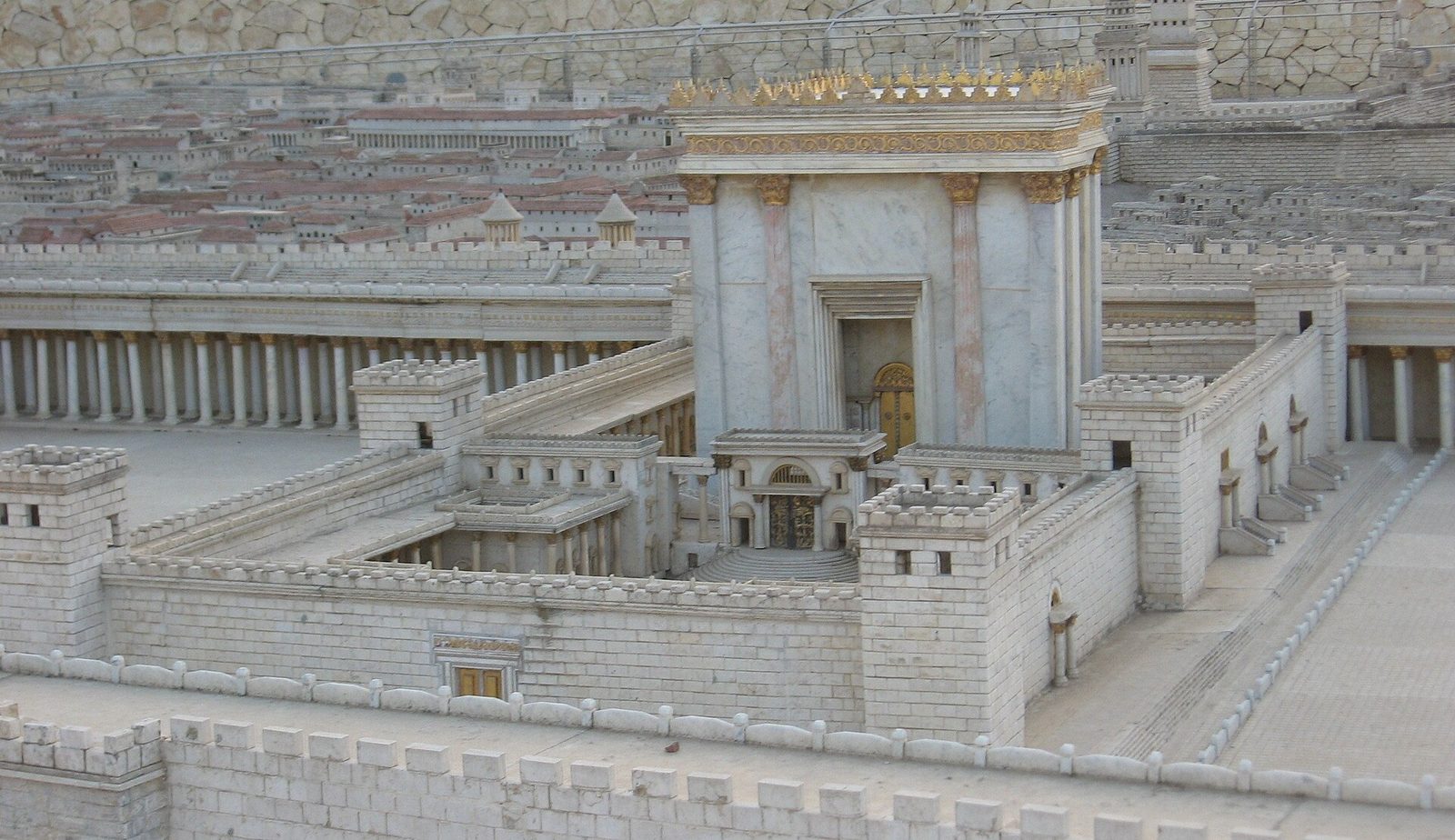
The Jerusalem meeting is the moment where the two sources — Paul's letters and the Book of Acts — disagree so clearly that the difference cannot be smoothed over. Read the two accounts side by side and the reader can see, in a single place, the shape of the book's method: where they conflict, the letters win, and the reader is told why.
The meeting is described twice in Acts and once in Paul's letters. Acts describes it in chapters 11 and 15, with a gap of several years between the two descriptions, or possibly with a single visit described in two different ways. Paul describes it in Galatians 2:1-10, in the passage where he tells the Galatians about the visit he made "by revelation" after fourteen years, when he went up to Jerusalem and submitted his gospel to the leaders "privately" so that he might not be running or had run in vain.
The two accounts disagree. They disagree about who initiated the visit, who was present, what was at stake, what was decided, and what the Jerusalem leadership thought of Paul. They disagree in ways that are not minor — they disagree in ways that shape the reader's understanding of who Paul was in relation to the Jerusalem church and what the Jerusalem church was in relation to the mission to the nations.
The book should describe the two accounts, show the reader the disagreement, explain why the letters are preferred, and let the reader see what the disagreement means.
The Acts account in chapter 11 is the earlier of the two Acts descriptions. It is tied to the famine relief visit: while Barnabas and Saul are in Antioch, prophets come down from Jerusalem, Agabus predicts a famine, the Antioch church collects relief money, and Barnabas and Saul carry it to the elders in Jerusalem. The visit is a generous gesture from a church to its elder sibling. The Jerusalem leadership receives the money. The tone is harmony. The Jerusalem church sends Barnabas to Antioch in the first place; Barnabas brings Saul; the year of teaching happens; the famine relief goes back to Jerusalem; the circle is complete. The movement is one family, one body, one church sending help to the other.
The Acts account in chapter 15 is the Jerusalem council. The issue is whether the non-Jews who have believed need to be circumcised. Men from the party of the Pharisees who have believed insist that the non-Jews must be circumcised and commanded to keep the law of Moses. The apostles and elders gather in Jerusalem to consider the question. Much debate happens. Peter stands up and reminds them that God made choice among them, that God gave the Holy Spirit to the non-Jews just as to the Jews, that God made no distinction, that the non-Jews are purified by faith. James stands up and speaks, and cites Amos 9:11-12 about the restoration of the tent of David, and concludes that the non-Jews who turn to the Lord should be written to and told to abstain from the pollution of idols, from sexual immorality, from the meat of strangled animals, and from blood. The decision is sent to the churches in a letter, carried by Judas Barsabbas and Silas. The letter says the Holy Spirit has imposed on them no greater burden than these necessary things. The non-Jews read the letter and are glad. The disagreement is resolved by the council.
The two Acts accounts are not necessarily describing the same visit. Many scholars think Galatians 2 describes the same event as Acts 15 — the Jerusalem council. Other scholars think Galatians 2 describes the famine relief visit of Acts 11. The book should not settle the question, because the question is not settled in the sources and the book should not pretend to settle it. What matters is the disagreement between the two sources on the substance of the meeting — what Paul thought he was doing there, what the Jerusalem leadership thought, what the stake was, and what the outcome was.
Paul's account in Galatians 2 is the primary source. It says the following.
Paul went up to Jerusalem "by revelation." The initiative was God's, not Jerusalem's. Paul does not say he was invited. He does not say he was sent for. He says he went by revelation — the same word he uses for the call that sent him to the nations, the same word that marks his apostleship as something that comes from God directly and not through the Jerusalem leadership.
He went up to Jerusalem and submitted his gospel to the leaders "privately, those who seemed to be influential." He did not go to submit his gospel to the church as a whole. He went to the leaders — the ones who seemed to be influential — and he did it privately. The word "privately" is important. It means that Paul did not think the public discussion of his gospel was safe or useful at this point. He went to the leadership and he did it in private, because he wanted to protect his gospel from the opposition that he knew was building.
He went for a specific reason: "so that I might not be running or had run in vain." The Greek is careful. It does not say "so that I might be sure I am right." It says "so that my running might not be in vain" — that is, so that the work God had given him would not be undermined by opposition from the Jerusalem leadership that could spread to the churches he had founded. He went to make sure the leadership did not actively oppose what God was doing through him, and to discover, in private, whether they were going to oppose it.
The phrase "those who seemed to be influential" is careful and slightly dismissive. Paul does not call them apostles. He does not call them the pillars. He calls them "those who seemed to be influential" — the Greek is hoi dokountes, the ones who seemed to be leaders, the ones who had the appearance of authority. The phrase has been read in two ways. One reading is that Paul is being respectful — he is identifying the leaders by the respect they seem to command. The other reading is that Paul is being ironic — he is noting that they only seem to be influential, because his apostleship comes from God and not from their recognition. The book should note both readings and not decide between them, because Paul's tone is hard to pin down and the reader should be able to see the ambiguity.
Paul's account of the meeting itself is brief. He says: "But from those who seemed to be influential — I say nothing more — they added nothing to me." The phrase "I say nothing more" is significant. It means that the influential ones did not add anything to his gospel. They did not correct him. They did not tell him to change anything. They recognized that God had entrusted him with the gospel to the uncircumcised, just as they had recognized that Peter had been entrusted with the gospel to the circumcised. James and Cephas and John — the ones Paul names specifically, the ones he calls "those who seemed to be influential" — recognized his authority to the Gentiles and gave him and Barnabas the right hand of fellowship, with the agreement that Paul and Barnabas would go to the Gentiles and the others would go to the circumcised.
The agreement included one specific request: "They asked only that we should remember the poor, the very thing I was eager to do." The request to remember the poor is the one thing the Jerusalem leadership asked of Paul and Barnabas. It is the one condition attached to the recognition of his authority. And Paul's response is that he was already eager to do it — the famine relief and the collection are the expression of this eagerness.
The account in Galatians ends there. Paul does not say that a council was held. He does not say that a letter was sent to the churches. He does not say that a decision was made about the four requirements for the non-Jews. He says that the leaders recognized his authority, that they gave him the right hand of fellowship, that they asked only that he remember the poor, and that he was eager to do it.
The absence of the council, the letter, and the four requirements in Paul's account is the central disagreement between the two sources. The disagreement is not small. It is the disagreement about what happened at the meeting and what the outcome was.
The two sources describe the same visit — if they are the same visit — as two different events.
In Acts, the meeting is a council. The church gathers. The apostles and elders meet together. The issue is debated publicly. Peter speaks. James speaks. A letter is written and sent. The four requirements are imposed on the non-Jews. The movement is unified by the decision.
In Paul, the meeting is a private meeting with the leaders. The initiative was God's. Paul submitted his gospel in private. The leaders recognized his authority to the Gentiles. They asked only that he remember the poor. No council is mentioned. No letter is mentioned. No four requirements are mentioned. No public decision is described.
The reader should be able to see that the two accounts are not simply different versions of the same event told in different words. They are accounts of events that have different shapes, different stakes, different outcomes. If the two sources are describing the same visit, then one of them is not telling the whole story, or is telling a different story about the same event. If the two sources are describing different visits, then the difference between the two visits — the private meeting of Galatians and the public council of Acts — is itself significant, because it suggests that the relationship between Paul and the Jerusalem leadership was different at different points in the timeline, and that the relationship changed from the time of the private meeting to the time of the public council.
The book should describe the disagreement and explain why the letters win. The reason is that Paul's account is his own account of his own meeting with the Jerusalem leadership, written at the time he was defending his authority to the Galatians against the circumcision party. Paul's account is the account that comes from the person who was there and who had the most at stake in the meeting. Acts' account is a later account, written by someone who wanted to tell a story of harmony and unity and authorization from Jerusalem. Where the two accounts disagree about the shape of the meeting, the account of the person who was there and who had the most at stake is the account that should be preferred.
The book should also note that the disagreement is not resolved by the scholarly literature. Scholars have argued about whether Galatians 2 describes the same visit as Acts 15 for as long as the question has been asked. Some scholars resolve the disagreement by saying that Galatians 2 describes a private pre-council meeting and Acts 15 describes the public council that followed. Some scholars resolve the disagreement by saying that Paul's account is abbreviated and that the council and the letter are implied. Some scholars resolve the disagreement by saying that Acts is wrong and Paul is right, or that Paul is wrong and Acts is right. The book should not resolve the disagreement. It should describe it and say that the letters win because Paul was there and had the most at stake.
The Jerusalem leadership itself is worth describing, because the reader needs to see who the "pillars" were and why Paul's relationship with them matters.
James is the leader of the Jerusalem church. He is the brother of Jesus — the James who appears in Paul's letters as the one to whom Paul presented his gospel in Jerusalem, and the one who is called a pillar along with Cephas and John. James is the one who speaks in the council in Acts 15, the one who cites Amos, the one whose judgment carries weight. James is the one who, in Paul's account, is one of the "those who seemed to be influential" and one of the three who recognized his authority. James is the leader of the Jerusalem church at the point where the question of the non-Jews' relationship to the law is being worked out.
James is also, in Paul's letter to the Galatians, the one who was sent by the church in Jerusalem to Antioch after the meeting, and whose arrival caused Peter to withdraw from the non-Jews and Paul to confront him. James is the leader whose presence in Antioch pushed Peter into the position that Paul confronted. James is the leader whose authority is the authority that the circumcision party appeals to when they tell the non-Jews they must be circumcised. James is not the villain of the story. He is the leader of the mother church, the one who has to hold the Jerusalem church together, the one who has to preserve the Jewish character of the movement while also accepting the non-Jews, the one whose practical judgment was the four requirements. But James is also the leader whose authority is used by the circumcision party in ways that Paul thought were wrong.
Peter — Cephas — is the one who was with Jesus from the beginning, the one Jesus called the rock, the one to whom the authority was given in the tradition. Peter is the one who, in Paul's account, "was entrusted with the gospel to the circumcised" and whose authority to the Jews was given to him by God in the same way Paul's authority to the Gentiles was given to him by God. Peter is the one who, in Acts, stands up at the council and makes the speech that resolves the disagreement. Peter is the one who, in Galatians, went to Antioch and ate with the non-Jews and then withdrew from the non-Jews when the men from James arrived, and whom Paul confronted to his face.
Peter is the figure who embodies the ambiguity of the Jerusalem leadership's position. Peter is the one who accepts the non-Jews in principle — he eats with them, he baptizes Cornelius and his household, he accepts the Gentile mission — but who also yields to the pressure of the circumcision party in Antioch and withdraws from the non-Jews. Peter is the one who is both on Paul's side and on the circumcision party's side, depending on the moment and the pressure. Peter is the figure whose inconsistency is the thing Paul confronts, and the thing Paul confronts publicly.
John is the third of the pillars. John is named in Paul's account as one of the three — James, Cephas, and John — who seemed to be influential and who recognized Paul's authority. John is the one who, in the tradition, is the son of Zebedee, the one who was with Jesus from the beginning, the one who is associated with the Johannine literature and the tradition of the beloved disciple. John is the least visible of the three in Paul's letters. Paul mentions him as one of the pillars but does not elaborate. John is the one who is part of the leadership but whose role is less clear than James's and Peter's.
The three — James, Peter, John — are the "pillars" of the Jerusalem church, the ones who seemed to be influential, the ones who recognized Paul's authority to the Gentiles and gave him the right hand of fellowship. They are the ones Paul went to in private to submit his gospel. They are the ones who asked only that he remember the poor. They are the ones Paul names in Galatians as the ones who added nothing to him.
The Jerusalem leadership is not portrayed by Paul as enemies. They are portrayed as the ones who recognized his authority, who gave him the right hand of fellowship, who asked him to remember the poor. But they are also the ones Paul went to privately, the ones he described as "those who seemed to be influential," the ones whose authority to the circumcised was the counterpart to his own authority to the uncircumcised — a division of labour that Paul insisted on as the basis of his apostleship.
The division of labour is significant. Paul insisted that his authority to the Gentiles was given to him by God, and that the Jerusalem leadership's authority to the circumcised was given to them by God, and that the two were parallel and not hierarchical. Paul did not want the Jerusalem leadership to be the source of his authority. He wanted the Jerusalem leadership to recognize that his authority came from God directly, and that the division of labour between them was the shape of the mission — the Gentiles to Paul, the circumcised to the Jerusalem leaders.
The division of labour is the thing that Paul fought for, and the thing that the circumcision party opposed, because the circumcision party wanted the non-Jews to be under the authority of the Jerusalem leadership and the law of Moses, and Paul wanted the non-Jews to be under his own authority and the gospel of the freedom of the non-Jew from the law of Moses as the entry requirement. The division of labour was the thing that Paul negotiated with the Jerusalem leadership, and the thing that the Jerusalem leadership agreed to in principle, and the thing that the circumcision party then worked to overturn.
The "false brothers" are mentioned in Galatians 2:4, in the passage where Paul says he went up to Jerusalem "because of a revelation, and I laid before them the gospel that I preach among the Gentiles, but privately to those who seemed influential, for fear that I was running or had run in vain. But from those who seemed to be influential — I say nothing more — they added nothing to me. On the contrary, they recognized that I had been entrusted with the gospel to the uncircumcised, just as Peter had been entrusted with the gospel to the circumcised — for the one who worked through Peter for his apostleship to the circumcised worked through me for the Gentiles — and they gave the right hand of fellowship to Barnabas and me, that we should go to the Gentiles and they to the circumcised. Only, they asked us to remember the poor, which I was eager to do."
The "false brothers" are not described in detail. Paul says they were "brought in secretly" — the Greek says dolos, by stealth, deceitfully — to spy out the freedom that Paul had in Christ Jesus and to bring the non-Jews into slavery. The false brothers are the ones who opposed Paul's gospel from within the meeting, the ones who wanted to impose circumcision on the non-Jews and who tried to force Paul's hand. They are the ones Paul describes as having been "brought in secretly" — the word is parelabeto, they slipped in, they came in by stealth. The false brothers are the ones whose opposition forced Paul to go to the leaders in private rather than publicly, because he feared that if he went publicly, the false brothers would have had the opportunity to oppose his gospel openly and to undermine it.
The false brothers are the ones who are behind the circumcision party. They are the ones who, in the letter to the Galatians, are described as the ones who are troubling the Galatians and wanting to turn them back to the law. They are the ones who, in the letter to the Corinthians, are described as the ones who are the "super-apostles" — the ones who have a different gospel and a different authority and who are competing with Paul for the allegiance of the churches. They are the ones who, in the letter to the Romans, are the ones who are the object of Paul's warning about those who preach a different gospel.
The false brothers are not named. They are not identified with any specific person. They are the ones who represent the circumcision party, the party that wanted the non-Jews to be circumcised and to keep the law of Moses, and that opposed Paul's gospel of freedom for the non-Jew. They are the ones who forced Paul to negotiate with the Jerusalem leadership in private, and the ones whose opposition persisted after the meeting and forced Paul to write the letter to the Galatians and to confront Peter in Antioch and to defend his apostleship in the letter to the Corinthians.
The false brothers are significant because they are the ones who show that the Jerusalem meeting did not settle the disagreement. The disagreement was managed in the meeting — the leaders recognized Paul's authority, the division of labour was agreed, the request to remember the poor was made — but the disagreement was not settled, because the false brothers continued to oppose Paul's gospel and to work to undo the agreement. The false brothers are the ones who make the Jerusalem meeting the beginning of the fight rather than the end of it.
The disagreement between the two sources has consequences for the reader's understanding of the movement.
If the reader reads Acts as the primary source, the Jerusalem meeting is a council that unified the movement, with the apostles and elders gathering, debating, and deciding, and a letter being sent to the churches, and the disagreement being resolved by the decision. The movement is portrayed as harmonized, as unified, as one body that works out its disagreements and moves on.
If the reader reads Paul as the primary source, the Jerusalem meeting is a private meeting with the leaders, in which Paul defended his gospel against the false brothers, in which the leaders recognized his authority, in which the right hand of fellowship was given, and in which the request to remember the poor was made. The meeting did not resolve the disagreement. It recognized the division of labour. The disagreement persisted, and the false brothers continued to oppose Paul, and Paul had to write the letter to the Galatians and confront Peter in Antioch and defend his apostleship in the letter to the Corinthians.
The two pictures are not the same picture. The Acts picture is the picture of a movement that resolves its disagreements in councils and letters and harmony. The Paul picture is the picture of a movement that contains a disagreement that is managed but not resolved, a disagreement that persists through the letters and the confrontations and the collection and the end.
The book should let the reader see that the Paul picture is the picture that is more consistent with the rest of the letters. The letters are full of disagreement, tension, confrontation, the sense of a movement that is not unified, the sense of a man who is fighting to defend his gospel against the men who want to impose circumcision. The picture of a movement that resolved its disagreement in a council and moved on harmoniously is not the picture the letters describe. The picture of a movement that contains a persistent disagreement, that is managed but not resolved, that costs Paul his life, is the picture the letters describe.
The book should also let the reader see that the Acts picture is not wrong in every detail. The four requirements are not invented by Acts. They are not impossible. They are a plausible description of a practical table-fellowship compromise — the things that would make it possible for a Jew and a non-Jew to eat together without defilement. The letter to the churches is not impossible. The council is not impossible. Acts is not a liar. Acts is a later, tidier, more diplomatic account written by someone with an agenda of harmony. The agenda shapes the account. The reader should be able to see the agenda and the shape it gives to the story.
The book should also note that the disagreement about the Jerusalem meeting is the disagreement that shapes the rest of Part Four. The Jerusalem meeting is the beginning of the fight. The row at Antioch is the next chapter of the fight — the confrontation with Peter, the silence about whether Paul won. The letter to the Galatians is the fight in its most anguished form — the man who thinks he is losing. The rivals are the fight against the men who think Paul is second-rate. The collection is the fight for reconciliation — the attempt to hold the two sides together by the one thing they both agreed on, the poor.
The Jerusalem meeting is the moment where the two sources disagree most clearly and where the book's method is most visible. Read the two accounts side by side and the reader can see what the book is doing: preferring the letters, explaining why, and letting the reader see the seam.
The meeting in Jerusalem was the moment where Paul's relationship with the Jerusalem leadership was defined — not settled, but defined. The leaders recognized his authority to the Gentiles. They gave him the right hand of fellowship. They asked him to remember the poor. They did not, in Paul's account, add anything to his gospel. They did not, in Acts' account, impose the four requirements as a public decision of the council. The disagreement between the two accounts is real and not resolved, and the book should let the reader see it.
The meeting was also the moment where the division of labour was defined — the Gentiles to Paul, the circumcised to the Jerusalem leaders — and the moment where the false brothers were described as the ones who had slipped in and tried to make the non-Jews into slaves. The division of labour was the thing Paul fought for, and the thing the circumcision party opposed, and the thing that the Jerusalem leadership agreed to in principle but that the false brothers continued to work to overturn.
The meeting was the beginning of the fight, not the end of it. The fight continued in Antioch, in Galatians, in the rivals, in the collection, and in the life that Paul bet on the outcome. The row at Antioch is next — the confrontation with Peter to his face, and the silence about whether he won.
Antioch Row
The row at Antioch is the moment in the letters that Acts does not mention at all, and the silence is one of the few silences in the record that the book can name with confidence, because the silence is the silence of a source that had a reason not to tell the story, and the reason is the reason the reader needs to understand before the story makes sense.
Acts tells the story of the Jerusalem council, with Peter standing up and speaking and James speaking and the letter going out to the churches and the non-Jews receiving the letter and being glad — a story of harmony, of unity, of a movement that works out its disagreement in a council and moves on. Acts does not tell the story of Peter coming to Antioch and eating with the non-Jews and then stopping when the men from James arrived, and Paul confronting him to his face in front of the whole church, and the hypocrisy that had spread to Barnabas, and the words Paul spoke before them all. Acts does not tell this story, and the silence is the silence of a source that wanted the reader to see the church as one family and not as a family that had just had a public row in a room in Antioch.
The silence is not a small thing. It is the silence that shows the difference between the two sources most clearly, because the row at Antioch is the most dramatic single moment of confrontation in Paul's letters, and the absence of the row from Acts is the absence of the thing that most obviously contradicts the harmony Paul's letters do not actually describe and that Acts wants the reader to believe in. The row is the row that the book should make the reader see, and the silence is the silence that the book should make the reader see, and the reason for the silence is the reason the book should make the reader see.
The row is described in Galatians 2:11-14, and the passage is briefer than the reader might expect and more direct than the reader might expect, because Paul does not decorate the confrontation with explanation or context or softening — he names the thing and names the person and names the words and leaves it there, in the kind of passage that shows the man who wrote it as the man who was willing to say the thing in front of everyone and who was not always careful about the consequences of having said it.
The passage says that Peter came to Antioch, and that Paul opposed him to his face, because he stood condemned, and that before the men from James came, Peter was eating with the Gentiles, and that when the men from James came, Peter drew back and separated himself from the Gentiles, because he feared those who belonged to the circumcision, and that the other Jews joined him in the hypocrisy, and that Barnabas was carried away by it, and that Paul saw that they were not walking uprightly according to the truth of the gospel, and that he said to Peter before them all — "If you, though a Jew, live like a Gentile and not like a Jew, how can you force the Gentiles to live like Jews?"
That is the row. The row is the row of a man who watched an inconsistency happen in front of him, and who watched the inconsistency spread to the second most prominent man in the mission, and who decided that the inconsistency had to be named in public, and named it in public, and the naming is the naming that is the most dramatic single moment of confrontation in Paul's letters, and the naming is the naming that Acts does not mention at all, and the naming is the naming that the reader should be able to see in the letters and not in Acts.
The setting of the row is the setting the reader should be able to hold in mind, because the setting is the setting that makes the row matter, and the setting is the setting that makes the hypocrisy costly, and the setting is the setting that makes the naming of the hypocrisy necessary.
Antioch was the city where the non-Jews had first been called Christians, and the city where the mixed community had first taken shape, and the city where Paul had taught with Barnabas for a whole year, and the city where the non-Jews were full members of the mission in significant numbers, and the city where the disagreement about the non-Jews and the Torah had been worked out in the private meeting at Jerusalem and the division of labour had been agreed, and the city where the table had been opened to the non-Jews in the aftermath of the Jerusalem council. Antioch was the city where the non-Jews were living as non-Jews and eating as non-Jews and participating as non-Jews, and where the Jew and the non-Jew were sharing the table and sharing the church and sharing the mission, and where the table was the table that the disagreement that split everything had been fought over and partially resolved.
Peter came to Antioch as the one who had been entrusted with the gospel to the circumcised, and who had recognized Paul's authority to the Gentiles at Jerusalem, and who had given the right hand of fellowship, and who had agreed that the mission was divided between the circumcised and the uncircumcised. Peter had been the one who had made the agreement at Jerusalem, and Peter had been the one who had recognized Paul's authority, and Peter had been the one whose authority to the Jews was the counterpart to Paul's authority to the Gentiles. Peter was the man who had agreed to the division of labour, and Peter was the man who had agreed to the principle that the non-Jew was free from the law as the entry requirement, and Peter was the man whose presence in Antioch was the sign that the agreement had been made and the principle had been accepted.
The men from James arrived, and the men from James were the men from the Jerusalem church, the church led by James, the brother of Jesus, the leader of the mother church, the leader of the circumcision party's authority. The men from James were the men who represented the authority of the Jerusalem church, and the men who carried the authority of the circumcision party, and the men whose arrival was enough to make Peter afraid, and whose arrival was enough to make Peter withdraw from the non-Jews, and whose arrival was enough to make the other Jews join him in the hypocrisy, and whose arrival was enough to make Barnabas be carried away by it.
The men from James are the men who show that the circumcision party was an organized party with authority that came from Jerusalem, and the men who show that the authority came from James, and the men who show that the Jerusalem leadership — James himself, the brother of Jesus, the leader of the mother church — was the source of the pressure on the non-Jews even if James himself did not arrive in person, and the men who show that the disagreement that started at Jerusalem was not settled and that the men from the Jerusalem church were the ones who continued to work to overturn the agreement.
The men from James are not named beyond what Paul names them, and the book should not name them beyond what Paul names them, because the book should not invent what the sources do not give. The men from James are the men from the Jerusalem church, the church led by James, the church whose authority was the authority the circumcision party appealed to, the church whose men arrived in Antioch and whose arrival was enough to make Peter afraid and to make him withdraw from the non-Jews and to make Barnabas be carried away by the hypocrisy. The men from James are the men who show that the Jerusalem leadership was the source of the pressure on the non-Jews, and that the pressure was the pressure the Jerusalem church exerted, and that the pressure was the pressure that made Peter withdraw, and that the pressure was the pressure that Paul had to confront.
The hypocrisy is the thing Paul names directly, and the hypocrisy is the thing the reader should be able to see in the social context of the row, because the hypocrisy is the thing that makes the row matter, and the hypocrisy is the thing that makes the row costly, and the hypocrisy is the thing that makes the naming of the hypocrisy necessary.
The hypocrisy was that Peter had been eating with the non-Jews, and that he had been eating with the non-Jews in the context of the agreement that the non-Jews were free and the table was open, and that he had been eating with the non-Jews in the context of the principle that the non-Jew did not have to become a Jew to eat at the table. The hypocrisy was that Peter had been eating with the non-Jews as the man who had agreed to the principle, and that he had stopped eating with the non-Jews when the men from James arrived, and that he had stopped eating with the non-Jews in a way that contradicted the principle, and that he had stopped eating with the non-Jews in a way that taught the wrong thing by example.
The hypocrisy was that Peter was living like a Gentile in the sense that he had been eating with the Gentiles — he had been crossing the boundary in the meal, and he had been crossing the boundary in the meal in the context of the agreement that the boundary was not the entry requirement. The hypocrisy was that Peter was living like a Gentile in the sense that he had been eating with the Gentiles, and that he had stopped living like a Gentile when the men from James arrived, and that he had stopped living like a Gentile in a way that returned him to the boundary in the meal, and that he had stopped living like a Gentile in a way that taught the non-Jews that the table was not fully open, and that he had stopped living like a Gentile in a way that taught the non-Jews that they were not fully accepted.
The hypocrisy was that Peter's withdrawal was inconsistent with his own belief in the freedom of the non-Jew, and that the inconsistency was visible to the whole church, and that the inconsistency was teaching the wrong thing by example, and that the inconsistency had to be named publicly because the inconsistency was public and the naming had to be public. The hypocrisy was that Peter was the man who had agreed to the principle, and that Peter was the man who was contradicting the principle by his withdrawal, and that Peter was the man whose withdrawal was contradicting the truth of the gospel, and that Peter was the man whose withdrawal was teaching the opposite of the truth of the gospel.
The hypocrisy spread to the other Jews, and the other Jews joined Peter in the hypocrisy, and the other Jews joined Peter in the withdrawal, and the other Jews joined Peter in the contradiction, and the other Jews joined Peter in the teaching of the wrong thing by example. The hypocrisy spread to Barnabas, and Barnabas was carried away by the hypocrisy, and Barnabas joined Peter in the withdrawal, and Barnabas joined Peter in the contradiction, and Barnabas joined Peter in the teaching of the wrong thing by example. The hypocrisy had spread to the second most prominent man in the mission, and the spread to Barnabas is the thing that should make the reader see the power of the hypocrisy and the danger of the hypocrisy and the reason Paul could not let it go.
The spread to Barnabas is the thing that should make the reader see that the hypocrisy was not a small thing, and that the hypocrisy was not a personal thing between Peter and Paul, and that the hypocrisy was a thing that was threatening the mission itself, and that the hypocrisy had become a public thing and a thing that was teaching the wrong thing to the whole church, and that the hypocrisy had to be named in public because the hypocrisy had become a public thing and a thing that was teaching the wrong thing to the whole church.
The confrontation is the thing Paul describes in the most direct terms, and the confrontation is the thing the reader should be able to see in the words Paul used, and the confrontation is the thing the reader should be able to see in the reason Paul named it, and the confrontation is the thing the reader should be able to see in the publicness of the naming.
The confrontation was that Paul opposed Peter to his face, and that he opposed him to his face because he stood condemned, and that he opposed him to his face because the hypocrisy had spread to Barnabas, and that he opposed him to his face because the hypocrisy was teaching the wrong thing by example, and that he opposed him to his face because the hypocrisy was contradicting the truth of the gospel, and that he opposed him to his face in front of the whole church, and that he opposed him to his face in the most direct form, and that he opposed him to his face in the words that named the contradiction and the words that named the truth of the gospel.
The words were: "If you, though a Jew, live like a Gentile and not like a Jew, how can you force the Gentiles to live like Jews?" The words were the words that named the contradiction, and the words were the words that named the truth of the gospel, and the words were the words that asked the question that was the question that split everything — the question of whether the non-Jew had to become a Jew to be part of the people of the Messiah, the question of whether the non-Jew had to cross the boundary to enter, the question of whether the non-Jew had to become a Jew to eat at the table. The words were the words that showed that Peter's withdrawal was forcing the non-Jews to live like Jews, and that the withdrawal was contradicting the truth of the gospel, and that the withdrawal was teaching the wrong thing by example, and that the withdrawal had to be named publicly.
The confrontation was public, and the confrontation was public because the hypocrisy was public, and the confrontation was public because the hypocrisy was teaching the wrong thing to the whole church, and the confrontation was public because the naming had to be public in order to correct the public teaching of the wrong thing. The confrontation was not private, and the confrontation was not a letter, and the confrontation was not a delegate, and the confrontation was a word spoken to Peter's face in front of the whole church, and the confrontation was the word that named the contradiction and the word that named the truth of the gospel and the word that asked the question that was the question that split everything.
The reader should be able to see the confrontation as the thing that Paul did because the hypocrisy was public and the naming had to be public, and the reader should be able to see the confrontation as the thing that Paul did because the hypocrisy was teaching the wrong thing by example, and the reader should be able to see the confrontation as the thing that Paul did because the spread to Barnabas had made the hypocrisy a thing that was threatening the mission itself, and the reader should be able to see the confrontation as the thing that Paul did because the confrontation was the only way to name the hypocrisy in a way that would correct the teaching of the wrong thing.
The silence in Paul's own account is the silence the reader should sit with, because it is the silence that shows the man who wrote it as the man who did not always get what he wanted and did not always control the outcome and did not always name the thing that happened after he named the thing he thought was wrong.
Paul does not say what Peter said in response. He does not say whether Peter argued back. He does not say whether Peter acknowledged the hypocrisy and apologized, or whether Peter defended himself, or whether Peter said nothing. He does not say whether the church was unified by the confrontation, or whether the church was wounded by it, or whether the confrontation changed anything. He does not say whether he won.
The silence is the silence of a man who was willing to say the thing that had to be said and then had to live with the consequences of having said it, whatever those consequences were. The silence is the silence of a man who did not claim to have resolved the conflict by confronting Peter to his face, and who does not claim that the confrontation made everything fine, and who does not claim that the church was unified by it. The silence is the silence of a man who was right about the thing he named and uncertain about the consequences of having named it, and the uncertainty is the uncertainty that the reader should be able to see in the letters and not just in this one passage.
The silence is also the silence that is consistent with the rest of Paul's letters, because the rest of Paul's letters are full of conflict that does not resolve neatly, and of teaching that does not always stick, and of churches that are troubled by the men from the circumcision party after the meeting at Jerusalem, and of a man who has to keep defending his gospel and his authority and his apostleship against the men who want to impose the law on the non-Jews, and the rest of the letters are full of the sense that the fight was ongoing and that the fight was not won and that the fight was the thing that cost Paul his life.
The silence is the silence that shows Paul as the man who was willing to confront and willing to be uncertain about the consequences, and the willingness to be uncertain about the consequences is the willingness that makes him the kind of man the book is about — the man who was right about the thing he believed and who did not always get what he wanted and who did not always win the confrontations he chose to have and who lived with the gap between being right and winning for the rest of his life.
The reader should sit with the silence and see the man who confronted Peter to his face and then had to live with whatever happened next, whatever that was, and see the man who was right about the hypocrisy and uncertain about the outcome, and see the man who named the hypocrisy publicly and then had to live with the consequences of having named it, whatever those consequences were, and see the man who was willing to be right and willing to be uncertain about the consequences, and see the man who was willing to live with the gap between being right and winning for the rest of his life.
The row at Antioch is the row that leads directly to the letter to the Galatians, the angriest letter in the New Testament, the letter written by a man who thinks he is losing, the letter where Paul defends his authority and his gospel and his apostleship against the men who have come to the churches and told the non-Jews they have to be circumcised, the letter where the fight that started at Jerusalem and became public in Antioch is fought out in words and in argument and in the defense of the truth of what Paul had said to Peter's face.
The row at Antioch is the moment where the fight that started at Jerusalem and was managed in the private meeting with the leaders became public and personal, and where Paul's authority was tested in the most direct way, and where Peter's inconsistency became the thing that Paul could not let slide, and where the hypocrisy spread to Barnabas, and where the naming of the hypocrisy in public was the thing that showed the fight for the truth of the gospel had become a fight for the truth of the gospel in a room in Antioch.
The row at Antioch is the thing that the chapter should end with, and the thing that the chapter should end with is the note that the row is the thing that leads to the letter to the Galatians, the letter where the fight is fought out in words and where the man who thinks he is losing defends himself and his gospel and his apostleship against the men who want to impose the law on the non-Jews and who want to turn the churches he founded back to the law, and the letter where the man who thinks he is losing defends the truth of what he had said to Peter's face and the truth of what he had said to the Galatians and the truth of what he had said to the churches he founded.
The row at Antioch is the row that shows the fight that started at Jerusalem and became public in Antioch, and the fight that never fully resolved, and the fight that cost Paul his life, and the fight that the book is about in this part, and the fight that the next chapter will describe in the angriest letter in the New Testament, the letter written by a man who thinks he is losing.
The Letter to the Galatians
The letter to the Galatians is the angriest document in the New Testament. It is also, in the opinion of a great many readers, the most revealing letter Paul wrote, because anger is one of the things that makes a person most himself, and Galatians shows Paul at his angriest — angry at the people who came to the churches he founded and told them they had to become Jews, angry at the threat to the gospel he had preached, angry at the churches that were listening, and angry in a way that is, in the end, the anger of a man who thinks he is losing the thing he built.
The letter is about a crisis. The crisis is that men came to the Galatian churches — churches Paul had founded in the course of a short but intense visit — and told the Gentiles who had become believers that they had to be circumcised, that they had to keep the law of Moses, that they had to become Jews in order to be saved. The crisis is that the churches were listening. The crisis is that Paul was not there to stop it.
The letter is Paul's response. It is not a polite letter. It does not begin with a warm greeting. It opens with astonishment and accusation: "I am astonished that you are so quickly deserting the one who called you by the grace of Christ and are turning to a different gospel — not that there is another gospel, but there are some who are disturbing you and trying to pervert the gospel of Christ." The word "deserting" is strong. The word "pervert" is stronger. Paul does not say "you have questions." He says "you are deserting." He does not say "there is another view." He says "there are men trying to pervert the gospel."
The letter is the most vivid and most human of all the letters Paul wrote, because it is the letter where the argument and the emotion are most fully joined. The argument is the argument of the letter — the covenant with Abraham, the law as a temporary measure, the children of the slave woman and the children of the free woman, the freedom of the gospel, the fruit of the Spirit, the cross as the only boast. The emotion is the emotion of the man who wrote it — the fear that the churches he built were being taken from him, the anger at the men who were taking them, the love for the people he was writing to, the desperation of a man who is fighting for the truth and knows that the truth is at stake.
The letter should be read that way: as the document of a man who thinks he is losing. That is how it reads. That is what it is.
The letter opens with the most direct and most surprising sentence in all of Paul's letters. Most letters from Paul begin with thanksgiving — "I thank my God always for you" is the pattern. Galatians begins with a storm.
"I am astonished that you are so quickly deserting the one who called you by the grace of Christ and are turning to a different gospel — not that there is another gospel, but there are some who are disturbing you and trying to pervert the gospel of Christ."
Three things in that sentence. First: "so quickly." The Galatians had not been believers for long. Paul had been with them for a short time — a few weeks, perhaps — and had then left them. The men who came after him had arrived and begun teaching, and the Galatians had begun to listen "so quickly." The speed is part of the anger. It is not just that they are turning. It is that they are turning so fast.
Second: "deserting." The Greek word is aposterior, from the same root as "apostasy." These people are not merely changing their minds. They are leaving. They are walking away from the one who called them. Paul does not say "you are confused" or "you have questions." He says "you are deserting" — leaving the one who called you, leaving the grace that called you, leaving the gospel that was preached to you.
Third: "a different gospel." Paul says there is no other gospel — "not that there is another gospel" — but the men who have come are perverting the gospel that is there. The word "pervert" means to twist, to turn something into what it is not. The men are not bringing a new gospel. They are twisting the gospel Paul preached into something else — something that requires circumcision, something that requires the law, something that Paul would say is not the gospel at all.
The sentence makes the argument immediately. The argument is not about whether the Galatians have questions. The argument is about whether the men who came to them are bringing the gospel or a perversion of it. Paul's position is that they are bringing a perversion, and that the Galatians are deserting the gospel for the perversion. The letter is the argument that this is wrong.
The first thing Paul does after the opening sentence is to establish his authority. This is the move that surprises modern readers, because it looks like vanity. It is not vanity. It is the preliminary of the argument. Paul cannot answer the men who came to the Galatians if he has not established that his gospel is his own — that it came to him from God and not from any human being, and that his authority to preach it came from God and not from the Jerusalem leadership.
"I want you to know, brothers," Paul says, "that the gospel that was preached to you is not a human gospel. I did not receive it from any human being, and I was not taught it. I received it through a revelation of Jesus Christ."
This is the claim that runs through the letter. Paul's gospel is not human in origin. It did not come from Jerusalem. It did not come from the apostles. It came through a revelation of Jesus Christ. This is why Paul can stand against the men who came to the Galatians. They are men with a human gospel, a gospel that requires circumcision and the law and appeals to the authority of Jerusalem. Paul's gospel came from God. The two are not comparable.
The story Paul tells of his own life is the evidence for this claim. He tells it in the opening of the letter, and it is the only autobiographical narrative he gives anywhere. He tells how he persecuted the church of God, how he was advancing in Judaism beyond many of his own age, how he was set apart for the gospel of God from his mother's womb, how God revealed his Son in him so that he might preach him among the Gentiles. He tells how he did not go up to Jerusalem to those who were apostles before him, but went into Arabia and then returned to Damascus. He tells how, after three years, he went up to Jerusalem and stayed with Cephas for fifteen days, and how he did not see any other of the apostles except James the brother of the Lord.
The story is in three parts. The first part is the persecution — Paul as the enemy of the church, the man who was advancing in Judaism and persecuting the followers of Jesus. The second part is the call — the revelation of Jesus Christ, the commission to preach to the Gentiles, the time in Arabia. The third part is the visit to Jerusalem — the private meeting with Cephas, the recognition that Paul's gospel was not from men, the confirmation that he was running and had not run in vain.
The purpose of the story is to establish that Paul's gospel did not come from Jerusalem and that his authority did not depend on the Jerusalem leadership. This is what the men who came to the Galatians were contesting. They were saying, in effect, that Paul's gospel was second-rate, that his authority was not legitimate, that the Galatians should listen to the men who had the true apostles on their side. Paul's response is to say that his gospel came from God, that his authority came from God, and that Jerusalem had added nothing to him.
The key sentence is the one about the visit to Jerusalem: "But even though I was a citizen of the commonwealth of Israel, and a member of the tribe of Benjamin, and a Hebrew of the Hebrews, I did not consider it necessary to consult with those who were apostles before me. I went up to Jerusalem to see Cephas and stayed with him for fifteen days. But I saw none of the other apostles except James the brother of the Lord. In what I am writing to you, I am not lying, before God."
The point of the sentence is that Paul did not go to Jerusalem for approval. He did not sit at the feet of the apostles. He did not receive his gospel from them. He spent fifteen days with one of them — Cephas — and after that he went back to his work, his gospel intact, his authority his own. When he did go back to Jerusalem later, years after this, it was not to receive his gospel but to protect it — to make sure, in private, that the leaders recognized what God had given him, and that they did not oppose what he was doing among the Gentiles.
The visit to Jerusalem "by revelation" is the second crucial event in the story, and it is the event that the men who came to the Galatians were contesting. Paul went up to Jerusalem fourteen years later — not to receive his gospel, but to lay it before the leaders "privately, those who seemed to be influential," for fear that he was running or had run in vain. The leaders — James, Cephas, and John — recognized that God had entrusted Paul with the gospel for the Gentiles, just as they had recognized that God had entrusted Peter with the gospel for the circumcised. They gave Paul and Barnabas the right hand of fellowship, so that Paul and Barnabas would go to the Gentiles and the others to the circumcised. They asked only that Paul remember the poor.
This is the meeting that Acts describes as a council, and that Paul describes as a private meeting with the leaders. The difference is not trivial. The council in Acts is a public event, with debate and decision and a letter to the churches. Paul's account in Galatians is a private meeting, a recognition of authority, a division of labor. The book has already described the difference between the two accounts. Here, in the letter to the Galatians, Paul makes the argument that matters: the leaders recognized his authority. They did not give it to him. They recognized what God had already given him. They added nothing to him.
The argument is the foundation of everything that follows. If Paul's gospel came from Jerusalem, then the men who came to the Galatians have a point — the true apostles would have something to say about Paul's gospel, and if they required circumcision, Paul would have to listen. If Paul's gospel came from God, then the men have no point at all — they are perverters of a gospel they did not receive, and Paul's authority comes from God and not from them.
The letter then turns to the argument. This is the part of the letter that most readers skip, because it is theological and difficult and long. It is also the part that matters most, because the argument is the thing Paul is fighting for, and the fight is the thing the letter is about.
The argument begins with Abraham. This is not an accident. Paul goes back to the beginning of the covenant, to the man God made the promise to, to establish that the promise was always for believers and not only for those who keep the law. Abraham believed God, and it was counted to him as righteousness. The law came four hundred and thirty years later. The law cannot annul the promise. The inheritance is by promise, not by law. The law was a temporary measure, a guardian until Christ came, to lead people to Christ so that they might be justified by faith.
```
Promise → Abraham → Righteousness by faith
Law → 430 years later → Temporary guardian → Christ
Inheritance → By promise, not by law
```
The argument is that the covenant God made with Abraham was not revoked by the law that came later. The law was added, but it was added for a purpose — to reveal transgression, to confine the world under sin, to lead people to Christ. The law was a guardian, a paidagogos, a servant who watched over the child until the child reached maturity. The child has now reached maturity. The guardian is no longer needed. The inheritance is by promise, and the promise is by faith, and the faith is the faith of those who believe in Christ, Jew and Gentile alike.
This is the argument that opposes the men who came to the Galatians. They were saying that the Gentiles must be circumcised and keep the law. Paul's response is that the law was a temporary measure, that the covenant with Abraham is the foundation, and that the inheritance has always been by promise and faith. Circumcision is not the requirement. Faith is the requirement. The law was the guardian, and the guardian has been replaced by the child who has come of age.
The famous passage about Hagar and Sarah is the allegorical reading that makes the argument vivid. Hagar is Mount Sinai, and she corresponds to the present Jerusalem, because she is in slavery with her children. Sarah is the Jerusalem above, who is free, and she is the mother of the children of promise. The Galatians, if they accept circumcision, are children of the slave woman. They are in the wrong city. They are in slavery. The free woman is the mother of the children of promise, and the children of promise are the ones who are free.
The argument is bitter, and it is meant to be bitter. Paul is not simply making a theological point. He is telling the Galatians that the men who came to them have put them in the wrong city, in the wrong mother's house, in the wrong relationship to the promise. They are children of the slave woman, not children of the free woman. If they accept circumcision, they are not making a small adjustment. They are changing their mother. They are leaving the free woman and going to the slave woman. They are leaving the promise and going to the law.
The argument then turns to the freedom that Christ has given. This is the positive side of the case, the thing Paul is arguing for in addition to arguing against the law. Christ has set us free. Stand firm therefore. Do not submit again to a yoke of slavery. The freedom here is not the freedom of the modern individual. It is the freedom of the covenant — the freedom of the person who is in Christ, who has received the Spirit, who lives by faith and not by the works of the law.
The warning is severe. "Listen! I, Paul, tell you that if you let yourselves be circumcised, Christ will be of no value to you at all. Once again I declare to every man who lets himself be circumcised that he is obligated to keep the whole law. You who are trying to be justified by the law have been alienated from Christ. You have fallen away from grace."
The warning is not that circumcision is a bad thing in itself. The warning is that circumcision, in the context of the Galatians, is a step back toward the law, and the law is a yoke that no one can bear fully, and the person who tries to be justified by the law has fallen away from the grace that is the only way to justification. The men who came to the Galatians were not asking them to add a small practice. They were asking them to enter a whole system of justification by law, and Paul says that this system is incompatible with the gospel of grace.
The fruit of the Spirit is the positive alternative. Paul does not leave the Galatians with a law they cannot keep. He gives them the life of the Spirit — love, joy, peace, patience, kindness, goodness, faithfulness, gentleness, self-control. "Against such things there is no law." The people who belong to Christ have crucified the flesh with its passions and desires. They live by the Spirit. They should walk by the Spirit. They should not become conceited, provoking and envying each other.
This is the positive vision. The law was a guardian. The Spirit is the life of the mature child. The person in Christ lives by the Spirit, and the Spirit produces the fruit that the law was pointing toward. The person in Christ does not need the law as a guardian because the Spirit is the life of the new creation.
The letter ends with the most personal and most wounded statement in all of Paul's letters. He has argued the covenant, the law, the promise, the Spirit, the freedom. He has warned the Galatians about the men who came to them. He has told them that accepting circumcision would alienate them from Christ. He has given them the fruit of the Spirit as the alternative. And now he turns to them directly, as a man who thinks he is losing the people he wrote to.
"See with what large letters I am writing to you in my own hand!" The large letters are the signature — the indication that Paul himself is writing the closing, in his own hand, in large letters that may indicate how hard he is gripping the stylus, or how angry he is, or how much is at stake. The closing is the most personal thing he wrote. "Those people who want to force you to be circumcised are trying to avoid being persecuted for the cross of Christ. They want to boast in the flesh. But I boast in the cross of our Lord Jesus Christ, through whom the world has been crucified to me, and I to the world. I do not set aside the grace of God, because if righteousness could be gained through the law, Christ died for nothing."
The cross is the only boast. Not the law. Not the credentials. Not the authority of Jerusalem. The cross. The cross is the thing that makes the law unnecessary. The cross is the thing that makes the covenant of promise real. The cross is the thing that the men who came to the Galatians are avoiding, because they want to boast in the flesh — in circumcision, in the law, in the authority they claim. Paul boasts only in the cross, and the cross is the thing that makes him free.
The letter ends with a blessing. "May the grace of our Lord Jesus Christ be with your spirit, brothers and sisters. Amen." The blessing is the thing that the letter has been arguing for — the grace of Christ, the grace that is sufficient, the grace that is the only inheritance, the grace that the men who came to the Galatians have tried to replace with the law.
The letter to the Galatians is the letter of a man who thinks he is losing. It is the letter of the man who is fighting for the truth of the gospel. It is the letter of the covenant with Abraham, the law as a temporary measure, the children of the slave woman and the children of the free woman, the freedom of the gospel, the fruit of the Spirit, the cross as the only boast. It does not resolve the question of the Gentiles and the law — the book as a whole will come back to that question. But it gives the argument in its most sustained form, and it gives the man who made the argument in his most vulnerable and angry and human form. The chapter should end with the note that this is the letter that shows the man who thinks he is losing, and that the argument of the letter is the argument that the book has been tracing through the rest of the chapters — the question of whether the Gentiles have to become Jews, the question that split everything, the question that the Jerusalem meeting managed but did not settle, the question that Paul fought for twenty years and that cost him his life.
Rivals
The men came to the churches Paul had founded, and they did not come quietly. They came with letters of recommendation that Paul did not write, with credentials Paul did not have, with a version of authority that claimed to be older and more legitimate than his own. They looked at Paul and saw a man who did not speak well, who was not impressive in person, whose letters were weighty but his presence was weak. They told the churches what Paul was and what his gospel was and what the real apostles said about him, and the churches listened. Paul heard about this through letters and delegates and reports that came back to him, and he spent years trying to win back the ground they had taken.
The fight with the rivals is the fight the book has been tracing through the previous chapters — the circumcision party, the men from James, the teachers who came to the Galatians and the Corinthians and told the non-Jews they had to become Jews. But the fight with the rivals is also a different fight, and a sharper one, because the rivals were not only teaching the wrong thing about the law. They were attacking Paul's authority directly. They were telling the churches that Paul was not a real apostle, that his gospel was second-rate, that his authority was not legitimate, and that they — the super-apostles — were the ones who should be trusted.
Paul was wounded by this. He was wounded by it for years. He was wounded by it enough that he wrote the most extraordinary passage of self-defense in his letters, the passage in 2 Corinthians where he lists his scars and his visions and his sufferings and his authority, the passage where a man who had spent his life refusing to boast of himself boasted of everything he had suffered because the men who were competing with him had made it necessary.
The chapter is the chapter of the rivals. The rivals are the men Paul calls "super-apostles," the men who came to the Corinthian church and persuaded it that Paul was less than them, and the chapter should walk through the fight as the fight over authority and the fight over the gospel and the fight over the man who was being told that he was not enough.
The Corinthians were the church where the rivals had the most traction. Corinth was the church Paul had founded in the course of his longest stay in one city, the church that had sent him the letter asking about food sacrificed to idols and sex and worship and resurrection and spiritual gifts and marriage and whether you could eat at an idol's table — the letter that produced 1 Corinthians. But the church was also the church that had been persuaded by other teachers, the teachers who came after Paul and told the Corinthians that Paul was not a real apostle, that his gospel was not the real gospel, that his authority to the Corinthians was not legitimate.
The rivals came to Corinth with a form of authority that the Corinthians found impressive. They came with letters of recommendation — the Greek is systatikai epistolai, the letters of introduction that a traveling teacher or philosopher would carry from one community to another, the kind of document that said "this person is trustworthy, you should listen to him." Paul had no such letter for the Corinthians. He had founded their church himself. He had taught them for a year and a half. He had sent them letters and delegates and a severe letter, and he had visited them again. But he had no letter of recommendation from Jerusalem, and the rivals did, or at least they claimed to have documents that lent their authority legitimacy.
The rivals also came with a version of apostleship that the Corinthians found convincing. They were men who spoke well. They were men who were impressive in person — the Greek for "unimpressive in person" that Paul uses about himself in 2 Corinthians 10:10 is tō physikō, the weak or unimpressive in the flesh, and the contrast is with the rivals who were apparently impressive. They were men who knew how to argue, who knew how to persuade, who knew how to command the room. Paul was not these things. Paul was, by his own account, a man who spoke poorly, who was not impressive in person, who wrote letters that were weighty but whose presence was weak.
The rivals were also, almost certainly, men who claimed to have known the historical Jesus or to have been close to the circle of the Twelve. The phrase "super-apostles" in 2 Corinthians 11:5 and 12:11 is huperapostoloi, the superior apostles, the ones who claimed to be above Paul in the hierarchy of apostles. The claim to superior apostleship was almost certainly a claim to have been with the historical Jesus or to have been close to the Twelve, the kind of claim that gave a man authority with the Corinthians in a way that Paul's call-from-his-mother's-womb authority did not. Paul's apostleship was from a vision of the risen Christ. The rivals' apostleship was, they claimed, from the flesh, from the historical Jesus, from the beginning. And the Corinthians, who were impressed by visible authority and persuasive speech and personal recommendation, were impressed by the rivals.
The rivals are not named in the letters. They are not identified with any specific person. They are "the rivals," the "super-apostles," the men who came to Corinth and did damage. There is scholarly speculation about who they were — Cephas, perhaps, or Apollos, or men from the circle of Apollos, or Jewish-Christian missionaries from Jerusalem. The book should not name them, because the sources do not name them, and the book should not invent what the sources do not give. The rivals are the rivals, the men who came to Corinth and persuaded the church that Paul was less than them, and the book should describe them as the men who did this and not try to identify them further than the letters allow.
The fight with the rivals is the fight that produced 2 Corinthians as the most personal and most defensive of Paul's letters. The first part of 2 Corinthians — chapters 1 to 7 — is about the severe letter Paul sent and the reconciliation that followed. The second part — chapters 8 and 9 — is about the collection. The third part — chapters 10 to 13 — is the fight with the rivals, and it is the part that shows Paul at his most wounded and most willing to contradict his own principles because the situation had made it necessary.
The passage is extraordinary. Paul says, in effect, that the men who are competing with him have made it necessary for him to boast, and that he hates boasting, and that he will boast anyway because he has to, and that he will boast of the things that make him look weak because those are the things that are true, and that the men who are competing with him are false apostles who preach another Jesus and another Spirit and another gospel.
The passage begins with Paul saying that he is not in the least inferior to these super-apostles, and that the things that they commend as their credentials he can match and exceed, and that the only reason he is being forced to boast is that the Corinthians have made it necessary by rejecting his own authority. Paul does not want to boast. He says that he will not boast of anything except the work that the Lord has done through him, the work of founding the churches among the Gentiles. But he will boast, because the men who are competing with him have made it necessary, and he will boast of the things that the rivals will not boast of — the scars, the sufferings, the imprisonments, the beatings, the shipwrecks, the threats from Jews and Gentiles, the persecutions, the constant danger — the things that Paul lists in 2 Corinthians 11:23-28 in a passage that is so compressed and so accumulated that the reader can feel the weight of it.
The list is the list of the scars. It is the list of the things Paul suffered for the mission. It is the list of the beatings and the lashes and the imprisonments and the shipwrecks and the rivers and the robbers and the Gentiles and the city and the wilderness and the sea and the false brothers and the toil and the sleepless nights and the hunger and the thirst and the fastings and the cold and the nakedness and the daily pressure on him because of the care of all the churches. The list is the list that shows the man who is fighting for his authority and his gospel and his churches, and the list is the list that shows the man who has no credentials except the scars, and the list is the list that shows the man who is willing to show his scars because the men who are competing with him have made it necessary to show them.
The rivals, by contrast, had credentials that were visible. They had letters of recommendation. They spoke well. They were impressive in person. They claimed authority from the beginning. They had the kind of credentials that a church like Corinth, which was impressed by visible authority, would find convincing. Paul's credentials were invisible — the scars were invisible once they had healed, the visions were private and could not be shown, the sufferings were in the past and did not necessarily command respect in the present. Paul was forced to boast of things that no one in the Roman world would count as credentials, because the men who were competing with him had credentials that the world would count, and Paul had been teaching the Corinthians for years that the world's credentials were not the thing that mattered, and now the Corinthians were using the world's standards to judge him.
The fight with the rivals is the fight over what counts as authority. The rivals claimed authority from the beginning — from the historical Jesus, from the apostolic circle, from the Jerusalem church. Paul claimed authority from the call — from the revelation of the risen Christ, from the commission to the nations, from the apostleship that was independent of the beginning. The Corinthians, who wanted to know who had the better credentials, were not asking the right question, because the question was not who had the better credentials but whether the gospel Paul preached was the gospel, and the question was whether the authority Paul had was the authority God had given him, and the question was whether the men who were competing with him were true or false.
Paul says they were false. He says they preach another Jesus, a Jesus different from the one Paul preached. He says they receive another Spirit, a Spirit different from the one Paul had given them. He says they proclaim another gospel, a gospel different from the one Paul had preached to them. The "another" is the Greek heteros, the different, the other in the sense of not the same — the rivals were not preaching a variation of Paul's gospel but a different gospel altogether. Paul says that he does not know what they are talking about when they talk about their credentials, but that the things that matter are the gospel and the Spirit and the work, and that the Corinthians have seen the work and the Spirit and the gospel in the churches Paul founded among them, and that the men who are competing with him are trying to persuade the Corinthians that he did not do these things and that they should trust the men who have the better credentials instead.
The fight is the fight over the Corinthians' own experience. Paul is asking the Corinthians to trust what they experienced — the gospel they heard, the Spirit they received, the community they became — over the credentials of the men who came after him. He is asking them to judge the apostle by the fruit of the apostle's work, not by the credentials the apostle carried when he arrived. He is asking them to see that the credentials that matter are not the letters of recommendation or the persuasive speech or the impressive presence or the claim to have been with the historical Jesus, but the work that God did through the apostle and the Spirit that God gave through the apostle and the gospel that God entrusted to the apostle.
The fight is also the fight over what counts as weakness. Paul says that if he must boast, he will boast of the things that show his weakness, because the things that show his weakness are the things that show God's strength, and the things that the rivals boast of are the things that show their own strength, and the things that show their own strength are the things that do not matter in the kingdom. Paul says that he will boast of his visions and his revelations, but only in so far as necessary, and that he will not boast of the vision that was given to him, the vision of the man caught up to the third heaven, the vision that is the most extraordinary single experience Paul describes, because the point of the vision was not to give Paul credentials but to show him something that he was not allowed to say, and the point of the vision was to give Paul a thorn in the flesh to keep him from becoming conceited.
The thorn is the detail that matters here. Paul received a vision of extraordinary glory, and the response was not to give him authority but to give him a thorn, a weakness, a thing that would keep him from becoming proud because of the extraordinary experience. The thorn is the thing that shows that the authority Paul had was not the authority of the visible credential or the impressive experience but the authority of the weakness that God used, and the thorn is the thing that Paul will not name, and the thorn is the thing that the rivals would have used if they could have, and the thorn is the thing that Paul kept as the thing that kept him honest.
The fight with the rivals is the fight that produced the most self-revealing passages Paul wrote. It is the fight that produced the list of scars. It is the fight that produced the vision of the third heaven and the thorn that followed it. It is the fight that produced the passage where Paul says, "I will not boast except of my weaknesses, for when I am weak, then I am strong." It is the fight that produced the passage where Paul says that the men who are competing with him are false apostles, ministers of Satan, disguising themselves as apostles of Christ. It is the fight that produced the passage where Paul says that he is not in the least inferior to the super-apostles, though he is nothing, and that the things that matter are the work and the Spirit and the gospel, and that the Corinthians should judge him by these things and not by the credentials the rivals carried.
The fight is the fight that shows Paul at his most wounded. Paul was wounded by the fact that these men had come to the church he founded and persuaded it that he was less than them. He was wounded by the fact that they had credentials that his own principles taught were not the right kind of credentials. He was wounded by the fact that the Corinthians — the church he had spent the most time with, the church he had written the most carefully to, the church he thought he understood — had been persuaded by men he thought were false. He was wounded by the fact that he was being forced to defend himself in a way he had spent his life refusing to do.
The fight is also the fight that shows Paul at his most strategic. He knew that the rivals had the Corinthians' ear. He knew that the Corinthians valued visible authority and persuasive speech and personal recommendation. He knew that he could not win on these terms, because he was not strong in these things. So he refused to compete on these terms. He insisted on the terms that mattered — the gospel and the Spirit and the work — and he forced the Corinthians to choose between the credentials of the rivals and the fruit of his own work. He asked them to remember what they had experienced, and to judge him by what they had experienced, and to see that the men who had credentials but no fruit were not the men they should trust.
The fight is a fight that Paul does not fully win in the letters. The Corinthians kept sending him their questions and their problems, and he kept writing back, and the letters show a church that was both loyal to Paul and willing to be persuaded by other teachers, a church that wanted him to visit but was also afraid of what his visit might be like, a church that praised him in some things and doubted him in others. The fight with the rivals is the fight that runs through 2 Corinthians and does not fully resolve, the fight that shows a church that could not quite decide whether Paul was the real thing or whether the super-apostles were.
The chapter is the chapter of the rivals, the men who came to Corinth and persuaded it that Paul was less than them, and the chapter should end with the note that the fight with the rivals was the fight that produced the most self-revealing of Paul's letters, and the fight that showed him wounded by the fact that the church he founded could not quite believe in him, and the fight that showed him willing to contradict his own principles because the situation had made it necessary, and the fight that showed him at his most human and most wounded and most willing to be right and uncertain about the consequences.
The next chapter is the collection — the money for Jerusalem, the great reconciling project, the thing that Paul bet his life on and that, in the end, may have been the thing that killed him.
The rivals were men who came to the churches Paul had founded and told the Corinthians that Paul was not a real apostle, that his gospel was second-rate, that his authority was not legitimate, and that they — the super-apostles — were the ones who should be trusted. Paul was wounded by this for years. He was wounded enough that he wrote the most extraordinary passage of self-defense in his letters, the passage where he boasted of his scars and his visions and his sufferings and his authority, the passage where a man who had spent his life refusing to boast of himself boasted of everything he had suffered because the men who were competing with him had made it necessary.
The fight with the rivals is the fight over what counts as authority — the authority of the call or the authority of the beginning, the authority of the scars or the authority of the credentials, the authority of the gospel and the Spirit and the work or the authority of the letters of recommendation and the persuasive speech and the impressive presence. Paul's answer was that the authority that matters is the authority of the call and the scars and the gospel and the Spirit and the work, and that the credentials that the rivals carried were not the credentials that mattered, and that the Corinthians should judge him by what they had experienced and not by what the rivals claimed.
The fight is the fight that shows Paul at his most wounded and most willing to be right and uncertain about the consequences, and the fight that shows the man who was willing to contradict his own principles because the situation had made it necessary, and the fight that shows the man who was fighting for the churches he founded against the men who had come to them and told them he was not enough.
Collection
The collection is the thing Paul bet his life on, and the thing that, in the end, may have been the thing that killed him.
The collection is the money that the non-Jewish churches sent to the Jerusalem church, the money for the poor among the saints in Jerusalem, the money that Paul spent years gathering and organizing and sending and defending, the money that was supposed to be the gesture that unified the two sides of the movement — the Jewish side and the non-Jewish side, the Jerusalem side and the Pauline side — the money that was supposed to show that the non-Jews were not just free from the law but full members of the people of the Messiah, the money that was supposed to heal the disagreement that had split everything and that had never been fully settled.
The collection is the project in the letters that runs for years. It appears in 1 Corinthians as the thing Paul is already organizing. It appears in 2 Corinthians as the thing Paul is finally sending, with Titus and the brothers, with the letter of tears behind it, with the church that has been persuaded to give and then persuaded to complete the gift. It appears in Romans as the thing Paul is about to carry, with the delegation from the Gentile churches, on the way to Jerusalem, the thing that the whole letter to the Romans is framed around. It is the last thing Paul does before he goes to Jerusalem and is arrested and spends the rest of his life in custody.
The chapter is the chapter of the collection. The collection is the great reconciling project of Paul's life, the thing he spent the most time on after the preaching itself, the thing that took the most organization and the most diplomacy and the most letters and the most delegates and the most visits and the most argument, and the chapter should walk through the collection as the thing Paul bet his life on and the thing that, in the end, may have been the thing that killed him.
The reason for the collection is the reason the reader should be able to see before the chapter describes the mechanics of it, because the reason is the thing that makes the collection not a fundraiser but a theological act, the thing that makes the collection not a charity but a statement about the unity of the movement and the place of the non-Jews in it.
The reason for the collection is that Paul believed the non-Jews should help the poor among the saints in Jerusalem. The reason for this is not simply that the Jerusalem church was poor, though it may have been — the Jerusalem church was the mother church, the original community, the church that had given up everything to follow Jesus, the church that had no wealthy patrons in the way that the Greek cities had, the church that was in a poor city and had poor members. The reason for the collection is also that the non-Jews were indebted to the Jerusalem church, because the Jerusalem church was the source of the gospel, the source of the apostles, the source of the truth that the non-Jews had received, and the non-Jews owed the Jerusalem church something for what they had received.
This is the language Paul uses in Romans 15:27: "They were pleased to do it, and indeed they are indebted to them, for if the Gentiles have shared in the spiritual things, they are indebted to minister to them in material things." The Gentiles have shared in the spiritual things — the gospel, the Spirit, the truth — and therefore they are indebted to the Jerusalem church in material things — the money, the food, the support. The logic is the logic of the gift economy: the one who receives a spiritual gift is obligated to respond with a material gift, and the material gift is the acknowledgment of the spiritual debt.
The collection, then, is not a simple act of charity. It is an act of acknowledgment. It is the non-Jews saying to the Jerusalem church: we received your gospel, we received your apostles, we received what you gave us, and we are sending back something material to acknowledge the spiritual debt. It is the non-Jews saying to the Jerusalem church: we are not just free from the law — we are also members of the same people, and we recognize the original community that gave us the thing we have.
The collection is also the thing that reconciles the two sides. It is the thing that Paul hoped would bring the Jerusalem leadership and the Gentile churches together in a relationship of mutual recognition. The Jerusalem leadership had recognized Paul's authority to the Gentiles at the Jerusalem meeting. The Gentile churches were now sending money to the Jerusalem church. The money was the gesture that said: the division of labor is real, but the two sides are not separate — the Gentiles give to the Jerusalem church, and the Jerusalem church gives the gospel to the Gentiles, and the two are connected in a relationship of mutual obligation and mutual acknowledgment.
The collection was the thing Paul hoped would heal what the Jerusalem meeting had managed but not settled. The Jerusalem meeting had recognized Paul's authority to the Gentiles and given him the right hand of fellowship. But the circumcision party had continued to oppose him, and the Galatians had been persuaded by the rivals, and Peter had withdrawn from the Gentiles in Antioch, and the church was still divided on the question of whether the non-Jews were fully members or not. The collection was the gesture that was supposed to make the unity visible — not just the recognition of authority but the practical act of giving and receiving, the material acknowledgment of the spiritual debt.
The collection was also the thing that was dangerous, because Jerusalem was the place where Paul was the most unwelcome, and the place where the circumcision party was the most organized, and the place where the men from James were the men who had the most authority to oppose him. Paul was carrying a large sum of money — the collection was enormous — and he was carrying it to the city that had tried to kill him and that continued to be suspicious of him and that continued to be the center of the opposition to his gospel. He was going to Jerusalem with the money that the non-Jews had given, and he was going to present the money to the Jerusalem church as the gesture of unity, and he was going to risk his life on the outcome, because the money was the proof that the non-Jews were full members, and the proof was the thing that the circumcision party would not accept, and the proof was the thing that was worth killing him for.
The mechanics of the collection are the mechanics the reader should be able to hold in mind, because the mechanics are the things that show the sheer scale of the project and the sheer organization it required, and the mechanics are the things that show the network of people the chapter before this one described.
The collection was money — coin, the accumulated contributions of the Gentile churches. Paul does not say how much, but he describes it in language that suggests a large sum. In 2 Corinthians, he describes the generosity of the Macedonian churches — the churches in Philippi and Thessalonica and Berea and the other cities of Macedonia — as a surpassing generosity, a poverty that was rich, a willingness to give beyond their means, a request to be part of the grace of giving to the Jerusalem poor. He describes the collection as a grace, the same word he uses for the gospel and the calling — the generosity of the Gentiles was a gift, and the giving was itself a kind of grace that the churches were eager to share.
The collection was organized over years. Paul wrote 1 Corinthians to tell the church to start saving, to set aside what they could on the first day of the week, to make the collection a regular part of their life. He sent Titus to collect it — Titus was the man who was the practical broker of the collection, the one who gathered the money and organized it and prepared it for transport. He sent brothers with Titus — men who were sent with the money, men who were representatives of the churches, men who were to carry the money and present it and make the gesture of unity visible. He wrote 2 Corinthians — the letter of tears, the severe letter — to persuade the Corinthians to give, to complete the gift they had started, to keep their promise, to show their sincerity.
The collection was transported by people. It was not sent by courier or by letter. It was carried by a delegation — the leaders of the churches, or the men they chose, walking with the money from the cities of the Gentiles to Jerusalem, a journey that took weeks or months depending on the route, carrying valuable coin through territory that was dangerous for a traveler and especially dangerous for a group carrying money. The delegation was the gesture — the non-Jews themselves, or their representatives, coming to Jerusalem with the money, presenting it to the Jerusalem church, making the unity visible in the bodies of the men who carried it.
The collection was a diplomatic mission as much as a financial one. Paul was the apostle who organized it and supervised it and defended it and carried it. The delegation was under his authority and in his name. The money was in his hands when he arrived in Jerusalem, and the presentation of the money was the presentation of Paul's ministry to the Jerusalem church, and the presentation of the money was the thing that was supposed to show that the non-Jews were not separate from the Jerusalem church but connected to it in a relationship of mutual acknowledgment.
The Romans letter is framed around the collection. Romans is Paul's last and most careful letter, written to a church he had never met, and the framing of the letter is the framing of a man who is about to go to Jerusalem with the collection and who is asking the Romans to help him on the way. In Romans 15:22-33, Paul says that he has been prevented from coming to them many times, but now that he has finished his work in the East and is going to Jerusalem with the collection, he hopes to come to them on the way to Spain, after he has delivered the collection to Jerusalem. He asks the Romans to pray for him — that he will be delivered from the unbelievers in Judea, that his service for Jerusalem will be acceptable to the saints, that the God of peace will be with them. The collection is the thing that is about to happen, the thing that Paul is traveling toward when he writes the letter, the thing that frames the whole letter and gives it its urgency.
The framing is significant. Paul writes the most careful and most theological of his letters — the letter about the gospel and the nations and Israel and the inclusion of the Gentiles and the olive tree of Israel and the mystery of the salvation of the Jew and the Gentile together — as a letter that is framed by the imminent journey to Jerusalem with the money. The letter is about the theology that makes the collection possible — the theology of the unity of the Jew and the Gentile in the Messiah, the theology of the olive tree and the wild branches grafted in, the theology of the spiritual debt and the material acknowledgment — and the letter is also about the practical thing that Paul is about to do: go to Jerusalem with the money, present it to the Jerusalem church, risk his life on the outcome, and then go on to Spain, if he survives.
The chapter is the chapter of the collection, and the collection is the thing Paul bet his life on, and the chapter should describe the collection as the thing that was at once the most hopeful and the most dangerous thing Paul did.
The collection was the thing Paul hoped would reconcile the two sides of the movement. The hope is visible in the letters, and the hope is visible in the way Paul talks about the collection as a service, a ministry, a thing that is not just financial but spiritual and ecclesial.
Paul calls the collection a "service" — the Greek is leitourgia, the liturgy, the public service, the thing that the Gentiles do for the Jerusalem church. He calls it a "blessing" — the thing that will result in joy for the Gentiles and the Jerusalem church together. He says that he sees the collection as the completion of the obedience of the Gentiles to the faith, the thing that makes their faith visible in practice. He says that the contribution itself is a form of worship, the thing the churches do as part of their worship, the thing that is the acknowledgment of the spiritual debt made material.
The hope is also visible in the delegation. Paul sends with the money not just practical men but men of standing — brothers who are representatives of the churches, men who are sent to make the gesture visible and personal, men who are to present the collection to the Jerusalem church as the gesture of unity from the Gentile churches. The delegation is the thing that shows that the collection is not a check sent in the mail — it is a group of non-Jews coming to Jerusalem to present the money to the Jewish church, a group of men who are the living proof that the Gentiles and the Jews are in the same movement, a group of men who are the embodiment of the unity that the collection is supposed to represent.
The hope is visible in Paul's willingness to risk his life on the outcome. Paul says in Romans 15:30-32 that he asks the Romans to pray that he will be delivered from the unbelievers in Judea, and that his service for Jerusalem will be acceptable to the saints. The "unbelievers in Judea" are the men who oppose him — the circumcision party, the men from James, the ones who want to kill him. The "service for Jerusalem" is the collection — the presentation of the money is the service, the thing Paul is doing for the Jerusalem church, the thing he hopes will be acceptable. Paul is asking the Romans to pray that he will survive the journey and that the collection will be accepted — two things that are connected, because the acceptance of the collection and the survival of Paul are connected, because the men who oppose Paul are the men who would prevent the collection from being accepted, and the men who oppose Paul are the men who would kill him.
The hope is visible in the joy Paul expects. He says that the collection will result in joy for the Gentiles and the Jerusalem church together — the joy of the Gentiles that they have been able to give, and the joy of the Jerusalem church that they have received, and the joy of both that the two are in the same movement, and the joy that the collection is supposed to produce. Paul is a hopeful man in this part of his life. He believes that the collection will work. He believes that the money will be accepted. He believes that the Jerusalem church will see the Gentiles as full members. He believes that the journey to Jerusalem will end in acceptance and not in arrest — or at least he believes that the risk is worth taking.
The hope is the thing that makes the collection the great reconciling project of Paul's life. He spent years on it. He wrote multiple letters about it. He sent multiple delegates. He organized multiple churches. He traveled with the money himself. He framed his last letter around it. He bet his life on it. The hope was that the collection would show that the non-Jews were not just free from the law but full members of the people of the Messiah, and that the Jerusalem church would receive them as full members, and that the two sides of the movement would be reconciled and unified around the bread and the money and the Spirit.
The collection also killed him. Or at least the journey to Jerusalem with the collection was the thing that led to his arrest and his years in custody and the end of his life. The chapter should say this honestly, without making it a simple causal story, because the sources do not give a simple causal story, and the chapter should say what the sources say and what they do not say.
The arrest is described in Acts, and the arrest is the riot at Jerusalem, and the arrest is the years in custody at Caesarea, and the appeal to Caesar, and the voyage to Rome, and the shipwreck, and the house arrest. The arrest is not described in the letters in the same way — the letters do not describe the riot or the custody or the voyage or the shipwreck, and the letters that Paul writes from custody — the prison epistles, if they are from prison, and the letter to the Philippians — describe the confinement in language that is compatible with Rome but also compatible with Ephesus or Caesarea or some other place. The letters do not give a clean timeline of the arrest and the custody.
What the letters do give is the sense that Paul knew he was going to Jerusalem at risk. He knew the risk. He told the Romans he was going to be in danger. He told the Corinthians he faced danger. He had faced danger many times before — the beatings and the imprisonments and the shipwrecks and the threats — and he had survived them, and he had learned to be content in whatever state he was in, and he had learned that God had delivered him from them before, and he had learned that God would deliver him again, or let him die, or do whatever God did. Paul's relationship to danger was not one of fear but of calculation and trust and habit and knowledge that he had been at risk before and had survived, and that he did not know what would happen this time.
The collection was the thing that took him to Jerusalem in the most dangerous period of his life, the thing that took him to the city where he was the most unwelcome, the thing that took him to the city where the men from James had the most authority to oppose him, the thing that took him with a large sum of money in his hands, the thing that took him to the city where the circumcision party was the most organized, the thing that took him on a diplomatic mission that was supposed to reconcile the two sides and that instead led to his arrest.
The arrest was not, in the sources, caused by the collection in a simple way. The riot in Acts is a riot over Paul's teaching, not over the money specifically. The dispute is about the law and the temple and the non-Jews and the accusation that Paul had brought Gentiles into the temple, the accusation that was false, the accusation that led to the riot, the accusation that led to Paul being seized, the accusation that led to Paul being held at Caesarea, the accusation that led to Paul appealing to Caesar. The collection is not the direct cause of the arrest in Acts. But the collection is the thing that brought Paul to Jerusalem at the moment when he was most vulnerable, the thing that took him to the city that wanted to kill him, the thing that put him in the place where the arrest happened.
The connection is there, in the chronology and the risk and the presence of the money and the presence of the non-Jewish delegation and the presence of the Gentile churches' money in the city that was hostile to the Gentile mission. The collection was the thing that killed him, if the chronology holds, and the thing that killed him was not the money itself but the risk of taking the money to Jerusalem at the moment when Jerusalem was the most hostile to him and the most organized in its opposition to him.
The chapter should not make the connection too simple. The collection was the thing Paul bet his life on, and the thing that, in the end, may have been the thing that killed him. The "may have been" is the right language, because the sources do not give a clean causal story and the chapter should not pretend to give one. The collection was the thing that took Paul to Jerusalem, and Jerusalem was the thing that arrested him, and the arrest was the thing that ended his life. The collection was the thing he bet his life on, and the bet was lost, or won, depending on how you count it — lost in the body, perhaps, but the collection was delivered, the money was given, the gesture was made, the non-Jews had acknowledged the spiritual debt, and the Jerusalem church had received the Gentile money, and the two sides had met, and the movement had done what Paul had hoped it would do, even if the man who organized it did not survive to see the outcome.
The chapter is the chapter of the collection, and the chapter should describe the collection as the thing Paul bet his life on, and the thing that was both the most hopeful and the most dangerous thing he did, and the thing that was the great reconciling project of his life, and the thing that was supposed to heal the disagreement that had split everything, and the thing that was the gesture that said the non-Jews were full members of the people of the Messiah, and the thing that was delivered, and the thing that ended with Paul in custody, and the thing that the reader should be able to see as the most costly thing Paul did, and the thing that the next chapter — the next and final part of the book — will describe as the beginning of the end.
The collection was the money that the non-Jewish churches sent to the Jerusalem church, the money for the poor among the saints in Jerusalem, the money that Paul spent years gathering and organizing and sending and defending, the money that was supposed to be the gesture that unified the two sides of the movement, the money that was supposed to show that the non-Jews were full members of the people of the Messiah, the money that was the great reconciling project of Paul's life, and the money that Paul bet his life on and that, in the end, may have been the thing that killed him.
The collection was at once the most hopeful and the most dangerous thing Paul did. It was the gesture of unity that he hoped would heal what the Jerusalem meeting had managed but not settled. It was the diplomatic mission that took him to the city where he was the most unwelcome. It was the thing that required the network of people — Titus and the brothers and the delegates and the churches and the couriers and the letter-carriers and the men from Macedonia and Achaia and Galatia — to work, and the thing that showed the network at its most organized and most costly.
The chapter ends with the note that the collection was the last thing Paul did before he went to Jerusalem and was arrested, and the thing that framed his last letter, and the thing that the next part of the book — Part Six — will describe as the beginning of the end, as Paul goes to Jerusalem anyway, and is arrested, and spends the rest of his life in custody, and writes his last letters, and dies, or does not die, or we do not know, and the book refuses to invent what the sources do not give.